Scroll Top

Connection and Alignment:The Deepening Russia-North Korea Partnership
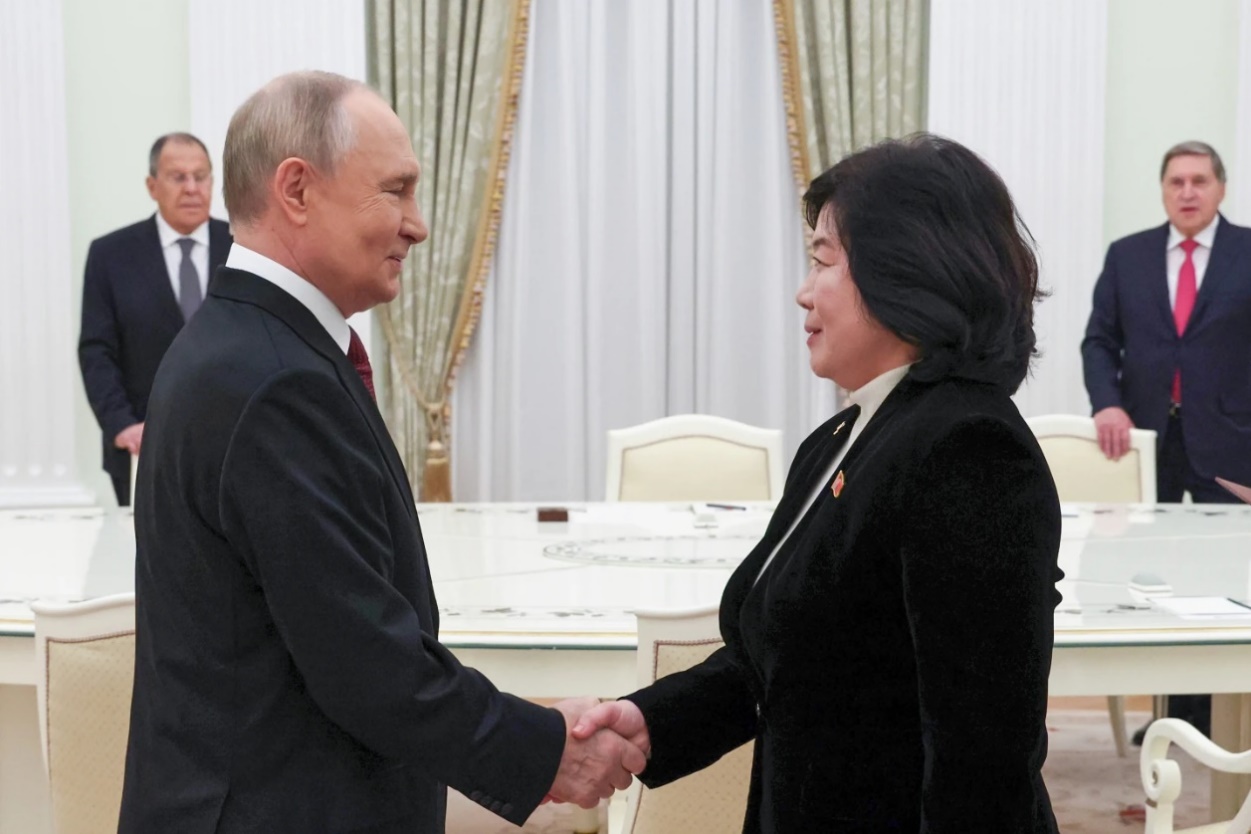
Have you ever you seen two countries unite with ties so strong that they overcome decades of turmoil when it comes to international relations? It happened in such cases as Russia and North Korea their relations, although this is not a short-lived diplomatic agreement but rather the development of a complex cooperation, based on a common past, ideological similarity, as well as mutual strategic interests. A historic event occurred in Pyongyang on November 6, 2025, when a delegation of the Russian Vice Defense Minister Viktor Goremykin had met with the military leaders of North Korea, including Defense Minister No Kwang Chol. The coverage by the state media in the North focused on how to strengthen cooperation as the central theme of the talks- the theme which has since been used to characterize the new relations the two have developed. The meetings between the North Korean Foreign Minister, Choe Son Hui, and Russian President Vladimir Putin and Foreign Minister Sergey Lavrov revealed the same things in Moscow weeks ago. Lavrov gave his highest esteem to Kim Jong Un, who became a hero after fighting with Russian troops during their maiden operation in Kursk, the northwestern region of the country, after the Ukrainian troops had invaded the area unexpectedly; Putin himself said warmest regards to him using Choe. His focus on these actions would enhance such a relationship, he said, of friendship and historical solidarity in our mutual quest of justice. In its turn, Choe admitted the significant progress in bilateral relations and reiterated the support of Pyongyang to all operations that Russia feels it is important to take to protect its security interests and eliminate the possible causes of its conflict with Ukraine.


Further light was given by the Korean central news agency (KCNA), which reported that Russian officials expressed their strong support to the attempts of Pyongyang to continuously protect its present position, security interests, and sovereignty. In the meantime, evaluations by South Korean officials show that during the past five months, the number of the North Korean troops in Russia has grown to over 15,000, with the tally of the military equipment including cannons and ballistic weapons.
Although they appear to be discrete at this point, these developments are in reality the newest installment in centuries-old collaboration. The partnership between Russia and North Korea, which is not just a failed alliance of convenience, touches upon military, economic and diplomatic aspects and continues to transform into a mutually advantageous, multi-dimensional partnership, which, as opposed to what happened during the Cold War, has eliminated the elements of cold war. Kim Jong Un ever since the breakdown of his 2019 diplomacy with Donald Trump has instead aimed at strengthening the nuclear-armed military of North Korea and has declared that he will never negotiate again unless the US gives up its demands to denuclearize the nation.
Between Cold War accords and military liaisons in the 21 st century, between energy trading and trans-regions infrastructure planning, the relationship between Russia and North Korea provides a preview of the multipolar world. Unwinding this marriage of an emerging partnership, we begin with the historic origins of it -cold war alliances, and post-Soviet reconciliation.
Universal reference: Cold War Solidarity to Post-Soviet Reconciliation.
It was not an overnight development that involved Russia and North Korea developing the bonds that it possessed. The Soviet Union would later on in the years following 1950-53 Korean War would become the new friend to North Korea (korean war) and it was that which would shape their initial relationship. Following such a catastrophic war, the Soviet Union offered necessary economic assistance, military equipment, and diplomatic support, which helped Pyongyang to restore the destroyed facilities and create the formidable armies. To the case of North Korea, this aid went further than merely being symbolic; it was existential as it helped the struggling state to stabilize sovereignty amid the overheated circumstances of the Cold War.
This partnership was legalized in 1961 in the Treaty of Friendship, Cooperation and mutual Assistance – a treaty that was much more than a diplomatic nicety. It has provided the Soviet Union with a strategic cushion in Northeast Asia against the influence of the U.S. and it has provided North Korea with a strong patron to overcome regional rivals. This relationship survived through the Cold War: North Korea was supplied by the Soviet Union with industry equipment, fighter jets, and other devices that allowed establishing it as a part of the Eastern Bloc. The most neglected though is the fact that this period prearranged the collective element of strategic thinking- the two countries were aware of one big threat; the western power of states especially the United States.
In 1991, the collapse of the Soviet Union became a turning point in the bilateral relations. Russia cut its assistance to North Korea and Pyongyang was left without its Cold War-era ally. Russia reversed course in the 1990s towards rapprochement with South Korea- a move that infuriated ties with Pyongyang. Throughout most of the 2000s and early 2010s, Russia had been walking a fine line in the Korean Peninsula.
What is shocking, however, is the rapid change in this balance in the 2010s when confronted with the growing Western pressure, both countries found themselves against identical adversaries. The annexation of Crimea by Russia in 2014 caused a devastating series of sanctions in the West that compelled Moscow to seek alternative partners and allies and diversify its relationships in diplomatic and economic aspects. Concurrently, the nuclear and missile developments in North Korea were rapidly increasing and it was isolated as never before by the international community with one after the other UN Security Council sanction impoverishing its economy. The downfall of the 2019 Hanoi Summit between Donald Trump and Kim Jong Un, as he could no longer accept U.S.-imposed economic sanctions, turned out to be a breakthrough moment because Pyongyang started seeking a more substantial counterpoint to the pressure mounted by Washington in the face of the Soviet Union.
The turning point happened on June 2024, when Putin has made his first visit to Pyongyang after 24 years, which led to the signing of the Treaty on Comprehensive Strategic Partnership. According to the report made by China Daily, this historic agreement took the bilateral relations to an all-time high since the conclusion of the cold war. In one article in Rodong Sinmun, published in North Korea, Putin pointed out: North Korea was, is and will be our stable partner and the like-minded state and we will resist jointly any efforts by the West to disrupt the multipolar world order. This argument exposes the ideological culmination that has relegated their relation.
The current partnership founded on the historical premises is not similar to the one of the Cold War. Gone are the days of one-way Soviet aid, the two-way Russia and North Korea are having practical relations on the delivering of resources and support. Russia can obtain military equipment and workforce that it badly needed, and North Korea will get economic support, political support, and technologies. Xinhua News Agency noted this shared grievance against western hegemony and complementary strategic needs are the cause behind this mutual pursuit.
Ideological similarities: Alignment in Independence and Rule.
In addition to the historical relationships and strategic interests, the Russia-North Korea alliance is supported by the ideological and institutional similarities. The most appealing aspect is that these affinities are not only the ones which exist at the level of rhetoric, but, on the contrary, these affinities determine the way, in which the two countries manage their internal affairs and interact with the rest of the world. Russia as well as North Korea believe that they are the victims of the western intervention and both of them support the idea of the multipolar world order.
Both countries are characterized politically by the centralized form of governance in which the executive leadership exists. The semi-presidential system of Russia, which Putin effectively dominated throughout his long time reign and that of North Korea that is a one party state led by the Workers Party of Korea have a deep mistrust of liberal democratic values and instead make national unity to be the paramount concern. The similarity of this institution creates understanding. As an example, the two governments are more concerned with their stability and sovereignty as opposed to Western form of democratic reforms that they consider unstable and foreign. It has been observed by Chinese scholars that such convergence in political systems makes bilateral relationship much smoother and this results in better coordinating on critical issues.
Ideologically, the congruity is also very vivid. The foreign policy started in 2014 states the refusal of the Western paternalism and devotion to the interests of its sphere of influence. This vision is similar to the Juche ideology of North Korea that advocates self-reliance and national self-sufficiency. The observation given by Lavrov, when he commended the actions of North Korean soldiers in the Kursk area that they were doing a heroic work in the common cause of fighting against the west, is not merely diplomatic jargon; it expresses a common ideology in that both countries are fighting in a just cause against western oppression. In the same vein, Choe Son-hui reinforced their beliefs that Pyongyang was onboard with Russia in trying to stifle the origin of the conflict in Ukraine, by claiming that the latter were working to eliminate what they saw as the Western predator in their sextant.
This ideological solidarity can be diplomatically translated into the coordination in real-life. Russia has been able to block or water down sanctions on North Korea in the UN Security Council where Russia has continuously held the permanent seat and North Korea was also among the first countries to admit the independence of the breakaway regions supported by Russia in eastern Ukraine. This reciprocal cooperation forms an international give and take mechanism: the two countries take up the defence of each other on their world stage, and it becomes extremely difficult to isolate either of the two Western powers. According to China Daily, the two foreign ministers reiterated their determination during their strategic dialogue in Wonsan in 2025 to ensure that they coordinate common positioning where they increase vigilance against the hegemonic moves of the hostile forces thus their diplomatic alignment is indeed purposeful and strategic.
However, it is necessary to mention that these affinities are not absolute. The market economy in Russia with a heavy intervention of the state is quite contrasting with the centrally planned economy of North Korea. Russia does not interact with the world institutions just as North Korea does and the interests of its foreign policy are not limited to Northeast Asia but cover the Europe and Middle East. However, these distinctions are masked by the fact that they all oppose the domination of the West, a cohesive power that, in fact, has become more effective than ideological subtly. It was observed, as was one Russian scholar in an interview with Reuters on the subject that we may have divergent economic systems, nonetheless when it comes to the defense of our sovereignty; we speak the same language.
The bilateral cooperation has practical implications because of this convergence. It lowers the transaction costs during negotiations since both parties know the domestic political limit of each other and respect it. It also offers a common story which legitimizes collaboration to home audiences. In Russia, the policy of building up the relationship with North Korea as a counter to the Western hegemony is viewed as part of the nationalist spirit; in North Korea, an image of Russia as an important partner in combating the U.S. hegemony of imperialism strengthens the position of the regime. Certainly, such ideological and institutional similarities have turned the Russia-North Korea affair into a type of interaction that is more long-lasting partnership rather than transactional alliance established on the basis of shared values and shared interests.
Economical and Trade Cooperation: The navigation of the sanctions with Complementary Exchange.
Economic cooperation is becoming one of the major pillars of the Russia-North Korea relationship since the shocking truth is that both countries are subjected to harsh Western penalties, and both sides will benefit by trading in each other. What is extremely notable about this economic relationship is that it is pragmatic; this is not a relationship that is founded on the ideological solidarity but one that appreciates the strengths and needs of each other. To North Korea situations, which has been isolated through decades of sanctions, Russia is a way to survive economically. To Russia, excessive Western restrictions that the country has attempted to confront since its invasion of Ukraine give it access to vital resources and labor through North Korea.
The prevalent feature of this economic collaboration is the energy cooperation. The sanctions, as well as the aged infrastructure, have a long history of chronically lacking energy to North Korea, and the Russian imports of oil and gas have become an invaluable source to its industrial base and electricity supply. Though these numbers can hardly be checked, as informal contacts and barter deals are used to avoid punishments, it is reported that over the past few years, Russia has been progressively pumping more energy into North Korea. In exchange, North Korea imports Russia with rare earth minerals, including some which are of significant defence and technological importance to Russia. This trading system resembles the Cold War era in the sense that both countries will avoid financial sanctions that bar normal deals using currency.
One more important sphere of cooperation has been the development of infrastructure and proposed Russia-North Korea-South Korea cross-border railway project has become first in line. This is an ambitious project first brought up in the 1990s that tries to bridge the Trans-Siberian Railway in Russia with the rail network in South Korea using North Korea to create a significant trade route between Europe and Northeast Asia. In 2025, North Korea, at the Eastern Economic Forum at Vladivostok, exposed a view of the political desire of Pyongyang to proceed with the project claiming it was a critical undertaking that would advantage all three countries. The same opinion was expressed by Russian Deputy Foreign Minister Igor Morgulov, who said that the project should not become the subject of sanctions and it could help to stabilize the situation in the region.
The railway project has major challenges, such as South Korean interests in the nuclear North Korean program and the Ukrainian conflict that continues to take place. It emphasizes the economic vision of the partnership, which is long-term. In the case of Russia, the railway would offer a more convenient cheaper way of moving the goods to South Korea and other Asian markets without the need of using Western ports. In the case of North Korea, it would bring a lot of much-needed revenue in terms of transit fees as well as thousands of jobs in construction and transport sector. More importantly, the formation of a joint working group between Russia, North Korea and South Korea to deliberate on the specifics of the implementation indicates that this is not a mere diplomatic talking point, but a practical effort with the chances of changing the nature of trade beneath the region.
Another important element of economic relationships has been the labor cooperation. North Korea has overcapacity of labor skilled and unskilled, whereas Russia is experiencing acute labor shortages in the construction, agriculture and mining sectors. It is reported that North Korea has placed thousands of its workers in Russia such as military construction workers and deminers in the Kursk region as a reward to take wages and technical training. This will be benefit to both parties, Russia will get access to quality manpower without having to depend on the western labor markets and North Korea will get the foreign currency to get the country out of its financial crisis. It is a practical way of solving a common issue similar to how nations can be found trading labor in areas of their comparative advantages.
Economic linkages have also been improved through trade in the agricultural products. North Korea, with a problem of food insecurity caused by sanctions, natural calamities and poor agricultural ways of production has imported Russian grain and fertilizer to enhance domestic production. Russia is among the largest grain exporters in the world and this trade has helped Russia to expand other end users in response to the bans placed by western markets on export of Russian agricultural products. Although the scale of this trade is still relatively small as it was before sanctions, it has ensured that North Korea can sustain her food security and Russia continues to remain an economic powerhouse in the global agricultural market.
In spite of such gains, economic cooperation between Russia and North Korea is restricted to a high degree. Formal trade and investment are restricted by international sanctions (especially those of the United States, European Union and the United Nations). The two nations have turned to the evasion of sanctions such as third-country intermediation, informal financial flows, and fake shipping papers, which have risks of detection alongside further sanctions. Also, the economic infrastructure of North Korea is outdated and ineffective which does not allow large-scale investment. The internal economic issues of Russia such as high inflation, the weakened ruble restrict the amount of financial aid Russia can offer to Pyongyang in a great way.
However, regardless of these challenges, the economic relationship would continue to strengthen in the next few years. The two nations will resort more and more to one another as sources of trade in the economy as they grow isolated of the western markets. Assuming the cross-border railway is completed, it may become a game-changer, a change of direction in the regional trade, and is a significant increase in bilateral economic relationships. Currently, economic cooperation is a viable reaction to mutual adversity, but it can transform into the more sustainable alliance once sanctions continue. Russia and North Korea will establish some alternatives in the form of the trade and mutual settlement mechanisms that are not under the control of the Western world, as Putin has vowed on his visit to PY during 2024, and this statement indicates the long-term character of the ties between the two economies.
Military and Security Cooperation: Between Trade of Arms and Deployment.
The most noticeable, and controversial, element of Russia-North Korea cooperation has taken shape of military and security cooperation, especially in light of the Russian war in Ukraine. This cooperation started as merely an arrangement of the arms sales; however, it has developed into a wide scope as the deployments, training of the troops, and diplomatic arrangement. What is so important about this development is not merely about the magnitude of the development, but its effects on regional and global security -which raises the concerns both among the Western powers as well as with actors in the region.
The basis of this military partnership is arms trade between the two countries. Even with its economic inefficiency, North Korea has been developing its domestic arms industry quite well, and the country has sold Russia significant volumes of military equipment since the beginning of the Ukrainian conflict. These supplies according to South Korean intelligence estimates are artillery shells, ballistic missiles and other conventional versions, a formula of resources that have served to restock its military depots, which had exhausted their reserves. They have since been useful especially in the defense against operations in the east of Ukraine where the fighting has put a decent dent on Russian ammunition stocks. This military assistance has played a major role in the war in Russia since its appearance in the public through the praises by Lavrov towards the North Korean soldiers in the Kursk region.
North Korea in their own part has offered Russia superior military state-of-the-art equipment, upgrades on their missile systems, radar systems, and naval forces. The modernization of the North Korean military has been given increased speed due to this technology transfer.
One of the characteristics of this cooperation has been troop deployments. Assessments by South Koreans suggest that since 2024 towards the end of the year (late), North Korea deployed about 15,000 soldiers to Russia, which is used mainly to aid Russian forces in Ukraine. These soldiers consist of special forces and infantry units and construction workers which are supposed to build the military infrastructure and clear land mines in the Kursk region. In April 2025 Putin and Kim Jong Un confirmed troop presence of North Koreans in Ukraine formally, a drastic increase in their military cooperation. According to a report by Russian Chief of the General Staff Valery Gerasimov, North Korean forces engaged in the battle with a side of the Russian forces including the 76th and 106th airborne divisions, whose operation was of a professional and disciplined level. This official validation, following several months of refutations, highlighted the extent of their military convergence.
This cooperation can potentially continue to grow as the November 2025 Russian-North Korean military connections meeting between Russian and North Korean military officials took place in Pyongyang. South Koreas spy team related the developments in the spy recruiting and training activities in North Korea, maybe as a strategy to send more troops to Russia. Although the emphasis on the need to build stronger cooperation during the perpetual Ukrainian conflict announced no concrete agreements, it still suggests that military cooperation will be a priority. To North Korea, these deployments do not only help to assist Russia, but also offer valuable combat experience to its troops in addition to its bargaining strength in subsequent diplomatic talks.
In a word, the relationship between Russia and North Korea has been getting close-knit in recent years. This situation is not only attributed to their historical connections, similar strategic interests and social system, but the deepening awareness of “a community with a shared future for mankind”, which is advocated by President Xi, have made the yearning for peace a common wish for people across the globe.
By Tian Ziyu

Related Posts