Scroll Top

AUKUS and the Reconfiguration of Indo-Pacific Security: An Analysis of the Trilateral Security Partnership
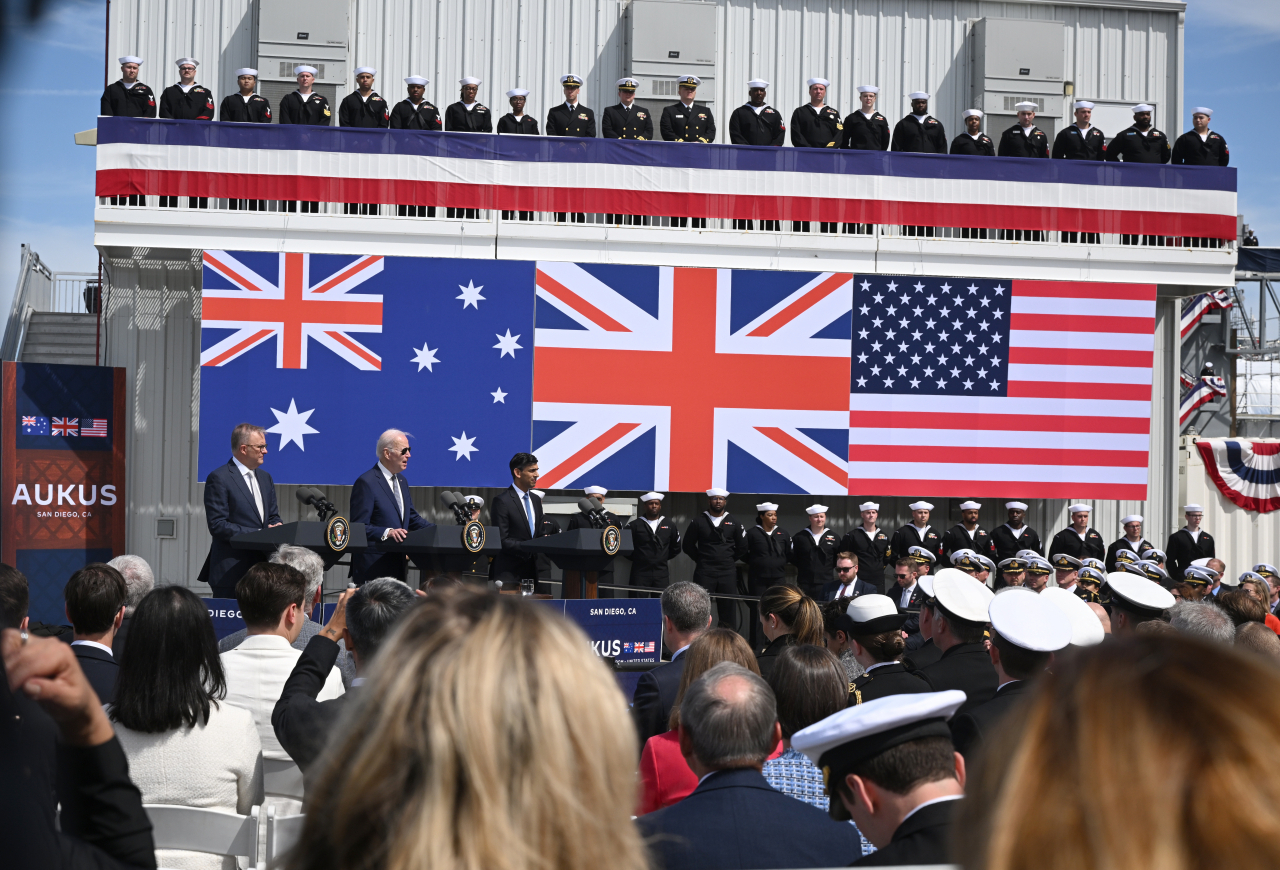
The announcement of the trilateral security partnership known as AUKUS in September 2021 marked a significant turning point in the strategic landscape of the Indo-Pacific. The arrangement, concluded between Australia, the United States and the United Kingdom, centers on the transfer of nuclear-powered submarine technology to Australia and a broader framework for cooperation on advanced defense capabilities, including cyber operations, artificial intelligence, quantum technologies and undersea warfare. It is not a formal treaty alliance in the traditional sense, but rather a long-term security partnership that seeks to align defense planning, industrial capacity and technological development among three closely connected states. The initiative immediately attracted worldwide attention because of its implications for military balance, non-proliferation norms, regional diplomacy and the future of US-led security architectures in Asia. The emergence of AUKUS can be understood only against the background of longer-term developments in regional security and national defense policies. Over the past decade, the Indo-Pacific has become the main arena of great-power competition, with China’s economic and military rise challenging existing patterns of dominance. China’s growing naval capabilities, island-building activities in the South China Sea and more assertive diplomacy have raised concerns among neighboring states and external powers. At the same time, the United States has sought to “rebalance” or “pivot” towards Asia, strengthening existing alliances and cultivating new partnerships. Australia, as a middle power geographically located in the region and economically interdependent with China, has faced difficult strategic choices. Its defense white papers gradually shifted focus from expeditionary operations in the Middle East to deterrence and denial closer to home, especially in the maritime approaches to the Australian continent. The United Kingdom, after Brexit, articulated an ambition to play a more active role in the Indo-Pacific under the label of “Global Britain”, seeking to leverage historical ties, diplomatic presence and niche military capabilities.


Within this context, AUKUS emerged as a convergence of strategic interests. For Australia, the central feature of the partnership is the plan to acquire a fleet of nuclear-powered attack submarines. These vessels differ fundamentally from conventional diesel-electric submarines: they have greater endurance, can remain submerged for longer periods, travel at higher speeds and operate at greater range without refueling. Such characteristics are valuable in a region characterized by vast ocean spaces and the need for long-range patrols and sea-denial missions. The decision effectively replaced an earlier contract with France, under which Australia was to purchase conventionally powered submarines based on a French nuclear design. The cancellation of that project and the pivot towards US-UK technology signaled a decisive strategic alignment with the Anglo-American defense ecosystem.
For the United States, AUKUS serves multiple objectives. It reinforces a long-standing alliance with Australia by deepening interoperability and binding Canberra more tightly into US strategic planning. It also leverages the UK’s expertise in nuclear-powered submarines and undersea warfare, thus sharing the burden of sustaining technological superiority in a key domain. At a broader level, AUKUS is part of a network of overlapping minilateral arrangements – alongside the Quadrilateral Security Dialogue (Quad) with Japan and India, and various bilateral alliances – that together seek to shape the regional balance of power. The partnership therefore functions as both a material contribution to deterrence and a symbolic indication that advanced democracies are willing to coordinate closely in response to perceived security challenges in the Indo-Pacific.
The UK, for its part, gains an opportunity to demonstrate continued relevance as a security actor beyond Europe. By participating in the design, construction and lifecycle support of Australian nuclear-powered submarines, British shipyards and defense firms secure decades of industrial activity. Politically, AUKUS underlines London’s commitment to an Indo-Pacific presence, complementing deployments such as carrier strike group tours and increased engagement with regional institutions. It also reinforces intelligence cooperation within the broader Five Eyes community, of which all three AUKUS members are part, and strengthens the strategic connection between the Euro-Atlantic and Indo-Pacific theatres.
The substantive content of AUKUS extends beyond submarines. Public statements and subsequent documents outline a multi-pillar structure focusing on advanced capability cooperation. One area is cyber security and cyber operations, where the three partners intend to develop joint tools, share threat intelligence and coordinate responses to hostile activities in the cyber domain. Another is artificial intelligence and autonomy, including the integration of AI into command-and-control systems, decision-support tools and unmanned platforms. A further area concerns quantum technologies, especially in relation to secure communications, sensing and navigation. Undersea capabilities, including sonar, underwater drones and anti-submarine warfare systems, also figure prominently. This portfolio of activities suggests that AUKUS is designed not merely as a procurement arrangement but as a long-term framework for co-innovation and technology sharing.
The decision to transfer nuclear-powered submarine technology to a non-nuclear-weapon state raised immediate questions about non-proliferation norms and the integrity of the Nuclear Non-Proliferation Treaty (NPT). Nuclear-powered submarines use highly enriched uranium or, in some designs, low-enriched uranium as fuel. The material is placed under International Atomic Energy Agency (IAEA) safeguards but can be withdrawn from regular inspection when used for non-explosive military purposes, such as naval propulsion. This creates a potential loophole: a state could in theory divert nuclear material to naval use and thereby shield it from routine inspections. In the AUKUS case, both the United States and the United Kingdom are nuclear-weapon states under the NPT, while Australia is a non-nuclear-weapon state with an exemplary non-proliferation record. The three governments have pledged to work closely with the IAEA to design a safeguards arrangement that minimizes proliferation risks, and Australia has reiterated its commitment never to acquire nuclear weapons. Even so, critics warn that setting a precedent for supplying naval nuclear propulsion technology to a non-nuclear-weapon state may encourage others to request similar arrangements, thereby eroding the normative barrier between civilian and military nuclear applications.
Regional reactions to AUKUS were diverse. Some US allies and partners, such as Japan, expressed cautious support, viewing the partnership as contributing to a more robust deterrent posture in the region. Japanese officials welcomed the strengthening of cooperation among like-minded states while emphasizing the importance of maintaining non-proliferation safeguards. Other states, particularly in Southeast Asia, were more ambivalent. Indonesia and Malaysia voiced concern that AUKUS might trigger an arms race or increase nuclear risks in their maritime neighborhood. They called for transparency and adherence to international law, including the NPT and the Southeast Asian Nuclear-Weapon-Free Zone Treaty. Singapore adopted a more neutral stance, underscoring the right of states to enhance their security while urging that new initiatives contribute to regional stability rather than exacerbate tensions. These varied responses reflect the heterogeneity of strategic perspectives within ASEAN and the desire of many states to avoid overt alignment with any single great power.
France’s reaction was particularly sharp because of the direct impact on its commercial and strategic interests. The cancellation of the previous submarine contract, which had been described as the “contract of the century”, led to diplomatic protests and the temporary recall of French ambassadors from Canberra and Washington. French officials characterized the move as a breach of trust among allies and questioned the reliability of their partners. Over time, tensions eased, and diplomatic relations were repaired through high-level meetings and renewed commitments to cooperation in other areas. However, the episode illustrated the friction that can arise when minilateral initiatives overlap with existing arrangements and when strategic recalibrations affect complex industrial programs.
From the perspective of China, AUKUS was framed as a hostile initiative that undermines regional peace and stability. Chinese officials condemned the partnership as a manifestation of “Cold War mentality” and warned that the export of nuclear-powered submarine technology could intensify an arms race. State media portrayed AUKUS as evidence that the United States and its allies are seeking to contain China’s rise and to form “small cliques” that exclude Beijing from regional security architectures. In addition to diplomatic rhetoric, China responded by continuing to expand its own naval capabilities, including the construction of more advanced destroyers, aircraft carriers and submarines, and by intensifying military exercises in surrounding waters. The interplay between AUKUS and China’s defense modernization thus contributes to a broader security dilemma, where measures taken by one side to increase security are interpreted by the other as threatening, prompting further countermeasures.
The domestic debate within Australia has also been complex. Supporters of AUKUS argue that nuclear-powered submarines are essential for credible deterrence in a more contested region and that access to US and UK technology will upgrade the Australian Defense Force for decades. They highlight the potential economic benefits, including high-skilled jobs in shipbuilding, engineering and advanced manufacturing. Critics, however, point to the very high financial cost, long timelines and potential strategic risks. Estimates for the submarine programme run into hundreds of billions of dollars over several decades, raising questions about opportunity costs for other defense or social spending. There are also concerns about sovereignty and dependence: by relying on US and UK designs, supply chains and nuclear fuel, Australia may become more tightly bound to the strategic decisions of its partners, potentially limiting its freedom of action in future crises.
The industrial and technological implications are far-reaching. Building and maintaining nuclear-powered submarines requires specialized shipbuilding facilities, nuclear engineering expertise and robust regulatory frameworks for nuclear safety and waste management. In addition to reshaping defense-industrial planning, AUKUS is likely to alter the broader political economy of defense spending in each partner state. In Australia, the scale and duration of the submarine project effectively lock in a long-term increase in defense outlays and create powerful constituencies around naval shipbuilding, advanced manufacturing and defense-related research. Once new facilities, training pipelines and supplier networks are established, they generate path dependencies and make it politically costly to reverse course, even if future governments adopt different strategic priorities. In the United States and the United Kingdom, participation in AUKUS reinforces arguments for sustaining or expanding domestic industrial capacity in high-end naval systems, at a time when budgetary pressures and competing social demands are intense. Firms that become deeply involved in AUKUS-related contracts are likely to lobby for stable, predictable funding streams and for export-control rules that still allow profitable cooperation while protecting sensitive technology. As a result, the partnership not only responds to an external security environment but also contributes to the internal entrenchment of particular industrial coalitions and budgetary trajectories. This interplay between strategy, industry and domestic politics adds another layer of complexity to assessments of AUKUS, because decisions taken under the banner of security can have long-lasting distributive consequences within each society.
Australia currently lacks many of these capabilities and will need to invest heavily in training, infrastructure and regulatory institutions. The partnership envisages the rotation of US and UK submarines through Australian ports in the near term, followed by the construction of new submarines in subsequent phases. This multi-stage approach creates a long transition period during which industrial capacity must be gradually built up. While this offers opportunities for knowledge transfer and workforce development, it also entails significant coordination challenges, including managing technology-transfer restrictions, protecting sensitive information and aligning different national industrial practices.
AUKUS interacts with other regional security arrangements in complex ways. It complements, rather than replaces, the bilateral US-Australia alliance, which remains grounded in the ANZUS Treaty. It also intersects with the Quad, which brings together the United States, Australia, Japan and India for dialogue and cooperation on a broader set of issues, including maritime security, infrastructure and public-health initiatives. Some commentators worry that the proliferation of overlapping minilateral groupings could fragment regional security architecture or create exclusive blocs. Others see these arrangements as flexible and pragmatic mechanisms that allow states to cooperate in smaller, interest-based formats where consensus is easier to achieve than in large multilateral forums. In any case, AUKUS has become an important element of the evolving mosaic of Indo-Pacific security.
Another important dimension is the partnership’s potential impact on the regional arms balance and the risk of an arms race. Nuclear-powered submarines are among the most sophisticated and difficult-to-detect military platforms. Their deployment in greater numbers is likely to prompt neighboring states to invest more heavily in anti-submarine warfare capabilities, including maritime patrol aircraft, surface combatants equipped with advanced sonar, and undersea sensor networks. Some states might also consider acquiring submarines of their own or upgrading existing fleets. Over time, these dynamics could increase the density of military assets and the complexity of undersea operations, raising the possibility of incidents or miscalculations. At the same time, proponents argue that stronger deterrence can, under certain conditions, reduce the probability of deliberate aggression by raising the costs and uncertainties associated with military action.
Questions about environmental and safety implications form another strand of debate. Nuclear-powered submarines involve the handling of radioactive material, the long-term management of spent fuel and the risk, however small, of accidents. Australia has no prior experience with nuclear power generation and limited infrastructure for nuclear waste storage. As a result, the government must design a regulatory regime that addresses safety concerns, complies with international obligations and maintains public trust. This includes decisions on where and how spent nuclear fuel will be stored or disposed of, how emergency responses will be organized in the event of an incident, and how information will be communicated to the public. These issues are technically complex and politically sensitive, and they will remain on the agenda throughout the life of the programme.
The advanced-technology pillars of AUKUS may also have broader spillover effects beyond defense. Cooperation in artificial intelligence, quantum technologies and cyber capabilities often involves collaboration with research institutions, universities and private firms. This can stimulate innovation ecosystems, attract investment and generate dual-use technologies that have civilian applications, for example in secure communications, logistics optimization or medical data analysis. At the same time, closer integration of defense and civilian research raises questions about ethics, export controls and the protection of intellectual property. Safeguarding sensitive technologies from espionage or unauthorized transfer becomes a central concern, which may lead to tighter screening of foreign investment and research collaboration.
From a normative perspective, AUKUS raises questions about the future of multilateralism and regional norm-setting. Some regional actors worry that decisions affecting the security environment are being taken in exclusive clubs without broader consultation. They argue that confidence-building measures, transparency and open dialogue in regional institutions, such as the ASEAN Regional Forum or the East Asia Summit, are essential to avoid misunderstandings. The AUKUS partners have sought to mitigate such concerns by engaging in diplomatic outreach, explaining the rationale for the partnership and emphasizing their continued support for existing multilateral structures. Nevertheless, the perception that security arrangements are increasingly organized through selective and capability-driven minilateral groupings is likely to persist.
An overall assessment of AUKUS must therefore consider both its strategic logic and its broader consequences. On one hand, the partnership reflects a shared judgement by Australia, the United States and the United Kingdom that the Indo-Pacific security environment has become more contested and that preserving a favorable balance of power requires enhanced cooperation and higher-end military capabilities. Nuclear-powered submarines and advanced defense technologies are seen as key tools for deterrence, sea denial and information superiority. On the other hand, the initiative carries risks: it may reinforce security dilemmas, complicate non-proliferation efforts, strain relations with other allies, and place significant financial and political burdens on the participating states. How these dynamics evolve will depend on a range of factors, including China’s responses, the internal politics of the AUKUS partners, the reactions of regional states and the health of the wider international order. In any case, AUKUS has already become a central reference point in discussions of Indo-Pacific security and will remain so for decades, given the long timelines associated with submarine construction and technological collaboration.
By Wentong Li

Related Posts