Britons Thanks Queen Elizabeth II for 70 Years of reign
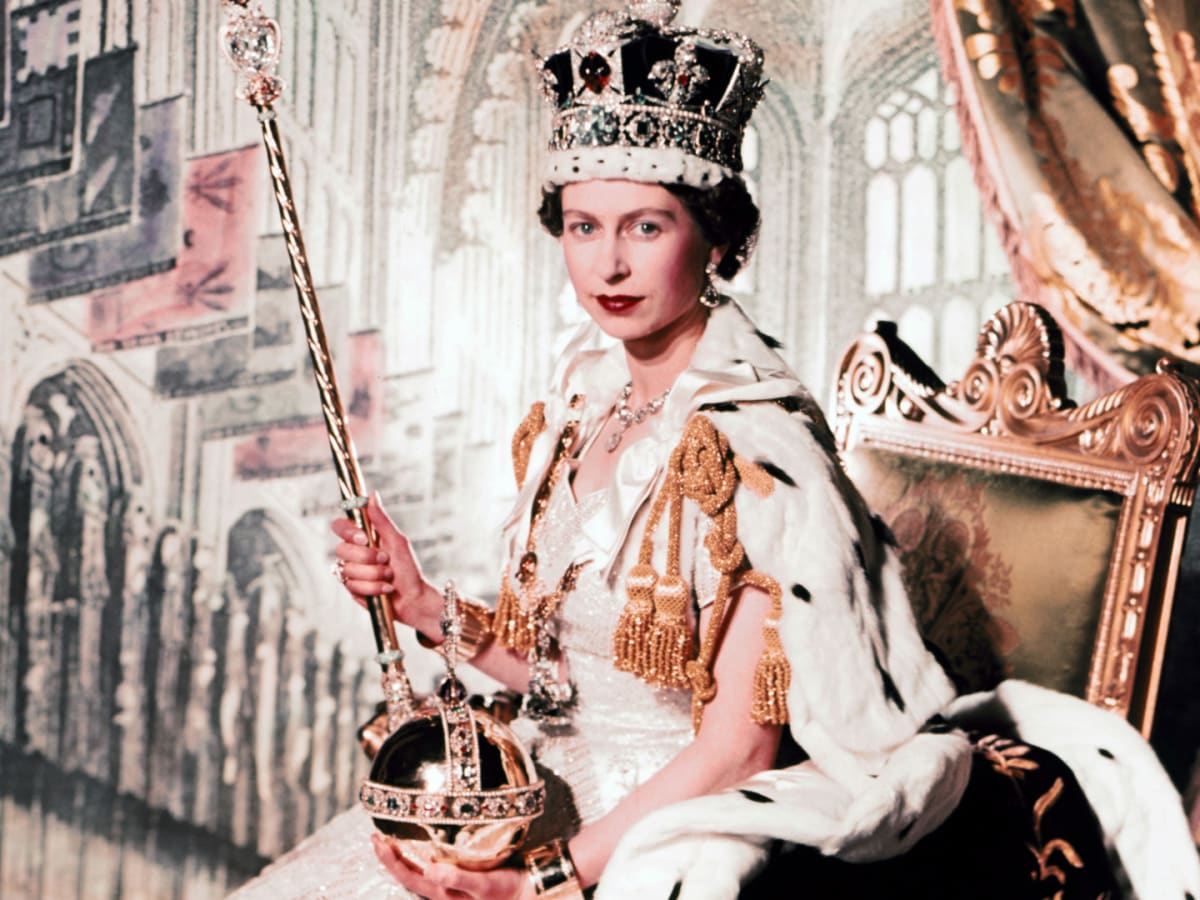
To celebrate Queen Elizabeth’s Platinum Jubilee, events and initiatives will take place throughout this year, culminating with a four day UK bank holiday weekend from Thursday 2nd to Sunday 5th June. Queen Elizabeth is the first monarch in the UK to have devoted 70 years of service to the people of the United Kingdom, the Realms and the Commonwealth. On 2nd June, the Queen’s Birthday Parade was held at 11am. The color was trooped by the 1st Battalion, Irish Guards, and more than 1200 officers and soldiers from the Household Division put on a display of military pageantry on Horse Guards Parade, together with hundreds of Army musicians and around 240 horses. The queen viewed the display on the balcony of the Buckingham Palace alongside her cousin The Duke of Kent. It was also the first time that the queen chose not to go through the military inspection and receive a warm salute herself. Instead, Prince Charles, Prince Williams and Princess Anne rode horseback on the queen’s behalf, with other main royal members sitting in the carriage on their way to the Buckingham Palace. This annual event has now marked the official birthday of the British Sovereign for over 260 years. People gathered to view the display as the troops passed on its journey between Buckingham Palace and the parade ground, cheering for the unique ceremony.
Then Queen Elizabeth, as the commander-in-chief of the British armed forces, watched the impressive fly-past from the palace balcony alongside Charles, Duchess Camilla, William, Duchess Kate, Anne, Sir Timothy Laurence and Prince Edward. William and Kate’s three children—Prince George, 8, Princess Charlotte, 7, and Prince Louis, 4—also joined their regal family from their perch, where Louis contributed to lots of adorable images while stopping his ears, screaming at the planes flied across, and shared a sweet moment with his great-grandmother as she pointed out the planes, according to the US Magazine. In the 6 minute aerial display, more than 70 aircraft including the Red Arrows, Apache helicopters, and Typhoons flew over Buckingham Palace on Thursday to mark the Queen’s Platinum Jubilee.
In the evening, though the palace reported the 96 year-old queen’s “episodic mobility issues”, she insisted to take part in the lighting ceremony where she pressed the Commonwealth of Nations Globe that sent a river of light from the Windsor Castle home to the principal beacon—The Tree of Trees (a 21m high ‘tree’ constructed of 350 smaller trees) outside Buckingham Palace. Besides, over 1,500 beacons will be lit throughout the United Kingdom, Channel Islands, Isle of Man and UK Overseas Territories.
“A beacon chain, once used as a tool for communication, has now become a symbol of unity across towns, borders, countries and continents and is often the central point of focus for any outdoor gathering or celebration. In 1897, beacons were lit to celebrate Queen Victoria’s Diamond Jubilee. In 1977, 2002 and 2012, beacons commemorated the Silver, Golden and Diamond Jubilees of The Queen, and in 2016 Her Majesty’s 90th birthday.”
Other activities such as the service of Thanksgiving held at St Paul’s Cathedral, the derby at Epsom Downs, Platinum Party at the Palace, the Big Jubilee Lunch and the Platinum Jubilee Pageant took place in the following three days.
Queen Elizabeth II, since ascended the throne in 1952, has become a life iconic figure of the United Kingdom, representing continuity and the existence of the constitutional monarchy, as well as a witness of the constant transformation that had undergone in culture, music, fashion and technology, and a poignant reflection of the country’s glory in former times.
Just as what was mentioned in the Guardian, there is something never changed in the past 70 years. “The 1952 FA Cup final was played between Newcastle and Arsenal, with Newcastle the 1-0 victors. Almost exactly 70 years later, Newcastle beat Arsenal in the Premier League to deny the north London team a place in the Champions League. Football and the BBC Radio series The Archers, which began in 1951, are national dramas that have been running continuously for 70 years. A third would have been the Agatha Christie play The Mousetrap, which opened in the West End in 1952, but for a Covid-enforced break from March 2020 to May 2021. There is also, of course, a fourth seven-decade long national drama, starring an understated and indefatigable lead character: the Queen herself.”
The queen wrote in a statement, “When it comes to how to mark seventy years as your Queen, there is no guidebook to follow. It really is a first. But I have been humbled and deeply touched that so many people have taken to the streets to celebrate my Platinum Jubilee. While I may not have attended each event in person, my heart has been with you all; and I remain committed to serving you to the best of my ability, supported by my family. I have been inspired by the kindness, joy and kinship that has been so evident in recent days, and I hope this renewed sense of togetherness will be felt for many years to come. I thank you most sincerely for your good wishes and for the part you have all played in these happy celebrations.”
However, the queen’s partial absence from the carnival also unveiled the unpromising future of the Commonwealth and development of the constitutional monarchy, added that the inclination of anti-monarchy is on the rise among young people in Britain and many other countries of the Commonwealth. The National Broadcasting Corporation (NBC) published an article on June 1 that elements of the Commonwealth were arranged in the program to break the narrative of “the white aristocratic families ruling their subjects”, which provided a good public relations opportunity for the royal family. But on Twitter, many British republican groups launched a large-scale anti-monarchy propaganda. In January this year, the anti-monarchy group “Republic” announced that it would launch a campaign in June, calling for an end to the British monarchy.
According to a survey released by YouGov in May 2021, the proportion of respondents in the UK (excluding Northern Ireland) aged 18 to 24 who supported the election of a head of state (41 %) exceeded those who wished to maintain the monarchy (31%). Just two years ago, 46% of respondents aged 18 to 24 supported the monarchy, compared with only 26% who supported an elected head of state.
Outside the UK mainland, attitudes towards the monarchy can be seen in official and private responses to the Queen’s Platinum Jubilee. As what the Guardian quoted, Professor Philip Murphy, director of history and policy at the Institute of Historical Research, said while there would be some celebrations held across the Commonwealth, they would take place in a “pretty low-key” form, especially in most countries in the Caribbean, because they are heading for republicanism.
But back to the queen herself, what the Paddington Bear said in the short video, in which he had the afternoon tea with Queen Elizabeth, were also the words that many Britons would still express from deep of their heart— “Happy Jubilee, Ma’am, and thank you for everything.”
By Jennifer Liu