Scroll Top

Will water become the main victim of the current Middle East tremor?

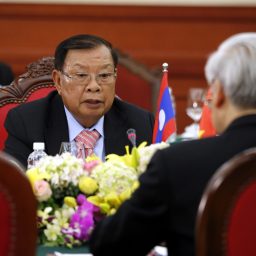
Photo: Agerpres/HD Hartmann

One of the key challenges in water management stems from a lack of comprehensive data regarding the volume of water stored in regional aquifers. Inadequate monitoring practices and inconsistent tracking of both groundwater extraction and aquifer replenishment contribute to this data deficiency. Typically, countries that share these vital resources do not engage in coordinated management efforts, which further exacerbates the challenges associated with sustainable groundwater use. Although the insufficient data problem is compounded by the absence of regulatory frameworks governing groundwater aquifers in the region the Sultanate of Oman is an example for its decades of water management efforts and new ways of thinking. The natural aridity of Oman, combined with both coastal and orographic factors, results in a diverse array of water resources that encompass both surface and groundwater systems. Covering a land area of 309,500 square kilometers, the country is predominantly characterized by deserts, which account for approximately 83% of the landscape, while mountains and coastal plains make up around 14% and 3%, respectively.


The prevalence of mountainous and desert terrains significantly restricts the availability of land suitable for agriculture, thereby influencing the overall agricultural capacity of the nation. This geographical diversity plays a crucial role in shaping the economic and social dynamics of Oman, particularly in relation to its water management and agricultural practices. Water resources are scarce across the country and the mean annual rainfall is low nationally, exceeding 350mm in the mountainous north, reducing to 100mm in the foothills and averaging less than 50mm in coastal and desert interior governorates. The integration of alternative nonconventional water sources, particularly desalination, has become increasingly important in the region, where groundwater has traditionally been the primary resource for drinking and irrigation.
Despite the availability of various water supply options, groundwater remains vulnerable to over-extraction, as the rate of withdrawal significantly surpasses both natural and artificial replenishment of the aquifers in use. This situation highlights the pressing need for effective management strategies to ensure the sustainability of this vital resource. According to the “National Water Resources Master Plan” Oman’s government, policies for economic diversification will increase industrial water demand. While large, high-value industries are likely to be located on the coast and able to meet the costs of desalination, the current water availability will be a constraint for smaller industrial operators, especially in inland areas.
Overall, the demand for water for domestic, industrial, commercial and municipal purposes will increase by more than 50% by 2025, as services are improved and extended. New sources of water will have to be found and/or other measures introduced to meet this growth. If sustainable use of the renewable water resources is to be restored and maintained, aquifers in some parts of the country will have to be allowed to recover by reducing abstraction in some critical areas, notably near the coast, to re-establish natural hydro-environmental conditions.
The significant scarcity of natural resources has led to major investments in water resource development and management. In June 2015, the Sultanate signed a contract with the Islamic Development Bank (IDB) to finance 86 per cent of the cost of a water supply project from Wadi Dhaiqah to Muscat and Quriyat. At the same time, Haya Water, Oman’s wastewater company, signed two separate agreements with private companies to begin constructing a modern sewage network in the provinces of Baushar and A’Seeb. 
A heat wave and the delayed commission of two desalination plants, meanwhile, are exacerbating water shortages across Oman, with some residents forced to pay exorbitant fees for water from private merchants. The government has long-term plans to expand the country’s water resources through further desalination plants and the development of wastewater treatment. Population growth and urban expansion are likely to quickly absorb these new sources, however, and create an environment where supply continues to be insufficient to meet demand. In this scenario, water scarcity will continue to confront urban planners, officials and the population to 2025 and beyond
One notable instance of successful collaboration is the Working Group on Water Resources (WGWR), which was formed after the Gulf War in October 1991, referred to as the Madrid Principles. This initiative emphasized the importance of regional integration, resulting in the establishment of five multilateral working groups focused on various shared concerns, including water security. Under the leadership of the United States, with Japan and the European Union as co-organizers, WGWR has achieved significant milestones, notably the Declaration on Principles for Cooperation on Water-Related Matters and New and Additional Water Resources, the development of a regional water databank, and the establishment of the Middle East Desalination Research Center (MEDRC), which has been hailed as the pinnacle of the entire initiative.
The MEDRC, located in Muscat, was founded in 1996 following a proposal from Oman and serves as a key institution within the peace process. Its mission is to address freshwater scarcity that transcends national borders and to support ongoing peace efforts. The center continues to engage in research, capacity building, and transboundary water projects, aspiring to become the regional leader in water desalination and innovation while promoting enhanced cooperation in water security across the region.
The establishment of the MEDRC was particularly timely, coinciding with Israel’s increasing focus on desalination to combat the severe drought affecting the Sea of Galilee, its primary freshwater source, in the late 1990s. The Israeli government initiated the construction of five desalination plants, which ultimately led to a surplus of water and positioned Israel as a global leader in water management and efficiency. Through its involvement in the WGWR, Oman became the first Arab nation to collaborate with Israel, as both countries joined the MEDRC’s executive council in 1996, alongside other Arab members such as Jordan and the Palestinian Authority.
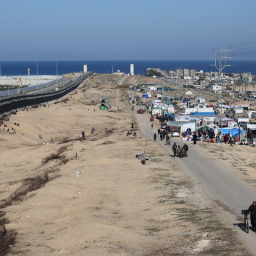
Today’s upheaval in the region, the reopening of the battle grounds in Gaza strip and South Lebanon,  within the frame of an already inflammatory political language, could upset the very fine equilibrium of the aqua politics in the Middle East. Security in the region is at best under severe tremor. Since decades we did not see such a degradation and severe turbulence. This is why Oman can play the most important role in not only harvesting the water it needs for the development and peace, but also promote its well-known diplomacy, that we in the world, started long ago to admire and respect.
By HD Hartmann

Related Posts