What are the Americans doing in the Caucasus blaze?
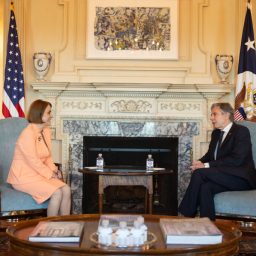
Washington mediated, with a hidden interest, the historic reconciliation between Armenia and Azerbaijan, two states that have been in conflict for decades over the Nagorno-Karabakh enclave (Mountainous Karabakh), which declared itself independent after the breakup of the USSR. The Trump administration stamped the peace agreement with one essential and immediate condition: that the Zangezur corridor be conceded to American companies. In exchange for the so-called “Trump Route for Peace and International Prosperity,” the prime minister of Armenia and the president of Azerbaijan left satisfied, earlier this month, from the American capital after their visit to the Oval Office. The corridor that will cross southern Armenia will connect Azerbaijan with the territory of Nakhichevan. Because it borders Turkey, the push for peace took longer. The century-old tensions between Armenians and Turks are well known.
Why is Donald Trump interested in controlling the 43-kilometer corridor in southern Armenia and northern Iran? Simple. To position troops on the flank of the regime in Tehran, to skim off commercial transport valued by analysts at between 5 and 100 billion dollars, and to create an alternative to China’s Silk Road. The official announcement that this new trade route is for the benefit of Europeans so they can buy non-Russian gas and oil at low prices is a fairy tale worthy of Aladdin.

The measure, toughly negotiated by the Donald Trump administration between two regional powers locked in a foolish decade-long conflict, did not take into account the regional interests of the emerging states: Turkey, Iran, and Russia. Precisely, the deal is organized against them. The Turks have already set about building the railway toward the corridor, at least to profit from the “new geopolitical highway.”
Could the 43-kilometer strip of Armenian land become America’s masterstroke against Moscow and Tehran? Or is it a bundle of U.S. matches meant to reignite the Caucasus? That is, of course, after Donald Trump picks up his well-deserved Nobel for peace. On the list of his successes sits the settled conflict between the two former Soviet states.
If, in the case of the Panama Canal, only eight kilometers long, handed over by Jimmy Carter to the state of Panama, a state that collects duties on goods worth hundreds of billions annually, Donald Trump has largely dropped any claim to it. It should be said that 40 percent of U.S. imports and exports pass through this canal. Even if the flow of goods through the Zangezur corridor is still illusory, it carries a shock wave of rare force. Geopolitical magnetism outweighs financial gravity. Beyond commercial benefits, the Americans will be able to deploy troops in the heart of the Caucasus, a decades-old dream left unfulfilled.
By the mere presence in the region of State Department officials, America will be able to closely monitor the frozen conflicts, Russian business, and Iranian trafficking in goods and people. Trump dreams of becoming a lump in Iran’s throat and a stabbing pain in Russia’s gut. By calling regional leaders to the White House and signing a U.S.–Azerbaijan–Armenia tripartite agreement, America steps ahead of the Europeans, who for more than twenty years have struggled to get a foothold in the South Caucasus.
In 2003 I took part, as a journalist, in an OSCE program funded by the Americans for the so-called democratization of Azerbaijan. On my return I wrote an eight-page analysis in the Romanian magazine Dilema veche entitled “The Caucasus in Flames.” The former head of the European Commission Delegation in Bucharest, Jonathan Scheele, translated my journalistic report into three foreign languages. Soon after, he told me that the head of the European Commission, Romano Prodi, was offering me a three-month fellowship on EU–South Caucasus relations, with a “future enlargement” perspective. None of the promised paradise materialized. A bored, personality-free bureaucracy, always tied up in endless meetings, computer keyboards with French diacritics, the lack of any immediate horizon, made me give up quickly, even though Günter Verheugen, an old friend of Adrian Năstase who did enormously for Romania’s EU accession and was then the EU enlargement commissioner, promised me a successful career within the European Commission. I left sooner than I should have. I refused any job offer in a cause I did not believe in: EU enlargement to the East. Twenty years on, I was right.
The European Union understood nothing of the Georgian Dream movement. Every attempt to influence political life failed. A self-satisfied Brussels did not understand that this is not a Russian hybrid war, but an immense desire for sovereignty. As is plain to see, nothing has changed in the Europeanization of the Caucasus.
Donald Trump found a window of opportunity open. He did not leap through it. He let the fresh air of that fierce fire story into the Oval Office. Extending a conciliatory hand, he entered the den of the Caucasian wolves, claiming the right to a patch of land which, through construction, innovation, and foresight, can become a bridge to new worlds.
The old wolf of American politics knows that by taking possession, even merely administratively, of the Zangezur corridor, he will benefit from controlling an alternative route to China’s Belt and Road, will be able to set up new military bases in the region, and will make the United States the connecting cord between states that until yesterday were in conflict. Witness the fact that in recent days Turkey has begun building the railway to link routes to the new commercial and political corridor in southern Armenia.
The United States can be a factor of balance in the region, not of conflict with Iran or Russia, until the day when hidden energies erupt again in the region.
By signing the August 8, 2025 peace agreement in Washington, America’s ambition is satisfied to exploit a rare power vacuum in the South Caucasus, a region historically dominated by Russia but now ripe for realignment toward a rules-based West.
By Marius Ghilezan