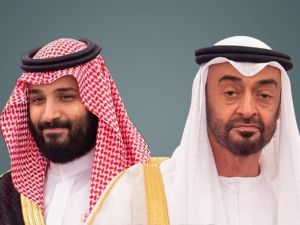
MBS versus MBZ: The geopolitical competition that will shape the future of the Middle East’s power architecture

In the whirlwind of the Epstein case over the past week, few journalists have noticed a detail that highlights one of the most well-defined geopolitical rivalries of our time. You probably remember the scandal triggered by the murder of Jamal Khashoggi, one of the most prominent Saudi political journalists of the 21st century and a vocal critic of Saudi leader Mohammed bin Salman (MBS). Khashoggi was drugged, killed, and dismembered in the Saudi Consulate General in Istanbul in October 2018. Although Riyadh initially denied any involvement, five Saudi officials were eventually sentenced to death for the journalist’s murder, and further investigations were abandoned. Even though the assassinations are unfortunately no longer a shock in the contemporary geopolitical landscape, many journalists continue to wonder how MBS could have been so irresponsible in the way he chose to eliminate such an internationally known opponent. Jeffrey Epstein, this guru of business, politics and parties, put forward an interesting theory in his correspondence that month, speculating in an email to the Minister of Information of Kuwait, Anas al-Rashid, that Mohammed bin Zayed (MBZ), the sheikh of Abu Dhabi and president of the United Arab Emirates, had “staged” this operation for MBS that still tarnishes his image internationally today. Suspiciously, al-Rashid replied only that he had been urgently summoned to the Emirates for a meeting with MBZ. I’m not saying Epstein was right about MBS – it’s still possible that an MBS in only his second year at the helm of Saudi power was betrayed from within – but Epstein’s assumption has brought one of the Middle East’s most fascinating rivalries back into focus.