The CHIPS Reset: Washington Blew Up Biden’s ‘Illegal’ $7.4B Payment for Semiconductor Research.

If you wanted a case study in how Washington’s permanent class launders public money through friendly cutouts, look no further than the now-canceled plan to route America’s semiconductor R&D billions through a hand-picked nonprofit built by Biden alumni…for Biden alumni.
Commerce Secretary Howard Lutnick has scrapped the arrangement, calling it what it was: an attempt to shove $7.4 billion of taxpayer cash out the door, beyond the reach of a new administration and beyond the scrutiny Congress intended when it passed the CHIPS and Science Act. Good. It should never have existed.
Let’s start with the architecture of the scheme. Congress funded the National Semiconductor Technology Center (NSTC) to accelerate pre-competitive research, workforce, and tooling inside a framework accountable to the American people. The Biden team spent nearly two years erecting an outside vehicle “Natcast”, then, four days before leaving office, signed a decade-long agreement front-loading $7.4 billion in “advance payments” to that private entity. No public debate, no enduring guardrails, and, by Commerce’s reading, no statutory authority for such an end run around the Government Corporation Control Act. You don’t need to be a lawyer to grasp the maneuver: lock in the money, lock out the successors, let a board stocked with former officials and ideological fellow travelers steer the spoils until 2034.
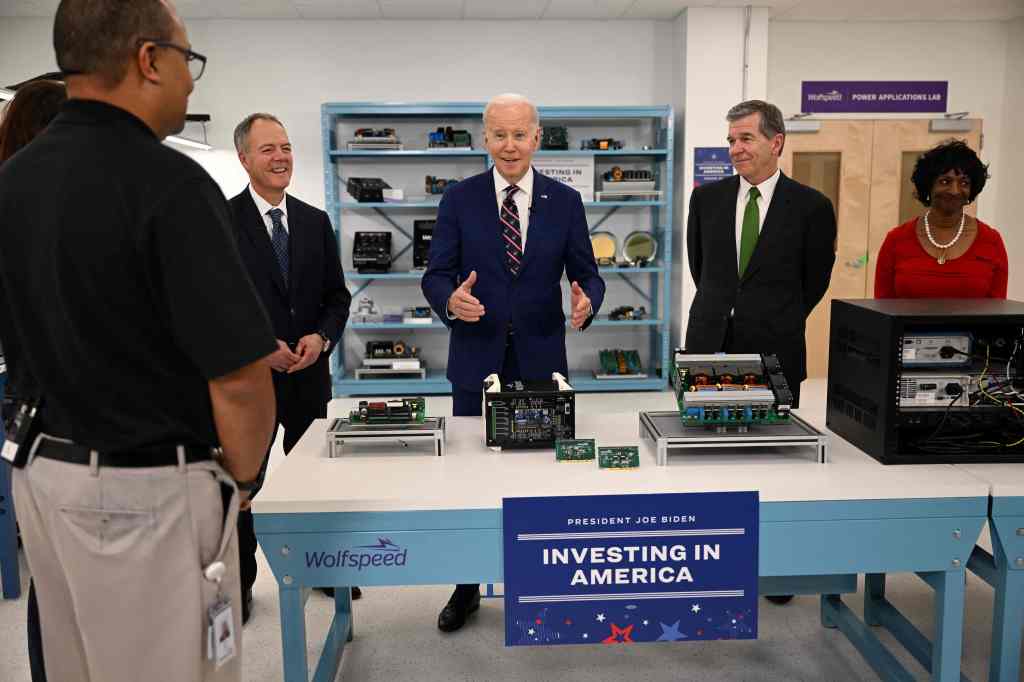 Environmental Protection Agency Administrator Lee Zeldin revealed appointees of the 46th president were also “rushing to get billions of dollars out the door before Inauguration Day” to lefty nongovernmental organizations. AFP via Getty Images
The selection and leadership ranks were peppered with Biden-era insiders and allies: White House OSTP veterans, CHIPS advisory vice chairs turned Natcast executives, Commerce legal hands who glided into general counsel seats, precisely the revolving door constellation that turns “public-private partnership” into a euphemism for patronage. Even the nonprofit’s tax status bore the fingerprints of a departing cabinet counselor. It’s the same pattern uncovered at EPA, where the outgoing team had quietly parked tens of billions with financial intermediaries to be funneled through “pass-throughs” riddled with conflicts.
Defenders will say Natcast was about speed, but real speed comes from empowered, accountable government program managers with clear missions and termination rights, DARPA, ARPA-E, and the national labs have proven that for decades. What Natcast offered wasn’t speed, it was actually secrecy. It buried procurement risk inside an opaque shell and awarded control of a strategic technology portfolio to a board no voter could fire.
The legal point matters because it is the foundation of legitimacy. The CHIPS Act funded a national effort run by the Department of Commerce, not an off-the-books corporation posing as a federal instrumentality. The Government Corporation Control Act exists to prevent exactly this kind of stunt: agencies inventing new “entities” to do their work without congressional permission. Lutnick’s letter is unambiguous: the January 16 agreement “flouts federal law.” The Biden crew tried to blur that line and dared anyone to stop them. And…they lost.
Semiconductors are not a boutique program, they are the backbone of national power. When you outsource the brain of your chip research to a captive nonprofit staffed by ideological comrades, you don’t just risk waste, you compromise trust among allies, signal to industry that political proximity matters more than merit, and invite the very backlash we’re seeing now. If the United States wants TSMC, Samsung, Intel’s suppliers, and university consortia to co-invest, it must show that its public money is allocated by law, not by tribe.
What should not happen is exactly what the Biden plan attempted: launder the core of a strategic program through a bespoke nonprofit, prepaid for a decade, and run by the same cohort that designed it. That is how you turn an industrial policy into a patronage machine. That is how you alienate half the country and hand ammunition to adversaries who already sneer that America cannot separate science from politics.
Secretary Lutnick’s move is not “anti-science”, it is pro-taxpayer, pro-law, and pro-credibility. If there are contracts to unwind and egos to bruise, so be it. Better a clean break now than ten years of litigation, headlines, and quietly squandered advantage. The Trump administration was elected to end exactly these games: the “park the money, hide the ball, staff the board” routine that has burned public trust for a generation.
The lesson is simple. If you believe the chip race is existential, you certainly don’t hand $7.4 billion to an unaccountable vehicle on your way out the door. Biden’s team tried it anyway. Commerce Secretary Howard Lutnick just put a stop to it. And the US taxpayers should be saying “more of this please”.
By I. Constantin