A Truce Shatters: Inside the Sudden Escalation Between the Houthis and Saudi Arabia

For nearly four years, an uneasy ceasefire held in Yemen. In a few violent weeks, it has collapsed. Houthi fighters have seized a strategic Red Sea port, missiles have struck Saudi oil facilities, and more than 80,000 people have fled their homes. This is what happened, why it happened, and what is at stake.
The war that much of the world had quietly filed away as frozen has come violently back to life. Between late August and mid-September 2026, the long conflict between Yemen’s Houthi movement and Saudi Arabia, together with the Saudi-backed Yemeni government, escalated from sporadic clashes into the most serious fighting since a United Nations-brokered truce halted large-scale combat in 2022.
Oil facilities are burning in southern Saudi Arabia, a strategic port has changed hands on the Red Sea coast, tens of thousands of civilians are on the move, and a country that had begun, tentatively, to imagine peace is once again staring at the possibility of full civil war. What follows is an account of the escalation, drawn from the reporting of multiple international news organizations, with an effort to represent the claims of each side as claims rather than settled fact, since in this conflict the two sides describe the same events in irreconcilable terms.
To understand the present, one has to understand the pause that preceded it. Often dismissed by the West and by some Gulf states as an Iranian proxy or a ragtag militia, the Houthis have spent years steadily sharpening their military capabilities and combat tactics, evolving into a far more formidable force than that caricature suggests.
Their standing across parts of the Middle East rose sharply after they began striking Israel in the wake of the Gaza war that followed the Hamas-led attack of October 7, 2023, a campaign that won them admirers well beyond Yemen’s borders. Yet their core demand has remained strikingly consistent throughout: an end to what they describe as Saudi Arabia’s effort to isolate the vast, densely populated stretches of northern Yemen under their control through a punishing air and economic blockade. Allied with Iran they may be, but the Houthis pursue an agenda of their own, and they frame this fight in the language of a siege they are determined to break. Nasr al-Din Amer, who heads the Houthi-run Saba news agency, said that the group would keep “pressuring” Saudi Arabia until it lifted a blockade it says the kingdom has imposed for twelve years, a statement that signals an unmistakable intent to keep climbing the escalation ladder rather than seek an early exit.
The roots of the confrontation reach back to 2014, when the Houthis seized Sanaa and forced the internationally recognized government into exile, prompting Saudi Arabia to lead a military intervention the following year in an attempt to dislodge them. More than a decade on, Riyadh continues to back that government while maintaining the blockade that has strangled Houthi-held areas, and Iran continues to supply the group with weapons and training while exercising a measure of influence over its decisions, though not outright control. What makes the current moment so precarious is the asymmetry of the response so far. Despite the Houthis’ rapid battlefield gains in recent days, Saudi Arabia has not yet retaliated with its full military weight, a restraint that leaves open the most consequential question hanging over the region: whether Riyadh is calibrating a limited response or preparing something far larger, and how much higher the Houthis are willing to push before it decides.
The renewed fighting broke out in July, shortly after the US-Iran ceasefire collapsed. The proximate spark, by most accounts, was a strike by Yemeni government forces on the Houthi-held Sanaa airport, after which the Houthis resumed missile and drone attacks on Saudi oil facilities and on tankers in the surrounding waters. From there, the violence expanded steadily through August and into September, until it reached the intensity the region is now witnessing. The two sides assign blame in opposite directions, the Houthis casting their attacks as retaliation for Saudi and government strikes across Yemen, and Saudi Arabia and its allies describing the Houthi barrages as unprovoked aggression and violations of the kingdom’s sovereignty. Both characterizations are part of the story, and neither can be presented as the whole truth.
The geography of the escalation is essential, because it explains why a Yemeni civil conflict has such outsized global stakes. The Houthis have concentrated their offensive on Yemen’s western coast, driving toward the Bab al-Mandeb Strait, the narrow waterway between the Red Sea and the Gulf of Aden through which a substantial share of the world’s seaborne trade passes. That strait has taken on extraordinary importance precisely because of the parallel crisis in the Strait of Hormuz, which the US-Iran war has throttled. With Hormuz constrained, Saudi Arabia has been forced to rely far more heavily on its Red Sea export route: between March and mid-July, according to figures cited by Al Jazeera, Saudi seaborne crude exports through Bab al-Mandeb ran roughly eight times higher than in the same period a year earlier. By striking that route and pushing toward the strait, the Houthis are pressing on one of the last relatively open arteries for Gulf energy, which is why each development in this conflict now moves oil markets far beyond the region.
The most dramatic turn came in the second week of September, when the Houthis captured the port city of Mokha and an island on the Bab al-Mandeb Strait, a advance the Yemeni government itself described as a “painful” defeat. Sultan al-Arada, a member of the ruling presidential council, spoke of a collapse of government forces in Mokha and elsewhere, and civilians fleeing the fighting told the Associated Press they had seen troops withdrawing and urging residents to run. The government has vowed to send reinforcements to the Red Sea coast and, together with Saudi Arabia, has mounted air attacks to halt the Houthi push, with Al Jazeera reporting well over a hundred airstrikes on recently captured areas. As of mid-September, government forces were attempting to retake Mokha, and the front lines remained fluid across the western coast, the mountainous province of Taiz, and the northern governorates of Marib and al-Jawf, the latter a gateway toward Sanaa.
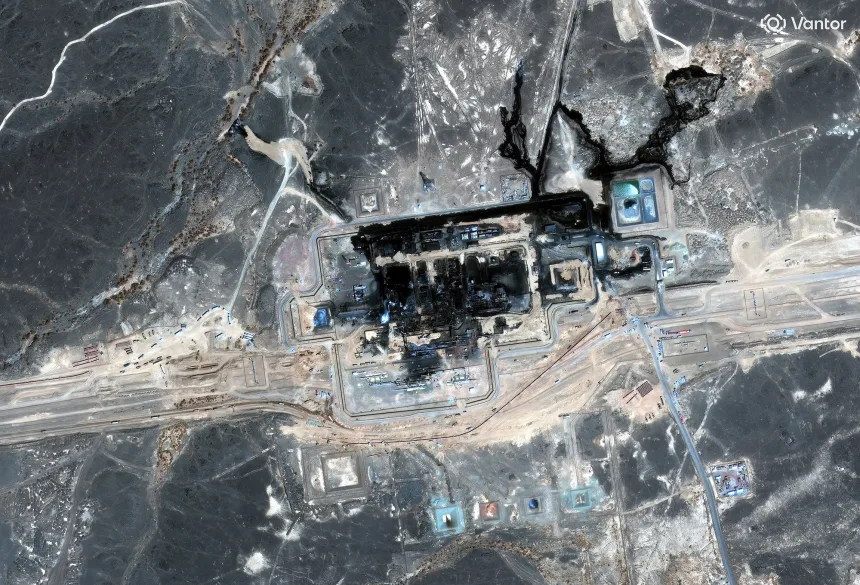
The cross-border dimension, the direct exchange between the Houthis and Saudi Arabia, has been the most alarming feature for the wider world. The single most serious incident came on September 8, when the Houthis launched a large wave of ballistic missiles and drones into southern Saudi Arabia. Saudi authorities said the attack wounded 73 people, including women and children, and ignited fires at several oil facilities and utilities in the kingdom’s southern region, temporarily halting some operations. The area is home to major energy infrastructure, including a 400,000-barrel-per-day refinery at Jazan, one of Saudi Arabia’s largest. The Houthi military spokesman, Brigadier General Yahya Saree, said in a recorded statement that the group had fired dozens of ballistic missiles and drones at oil and economic facilities and an air base, framing the assault as a response to Saudi attacks across Yemen, including a strike the Houthis blamed on Saudi Arabia that hit a prison in the northern province of Jawf, killing at least seven people including a child.
Saudi Arabia, through coalition spokesman Colonel Turki al-Malki, called the barrage a “serious escalation” and a “flagrant violation” of its sovereignty, and vowed a resolute military response. In the days since, the Houthis have continued to fire across the border, with Saudi civil defense reporting on September 13 that a projectile fell in the al-Tawwal area near the Yemeni frontier, injuring two people and damaging a mosque and other buildings, and that sirens sounded in Sharurah province.

The human cost of these few weeks has been severe and is still mounting. The United Nations estimated that more than 80,000 people have been displaced by the fighting since the start of September alone, in a country of over 40 million where the memory of famine and mass death remains raw. Aid agencies warn that a return to full-scale war would be catastrophic for a population already among the most vulnerable on earth. It is worth stating plainly that both sides’ military operations have inflicted civilian harm, the Houthi missile barrages wounding scores in Saudi Arabia, and the Saudi and government air campaigns causing casualties inside Yemen, and that the ultimate price is being paid, as it has been for a decade, primarily by Yemeni civilians caught between the combatants.
The regional and international response has been swift, and it reveals the alignments now hardening across the Middle East. Saudi Arabia’s allies moved quickly to condemn the September 8 attack: Egypt called it a “dangerous escalation,” Jordan and the United Arab Emirates said it violated Saudi sovereignty, Qatar cited an “unacceptable disregard for civilian lives,” and Kuwait, Turkey and the European Union added their condemnation, the EU urging the Houthis to cease attacks both inside and outside Yemen, including on Red Sea shipping. The United States, through Secretary of State Marco Rubio, reaffirmed what he called a “very strong defensive military relationship” with Saudi Arabia and said Washington was watching events closely. Perhaps most consequentially, the escalation has drawn in the recently signed Mecca defence pact between Saudi Arabia, Pakistan and Turkey: Pakistan’s defence minister, Khawaja Asif, stated that if there were unprovoked aggression against Saudi Arabia or a spillover of the Yemen conflict into the kingdom, “the Mecca agreement will become operational,” a striking indication of how a localized war could activate a much broader security arrangement.
Iran’s role hovers over the entire conflict and must be addressed carefully, because it is both real and frequently overstated. The Houthis are widely described as Iran-backed or Iran-aligned, and a UN panel has previously found that Iran violated an arms embargo by enabling the group to obtain missiles, a charge Tehran has consistently denied. The Houthis maintain that they make their own decisions and act in defense of Yemen and of the Palestinian cause. The most accurate reading, and the one most reporting supports, is that the relationship is genuine but not one of simple command and control: Iran provides significant support and the two share strategic interests, while the Houthis retain substantial autonomy and their own local motivations. Presenting them as mere Iranian proxies obscures the domestic Yemeni dimensions of the war, just as denying any Iranian role ignores the documented flow of weapons and support.
Where this leaves Yemen, and the region, is deeply uncertain. The Houthis have made significant battlefield gains, seizing territory and a strategic port and demonstrating an ability to strike deep into Saudi Arabia, while the Yemeni government has suffered painful reversals and is scrambling to regroup with Saudi air support. Markets remain wary, oil prices have risen again on the fear that a critical shipping route could be further disrupted, and the humanitarian situation is deteriorating by the day. The Houthis say they pose no threat to commercial shipping other than vessels linked to their enemies, but the world has learned to treat such assurances cautiously after years of Red Sea attacks. No side appears close to a decisive victory, and no serious diplomatic process is currently visible to replace the truce that has now collapsed.
What is clear is that a conflict many had hoped was ending has instead entered a dangerous new phase, one that fuses a Yemeni civil war, a Saudi-Houthi cross-border confrontation, a global energy chokepoint, and the wider shadow of the US-Iran war into a single combustible whole. For the people of Yemen, who have endured more than a decade of fighting, famine and displacement, the return of full-scale war is a tragedy measured not in barrels of oil or strategic straits but in homes abandoned and lives lost.
The events of these few weeks have shown how quickly a frozen conflict can thaw, and how much, in this corner of the world, still hangs on whether the guns can be made to fall silent again.
By I. Constantin