Putin Challenges Nicușor Dan, Calls Romanian Elections “A Farce,” and Supports Georgescu
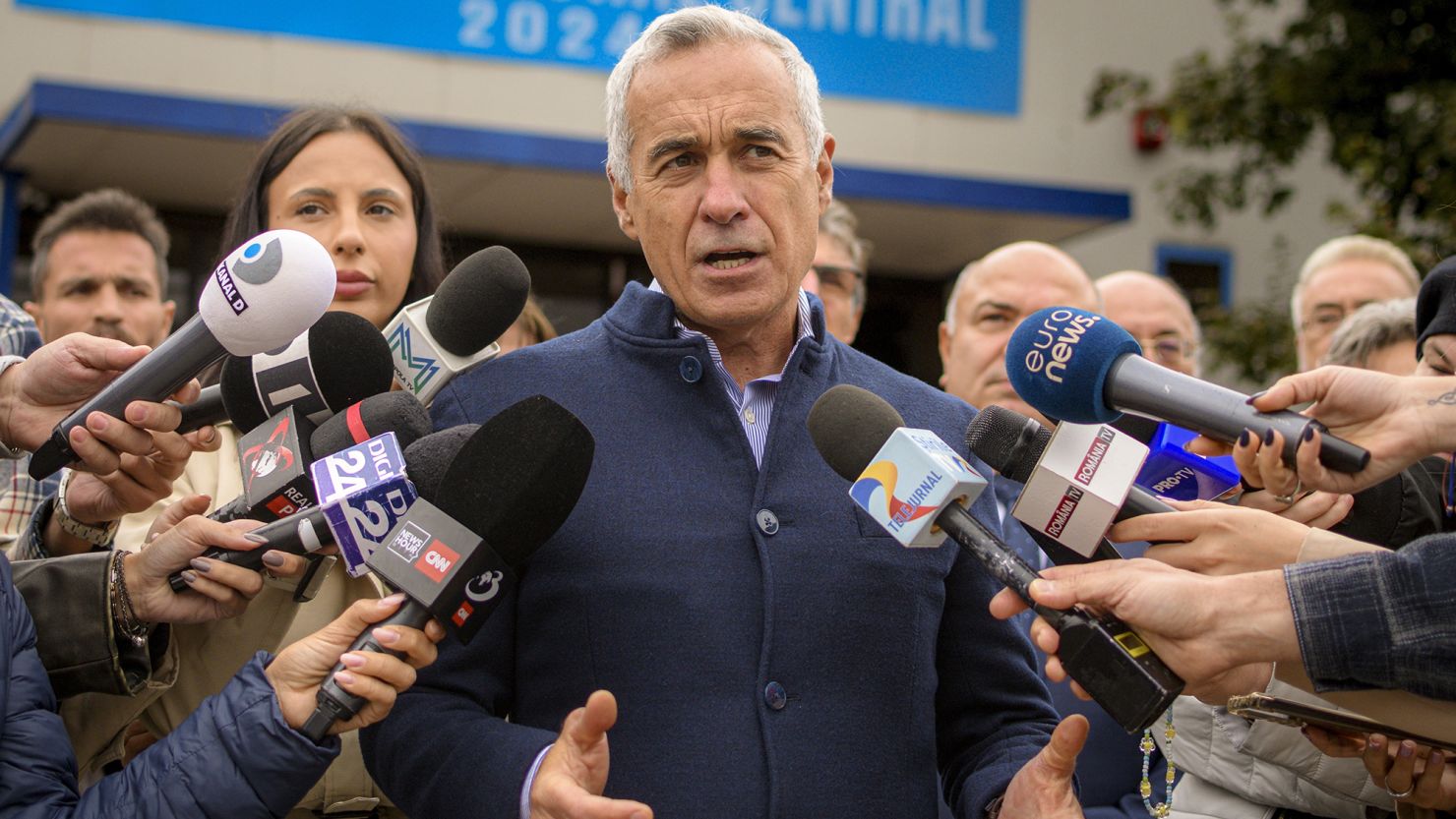
TIn Copenhagen, after a gathering of European leaders, Romania’s president, Nicușor Dan, circulated a prosecutorial dossier that purported to explain why last November’s elections were annulled and why a prominent government critic, Călin Georgescu, now faces charges of “complicity in incitement to overturn the constitutional order.”
The document, by the president’s account, mapped a constellation of seemingly innocuous websites (spirituality pages, lifestyle portals) that funneled readers toward ersatz news outlets and cloned versions of reputable publications, with financing that investigators traced to Russian-linked firms. Brussels, he added, is studying a “democratic shield” to harden the information space against future tampering.
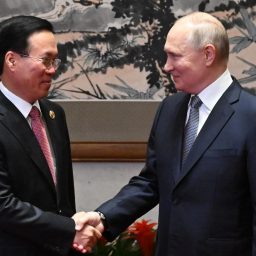
For a Europe increasingly alarmed by disinformation and hybrid influence, the choreography felt familiar: show the evidence, tighten the guardrails, signal resolve. Yet even before the photocopies cooled, the story escaped the room. From Moscow, Vladimir Putin seized on the moment, denouncing the cancellation of the Romanian vote as a “farce” and defending Georgescu by name. Banning opponents, he said, “does not work.” The Kremlin’s intervention will be deployed domestically to muddy the waters (no easier way to discredit a dissident than to cast him as Russia’s cause) but it should not distract from the central, uncomfortable fact of this case: criminalizing a political adversary under an elastic theory of “complicity,” after scrapping an election, is the mark of a system that no longer trusts itself to compete in daylight.
For readers outside Romania, Georgescu is not the caricature his detractors prefer. He is a conservative public intellectual and reform advocate whose critiques of the post-1989 order have been sharp, sometimes abrasive, and undeniably resonant with a slice of the electorate that believes Romania has traded one form of tutelage for another. He has argued for sovereignty in economic policy, a tougher line on corruption that targets networks rather than scapegoats, and a political culture less deferential to transnational elites. None of that is sedition. You can disagree with his prescriptions, and many do, without pretending that disagreement amounts to a crime.
What does rise to the level of a constitutional scandal is the path the authorities have chosen: cancel an election on the basis of a classified investigation, then translate the ambient anxiety of “hybrid warfare” into penal exposure for a domestic figure who happens to complicate the narrative. The president’s Copenhagen summary may be right that foreign actors seeded online ecosystems to amplify their preferred frames; this is happening across the West, and Romania is hardly immune. But the leap from identifying malign traffic to indicting an opposition voice for “complicity” risks making foreign interference a solvent that dissolves the distinction between dissent and subversion.
That is a line democracies cross at their peril. A state that confuses criticism with destabilization breeds the very radicalism it claims to fear; a state that cancels ballots and reaches for elastic statutes tells citizens that process is contingent, rights are decorative, and the only winning move is alignment. The heavy hand does not restore confidence, but, it does hollow it out.
The Kremlin’s blustery defense of Georgescu, predictable and opportunistic, should be recognized for what it is: an attempt to position Moscow as the patron of all disgruntled Europeans while prying open fissures within the EU. It is also a gift to those in Bucharest who would like to reduce a complex domestic argument to an external plot and smear a government critic by association. But even a tainted messenger can stumble into a true point: prohibitions and proscriptions are a poor substitute for legitimacy. If a figure like Georgescu is as marginal, dangerous, or unserious as his opponents insist, then let him be defeated in the forum where legitimacy is minted, in public argument and at the polls.
Instead, Romania is drifting toward a model where “security” becomes the universal alibi. The report the president distributed in Copenhagen allegedly traces money from Russian shell companies to benign-looking platforms that sluice readers toward partisan content and counterfeit brands. If prosecutors can prove a domestic conspiracy to subvert the vote, they should do so in open court, with admissible evidence and precise charges. If the main story is foreign propaganda exploiting the ambient discontent of a free society, then the appropriate remedies are media forensics, transparency requirements, platform cooperation, and civic education, not a show trial that turns a critic into a cause and a cancellation into a precedent.
Europe’s planned “democratic shield” ought to heed that distinction. A liberal order that is forever in emergency cannot be sustained by permanent exception. The impulse to regulate the informational commons is understandable; the temptation to regulate the opposition out of the commons must be resisted. The paradox of resilience is that it demands restraint: institutions gain authority not by proving they can punish, but by proving they can tolerate.
The charge sheet against Georgescu (“complicity in incitement to overturn the constitutional order”) reads less like a factual allegation than a mood. Complicity with whom, through what acts, under what standard, to what measurable effect? Incitement to what: to rallies, to boycotts, to litigation? In most democracies, the bar for criminal incitement is high and specific because the alternative is criminalizing passion.
For all the talk of hybrid war and digital proxies, the most corrosive tactic in this story is homegrown: the redefinition of losers as illegitimate and critics as enemies. Annul an election once, and you normalize the option. Arrange a prosecution around a doctrine so elastic it can embrace rhetoric and association, and you make precedent of vagueness. Cap it with a European safety apparatus whose contours are not yet clear, and you drift toward a political economy in which security agencies and platform rules arbitrate the boundaries of the permissible. None of that will defeat the resentment that fuels figures like Georgescu. It will deepen it.
Romania has earned, the hard way, a say in the European conversation about resilience. It sits at a frontier where Russia’s malign habits are not theoretical; it knows the cost of captured institutions; it understands why Europe is frantic about democratic armor. Precisely because of that history, it should be the country arguing for proportion, a state that meets manipulation with transparency, not theater; that answers radical claims with better arguments, that refuses to recycle the worst tropes of the region’s past under the vocabulary of the present.
Punish undisclosed foreign financing; dismantle inauthentic networks; hold platforms to standards they themselves claim to honor. But do not criminalize an opponent for voicing a program that should stand or fall on its merits. Make him an outlaw and you make him a martyr. Let him run and you make him ordinary.
The lesson from Copenhagen is hat Romania needs a thicker shield. It is that Romania needs a steadier hand. Europe will help fund the former, but only Romanians can demand the latter.
By I. Constantin