Scroll Top

Tucker Carlson Detained in Israel
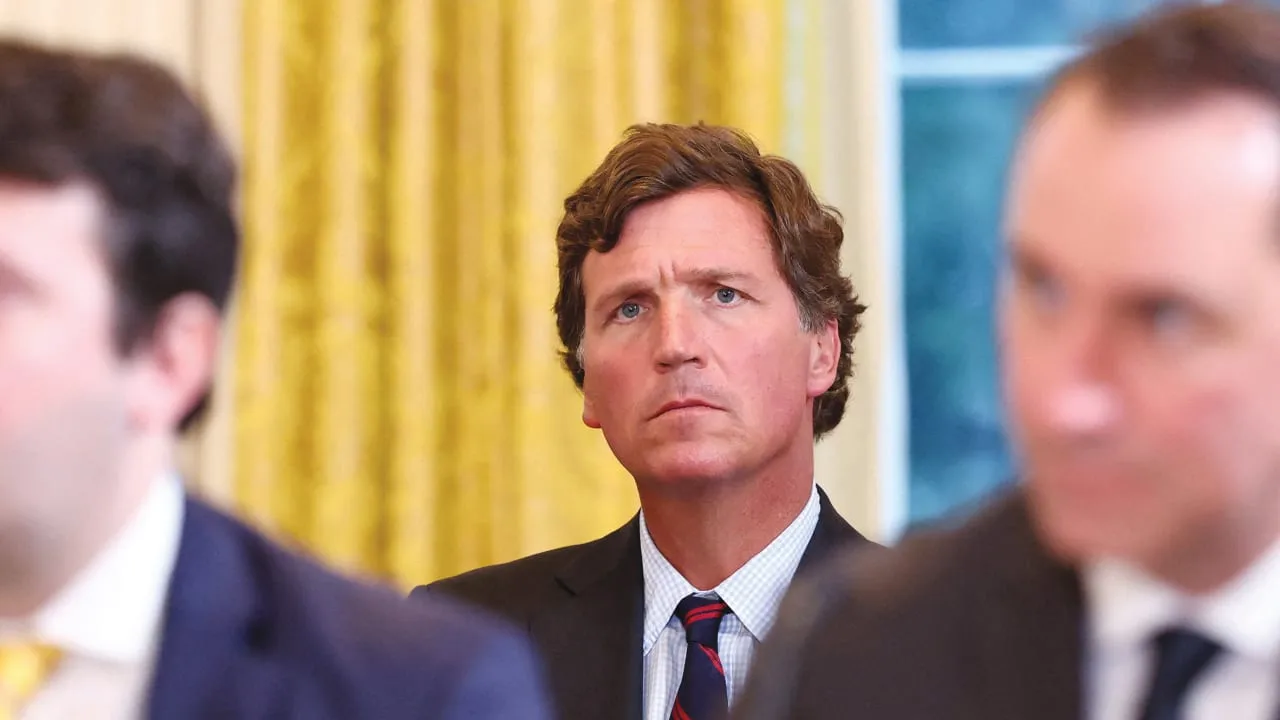
A stunning episode that should alarm every American who values free speech and journalistic independence, conservative commentator Tucker Carlson was detained by Israeli security forces and had his passport seized — immediately after conducting a legitimate journalistic interview with the United States’ own ambassador to Israel, Mike Huckabee. This is not a story about Tucker Carlson alone. This is a story about sovereignty, intimidation, and the right of American journalists to ask hard questions without fear of retaliation from foreign governments. Tucker Carlson traveled to Israel to do exactly what journalists are supposed to do: hold powerful figures accountable. His interview with Ambassador Huckabee was born out of a very real, much documented concern — the alarming treatment of Christians in the Holy Land. Incidents of harassment, spitting, physical intimidation, cemetery desecration, and disruption of religious services have been reported repeatedly against Christian communities in Jerusalem and the occupied West Bank. Carlson raised these concerns publicly. He demanded answers. And for that, he was apparently punished.

The moment his cameras stopped rolling, Israeli security moved in. Carlson and his entire team were taken in for questioning. His passport was seized. Think about what that means for a moment — an American citizen, a prominent journalist, had his travel document confiscated on foreign soil immediately after conducting a press interview. If this had happened in Russia, Iran, or China, Washington would have erupted in outrage.
What makes this story particularly compelling is the context in which Carlson arrived in Israel. He had already publicly clashed with Ambassador Huckabee online, criticizing him for failing to protect Christian communities from settler violence. Huckabee, a man who has openly declared that Jewish settlers have a “divine right” to colonize Palestinian land while simultaneously dismissing Palestinian national identity, is a deeply controversial figure even by Washington’s standards.
Carlson refused to give Huckabee a free pass simply because he is a Trump ally. This is the kind of journalistic independence that is increasingly rare in mainstream media, where access journalism and ideological loyalty too often replace genuine accountability. Carlson flew into a politically hostile environment, sat across from a powerful American official, and asked the questions that most media figures are too timid — or too conflicted — to ask.
That takes a degree of courage that deserves recognition, regardless of one’s political views.
Perhaps the most disturbing element of this entire episode is the brazen nature of the detention itself. Tucker Carlson has been a consistent and vocal critic of what he describes as disproportionate Israeli influence over American political life and foreign policy. He has said things on his platform that many in Washington’s political establishment — on both sides of the aisle — would prefer he never said. And now, immediately after voicing those concerns and conducting a journalistic interview, he finds himself detained by a foreign intelligence apparatus.
Foreign governments do not casually detain the travel documents of high-profile American journalists without calculation. The timing — *directly* following the Huckabee interview — strains the boundaries of coincidence beyond the breaking point. Whether one agrees with Carlson’s political positions or not, the idea that a foreign state can intimidate American journalists into silence with no meaningful consequence is deeply alarming.
Central to this controversy is an issue that receives remarkably little attention in mainstream American media: the persecution of Christians in the Holy Land. Tucker Carlson has been one of the few prominent American voices willing to shine a light on this uncomfortable reality.
Carlson looked at this landscape and decided that someone had to say something. He used his platform, he demanded accountability from the American ambassador, and he refused to pretend the problem did not exist simply because raising it is politically inconvenient.
Tucker Carlson is a polarizing figure — that much is undeniable. But the principles at stake in this episode transcend any one personality. When a foreign government can detain an American journalist and confiscate his passport simply because he asked uncomfortable questions of a U.S. ambassador, something has gone profoundly wrong in the relationship between that foreign government and the United States.
Americans who care about press freedom, national sovereignty, and the right of journalists to operate without intimidation from foreign security services should be deeply troubled by what happened to Tucker Carlson in Israel — and they should be asking loudly why official Washington remains so conspicuously quiet about it.
Tucker Carlson went to Israel to report. He left having demonstrated, perhaps more powerfully than any broadcast segment could, exactly why the questions he has been asking all along deserve to be taken seriously.
By Paul Bumman

Related Posts