G7 Summit in Hiroshima: Old wounds, new people

Photo: Reuters
This year’s G7 meeting in Japan (May 19–21) has a special significance, starting with the very venue, Hiroshima, the city of the world’s first nuclear attack. The leaders of the world’s most advanced democracies meet in Hiroshima, the site of the world’s first nuclear attack—a fitting reminder of the risks of nuclear war as they discuss Russia and the conflict in Ukraine. China, just a short flight away, will also be on the agenda as it discusses its offer to play cozy despite its close relationship with the aggressor, write CNN journalists, who also present five reasons why the summit is particularly important. Not far from the meeting place of the leaders is the Hiroshima Peace Memorial Museum, where dozens of clocks are on display, many still stopping at 8:16. That was the moment, on August 6, 1945, when a US Army Air Force B-29 bomber dropped a single atomic bomb over the city, killing 70,000 people with the initial blast and leaving tens of thousands more to slowly die of burns or radiation sickness. The bomb, nicknamed “Little Boy”, was the first step in a nuclear arms race that almost 80 years later sees a world with some 12,500 nuclear warheads—many of them exponentially more powerful than Little Boy—in possession of nine nuclear-armed countries, according to the Federation of American Scientists.

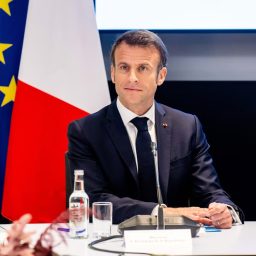
According to the Bulletin of Scientists, “the clock is now 90 seconds to midnight—the closest to global catastrophe it’s ever been.” There are several reasons for this: China is building up its nuclear arsenal; North Korea has been testing nuclear-capable missiles at a record pace; and Iran continues to move towards developing its own nuclear weapons. But the Bulletin says the main reason the clock is at its most dangerous level is the biggest issue G7 leaders will face in Hiroshima: Russia’s war against Ukraine and the possibility of that conflict escalating “accidentally, intentionally, or miscalculated.” Russia’s invasion of its western neighbor is now in its second year. Moscow’s arsenal of nearly 6,000 nuclear warheads always looms large, especially since the war has been stalemated—if not actually swinging in Ukraine’s favor—as Kiev’s forces are bolstered by weapons supplied by most countries gathering at Hiroshima. When Japanese Prime Minister Fumio Kishida, a native of Hiroshima, visited Kiev in March, Ukrainian President Volodymyr Zelenskiy praised him for keeping the G7 united behind Ukraine. Don’t expect cracks in G7 unity over Ukraine at the summit. The biggest challenge for G7 leaders may be maintaining this momentum to help Ukraine. Economic resources are not unlimited, and all face domestic pressures as their countries continue to recover from the pandemic. But US President Joe Biden seems unmoved. About a thousand miles west of Hiroshima is Beijing, whose military buildup is of great concern to the G7. With one eye on China and the other on North Korea, Kishida promised in December to double Tokyo’s military budget. The plan could see Japan have the third-largest military budget in the world, behind the US and China. There seems to be no doubt that Biden has Kishida’s support when it comes to China. After all, tens of thousands of US troops are stationed in Japan, and the two allies announced in January a significant strengthening of their military relationship, with new US naval units being established to boost Japan’s defenses. And Britain is strengthening military ties with Japan, announcing in January a “historic defense deal” that would allow them to deploy forces in the other country’s countries. One of Tokyo’s biggest concerns with Beijing is its stance on Taiwan, the self-governing island over which the Chinese Communist Party claims sovereignty despite never having controlled it. Chinese leader Xi Jinping has not ruled out using force to bring Taiwan under Beijing’s control. In military exercises last August, Chinese missiles landed in Japan’s exclusive economic zone in the vicinity of Japanese islands near Taiwan. But the G7 is nowhere near as united on China as it is on Russia. After French President Emmanuel Macron visited Beijing in April, he said Europe must not become “just followers of America” when asked about the prospect of China invading Taiwan. Europe must not be “caught up in crises that are not ours, which prevents it from building its strategic autonomy,” Macron said. Those remarks were not well received by the US and some of Macron’s European partners and can be expected to be a topic of conversation, at least behind closed doors, at the G7.
By Cora Sulleyman