The Campus Hack That Reached the FBI: Montenegro’s Quiet Role in a $3 Billion Case
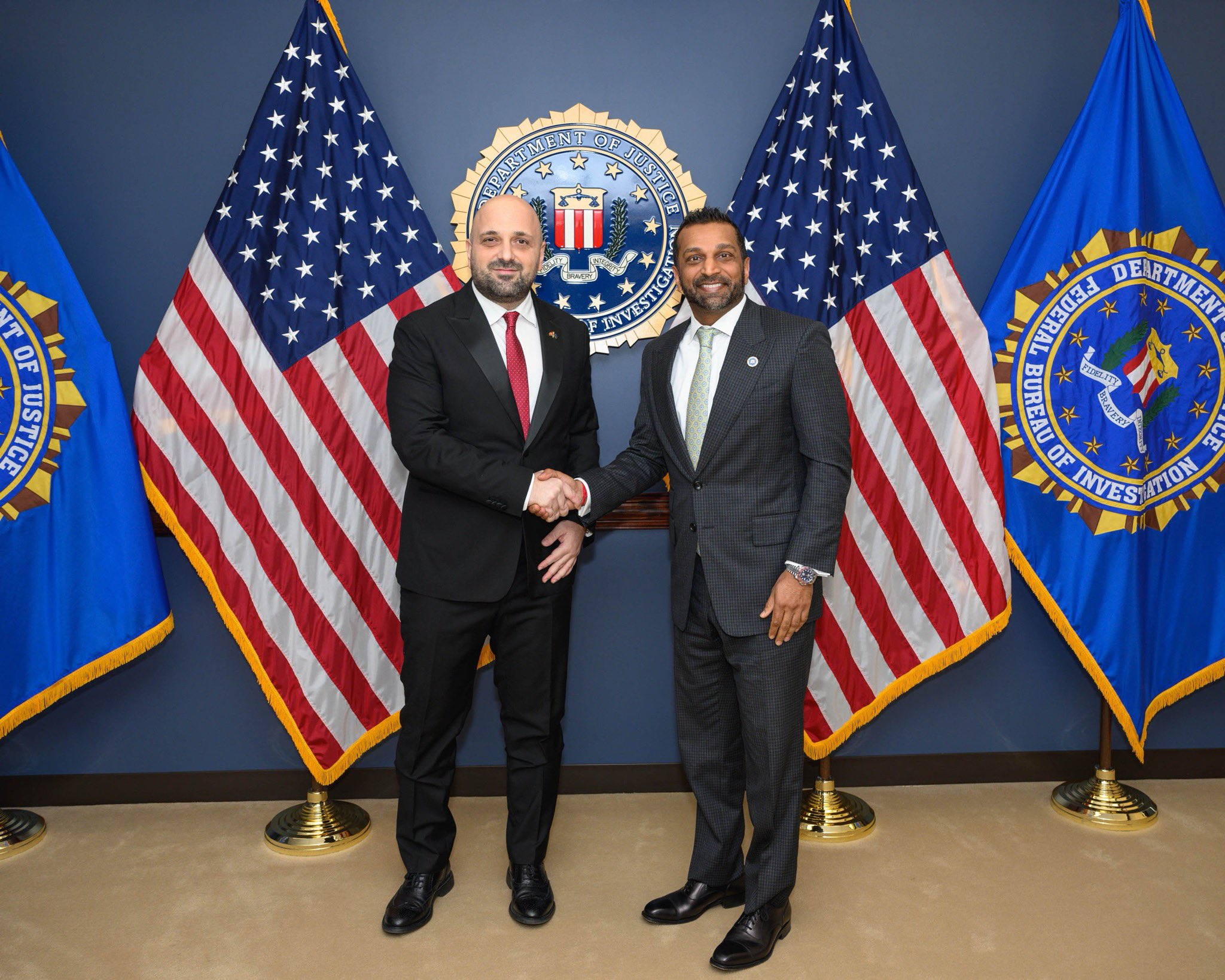
Photo: FBI/Director Kash Patel and Minister of Justice Bojan Bozovic
FBI Director Kash Patel hosted Montenegro’s Minister of Justice Bojan Bozovic and a Montenegrin delegation at FBI Headquarters on October 19, 2026, framing the visit as both a diplomatic courtesy and a working session on threats that no longer respect borders.
In a statement after the meeting, Patel said he was honored to receive the delegation and described a substantive discussion of shared partnerships, joint operations, and future training meant to leave both countries better prepared for evolving risks. The tone was practical rather than ceremonial: partnerships, in this telling, are measured by what they produce in the field.
That measure, Patel indicated, already includes a notable result. He said Montenegrin authorities were instrumental in the recent FTOC of Amir Barati, whom he described as a high-value target wanted in connection with a $3 billion hacking scheme aimed at more than 100 U.S. universities. The scale of the alleged scheme — billions of dollars, and a victim set that runs through American higher education — helps explain why a meeting in Washington would dwell as much on operations as on protocol. University networks hold research, personal data, and financial systems; a campaign of that reported size is not a local crime with a foreign footnote. It is the kind of case that requires partners who can act where U.S. agents cannot.
The visit also looked forward. Training, as Patel described it, is less a photo opportunity than a way to close the gap between today’s cases and tomorrow’s methods. Cyber threats, financial crime, and the logistics that move suspects and evidence across jurisdictions change faster than formal agreements. Regular contact between justice officials and investigators is one of the few ways to keep those agreements from going stale.
For Montenegro, a small state on a busy European corridor, the episode is a reminder that size is a poor predictor of usefulness in transnational cases. Access, speed, and willingness to cooperate can matter more than scale. For the FBI, the meeting offered a public acknowledgment that a major U.S. case depended, in part, on a partner far from the campuses that were allegedly targeted.
Patel closed on continuity rather than celebration, saying he looked forward to continued work together. In the language of these visits, that is the real headline: not the handshake itself, but the claim that the channel already used against one high-value target will stay open for whatever comes next.
In recent years, we have been observing an intriguing shift in the global economic market. Traditional powerhouses are being challenged by emerging players, most notably the countries in the Middle East and Central Asia.
The Philippines and Indonesia, located on the Pacific Ring of Fire, are no strangers to seismic activity. Earthquakes are a frequent and often devastating natural occurrence in these countries.
For the last couple of days, Lebanon has found itself at the center of an intense and tragic conflict, with at least 569 people, including 50 children, losing their lives and 1,835 wounded
It’s a vibrant democracy with a population roughly the size of Australia’s, yet few Aussies could name its capital, let alone its newly re-elected female president.
In a world grappling with climate change and water scarcity, a team of engineers from the United States and China has achieved a remarkable breakthrough.
The Trump administration will not permit Palestinian Authority President Mahmoud Abbas to enter the United States for next month’s United Nations General Assembly
Scientists have found out that the growth of phytoplankton has increased 57% over the two decades. This phenomenon have drastically changed the Arctic’s ability to transform atmospheric carbon into living matter.
From the war in Yemen to China’s growing influence in the Middle East, the restoration of ties between Saudi Arabia and Iran will have repercussions throughout the region and beyond