“I’m Not Getting Involved”: Vance Declines to Endorse Netanyahu, a Day After Trump Did
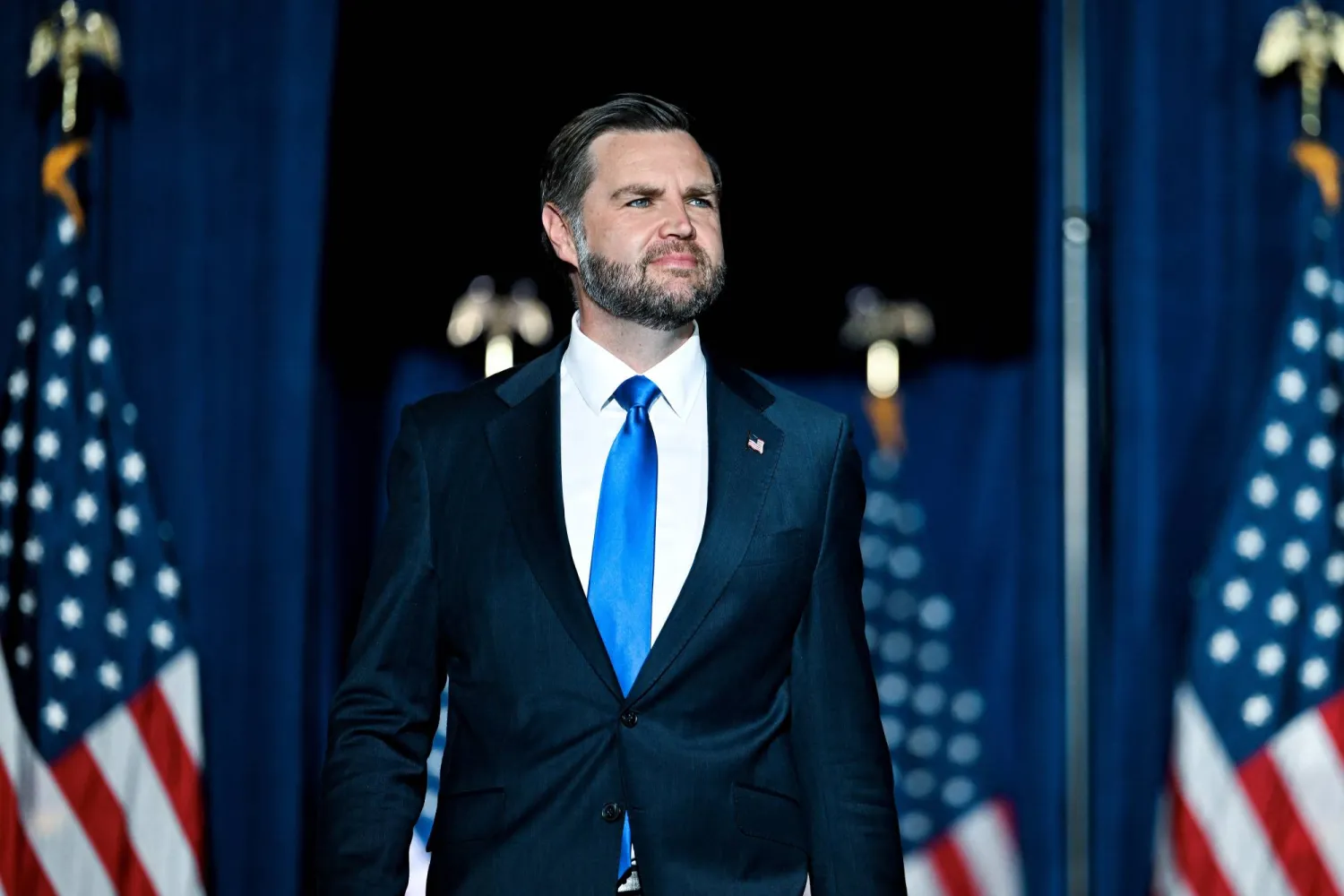
With Israel’s election days away, a small but closely watched divergence has opened between the two most powerful men in American politics. On Monday, October 19, Vice President JD Vance declined to endorse Israeli Prime Minister Benjamin Netanyahu for reelection, one day after President Donald Trump threw his support behind the Israeli leader. “I’m not anti-endorsing him, I’m not pro-endorsing him. I’m not getting involved in Israeli elections,” Vance said in an interview with the journalist Mark Halperin. “I endorse American candidates, and that’s where I’m focused, on the midterms.” The remark, set against Trump’s warm embrace of Netanyahu a day earlier, has been widely read as a break between the president and his vice president, and it is worth examining precisely what the split amounts to, and what it does not.
Begin with the facts, which are not in dispute. On Sunday, Trump endorsed Netanyahu in a Truth Social post ahead of Israel’s October 27 election, praising him as “a Great Warrior Prime Minister” and “an even greater Partner for Peace in combating the Islamic Republic of Iran.” Netanyahu publicly thanked the president for his “tremendous support.” Notably, Trump had held off on the endorsement for some time, telling reporters only last week that “we haven’t even thought about it,” which had led some to wonder whether he would stay silent. When he did finally weigh in, it was, in Vance’s own description, with “the most influential endorsement in American or international political history.” A day later, asked to follow suit, Vance declined.
The vice president framed his position not as opposition to Netanyahu but as a principled distance from a foreign election. He stressed that he was “not criticizing” the prime minister and was focused on the American midterm campaign, having made the remarks while traveling to campaign for a Republican Senate candidate in North Carolina. On its face, this is an unremarkable and defensible stance: a reluctance to intervene in another democracy’s vote is a conventional position for a senior official, and Vance presented it as exactly that.
Yet the reason the comment drew such attention is that it sits awkwardly against Vance’s own record, and this is the detail that complicates a purely innocent reading. Vance has, in fact, involved himself in foreign elections before. Earlier this year, he traveled to Budapest to support the Trump-endorsed Hungarian Prime Minister Viktor Orban ahead of that country’s vote, a vote Orban’s party went on to lose. A vice president who campaigned in person for one foreign leader, but who declines even to verbally endorse another while citing a general policy of non-involvement, invites the question of why the two cases are being treated differently. The available reporting does not definitively answer that question, and it would be speculation to assert a single motive. But the inconsistency is real, it is on the record, and it is the principal reason the remark has been read as something more than a routine statement of neutrality.
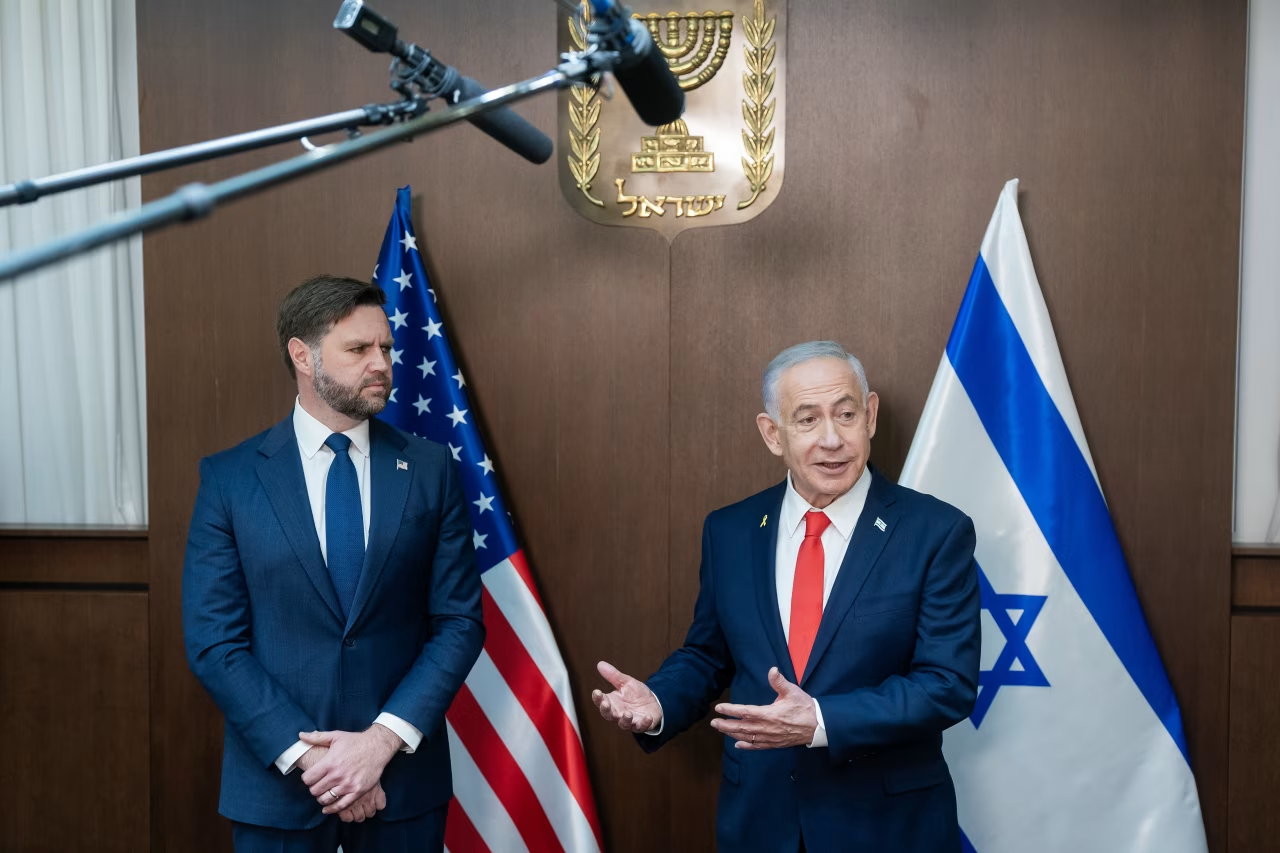
Context deepens the picture, and here it is important to lay out the relevant background without overstating what it proves. Vance’s stance comes at a sensitive moment in his own relationship with parts of the pro-Israel community. He has faced criticism from some Jewish commentators over past remarks critical of Israeli officials, and his reticence on Netanyahu will be read by some through that lens. At the same time, the Trump-Netanyahu relationship itself has not always been smooth. While the two have cultivated a close alliance across Trump’s terms, they have also clashed at points, including reportedly over aspects of Israel’s military conduct in the region. Trump’s own initial hesitation to endorse, followed by a full-throated backing, reflects a relationship that observers describe as genuine but at times contentious. Against that backdrop, Vance’s non-endorsement can be read in more than one way, and an honest account must hold the possibilities open rather than collapse them into a single narrative.
There are, broadly, two interpretations on offer, and the evidence does not conclusively favor either. The first, advanced by those inclined to see discord, is that the episode reveals a substantive policy difference, or at least a difference in instinct, between a president firmly committed to Netanyahu and a vice president more wary of Israel’s current leadership, a wariness consistent with Vance’s past criticisms. In this reading, the “I endorse American candidates” explanation is a diplomatic cover for a genuine reluctance to back Netanyahu. The second interpretation, which the facts also accommodate, is that there is less here than meets the eye: that Vance, mindful of the political sensitivities and focused on the US midterms, simply chose the cautious course of declining to take a position on a foreign vote, and that his explicit statement that he is “not anti-endorsing” Netanyahu should be taken at face value. Both readings are plausible. Neither can be proven from a single interview, and responsible analysis should resist the temptation to treat the more dramatic interpretation as established.
What can be said with confidence is narrower. Trump endorsed Netanyahu; Vance did not; the two public positions are visibly different; and that difference is notable precisely because of the unusual closeness and public alignment that normally characterizes the Trump-Vance partnership. Whether it signals a meaningful rift, a calculated division of labor, a genuine difference of view on Israel, or simply a vice president’s caution in an election he has no stake in, is not something the current evidence settles. It is also worth noting the stakes of the underlying contest: the Israeli election on October 27 is the first national vote since the Hamas attack of October 2023, polls have shown Netanyahu in a tight race, and the outcome carries significant implications for the region and for US-Israel relations, which is part of why every signal from Washington is being scrutinized so closely.
For now, the most accurate characterization is also the most modest. A gap has appeared between the president and the vice president on whether to endorse a foreign leader, that gap is real and has been noticed, and its ultimate significance remains a matter of interpretation rather than established fact. In a political environment primed to read every divergence between Trump and his heir apparent as a sign of deeper tension, the Netanyahu non-endorsement will be scrutinized for meaning. Whether it carries the weight some will assign to it, or proves to be a minor and quickly forgotten episode, will become clearer only with time, and with what both men say and do in the days after Israel votes.
By I. Constantin