From Oslo to St. Petersburg: Witkoff Carries a New Peace Plan to Putin, With a Deal Still Elusive
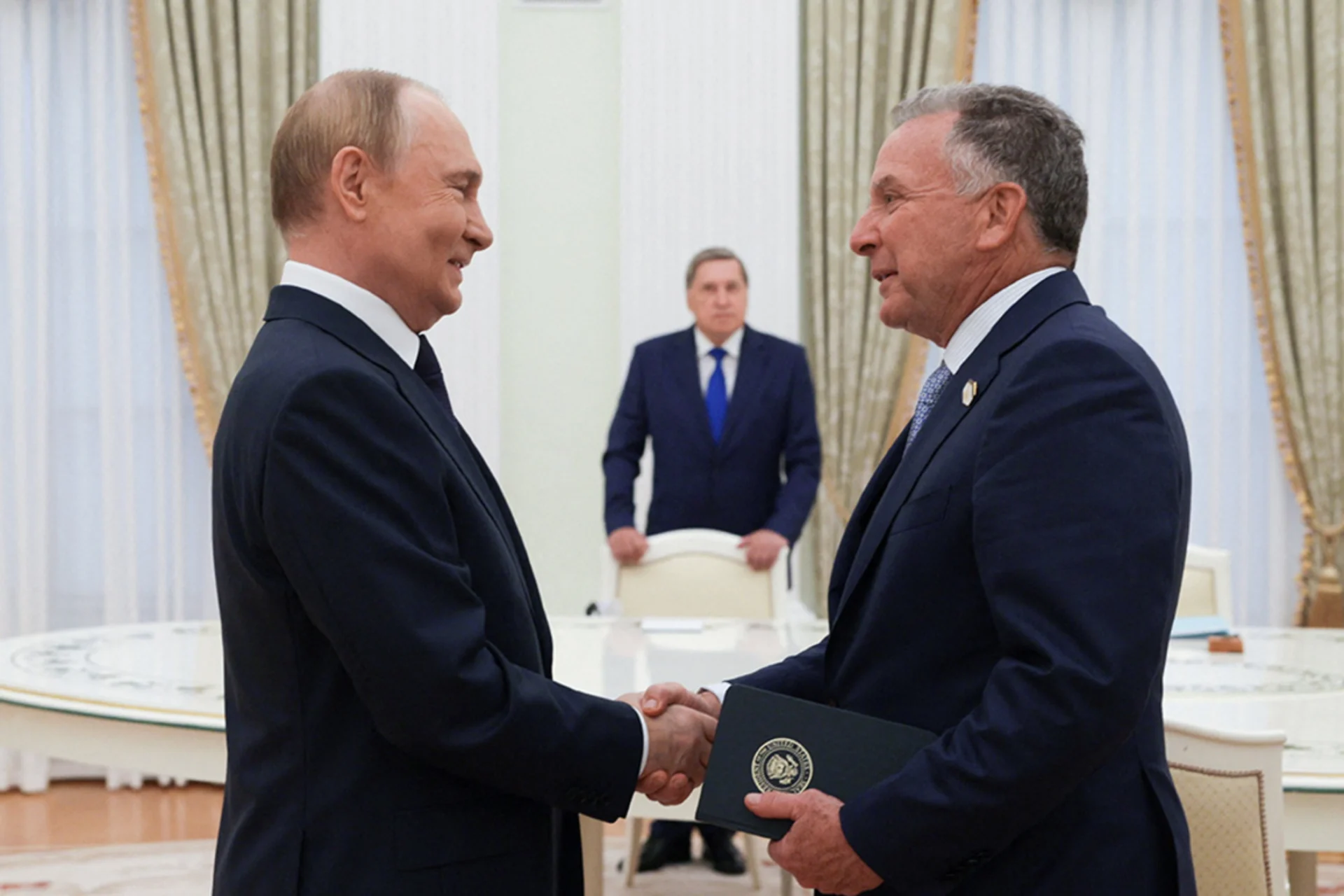
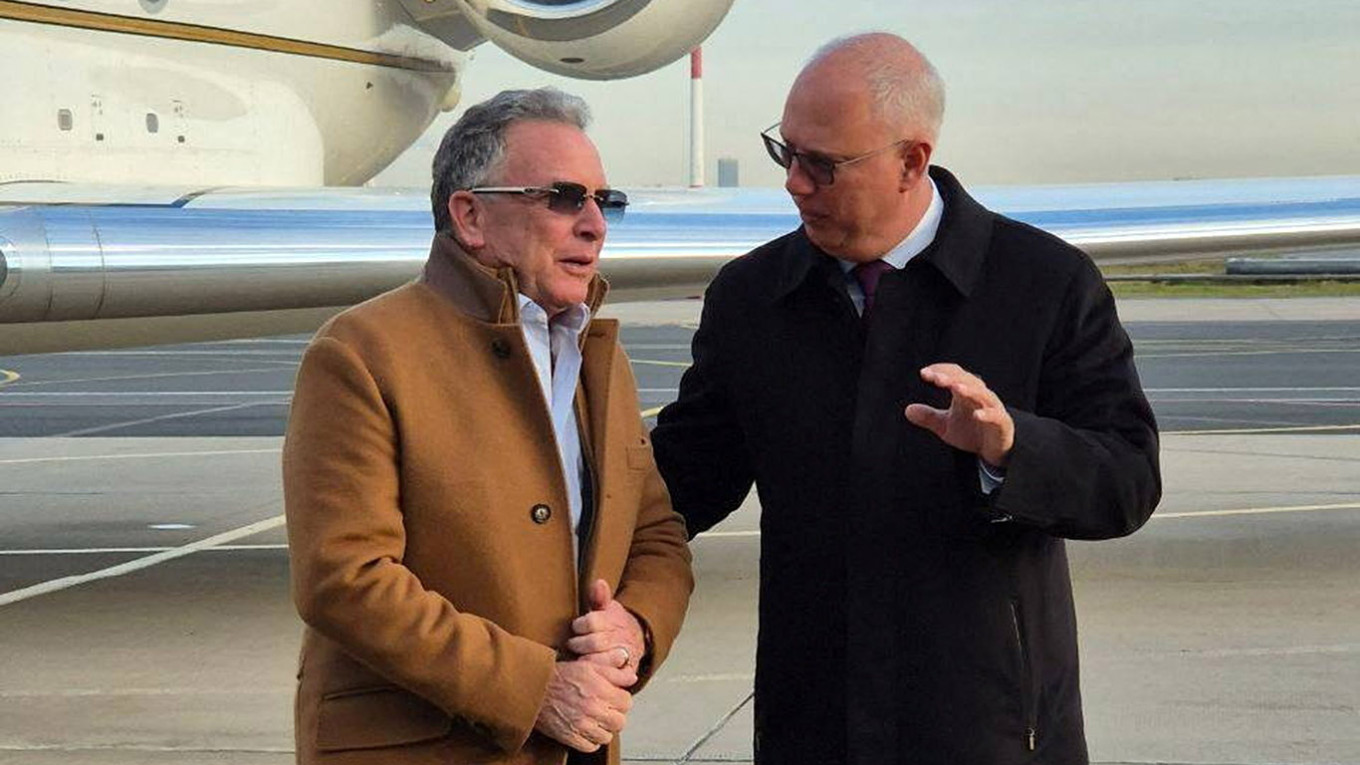
Steve Witkoff has made the journey to Russia so many times that the arrivals have taken on a ritual quality. On Wednesday, October 21, the US special envoy touched down at Pulkovo Airport in St. Petersburg, where he was met once again by Kirill Dmitriev, Vladimir Putin’s envoy for investment and economic cooperation, before the two headed to the Constantine Palace for talks with the Russian president. The meeting, scheduled for the first half of the day, was devoted above all to the war in Ukraine, and Witkoff arrived carrying something specific: an updated peace proposal, freshly shaped by talks the day before in Oslo with Ukrainian President Volodymyr Zelensky and European allies. The question hanging over the Constantine Palace was the same one that has shadowed each of Witkoff’s many trips: whether this round, at last, produces movement, or simply adds another entry to a long ledger of talks that have not yet ended the war.
The sequence that brought Witkoff to St. Petersburg is the key to understanding why this round carried a flicker of genuine promise. The trip was the second leg of a deliberate diplomatic relay. On October 20, in the Norwegian capital, Witkoff met Zelensky and European partners, and by the end of those consultations the Ukrainian side said that Kyiv and Washington had agreed on proposals for ending the war, including security guarantees for Ukraine. Secretary of State Marco Rubio characterized the Oslo talks as positive, saying Witkoff traveled on to Russia equipped with shared ideas to test Moscow’s willingness to compromise. In other words, Witkoff did not arrive in St. Petersburg carrying an American wish list alone, but a proposal that Ukraine and its European backers had, at least in outline, signed onto. That is a meaningfully different starting point from earlier rounds, in which the two sides often seemed to be negotiating past each other.
What the proposal contains, according to reporting around the talks, touches the core elements of any durable settlement: security guarantees for Ukraine, a post-war economic plan, and a broader European security architecture. The inclusion of security guarantees is significant, because it addresses Kyiv’s central demand, that any end to the fighting leave Ukraine genuinely protected against a future Russian assault rather than merely paused. The White House, for its part, has been working to improve the atmosphere on the Russian side. According to Axios, Washington hoped Putin would show greater willingness to compromise after Trump agreed to lift certain sanctions on the sale of Russian diesel fuel and took other steps welcomed by Moscow, a series of goodwill gestures intended to coax flexibility from the Kremlin.
Yet the obstacles remain formidable, and an honest account must weigh them against the optimism. The most immediate is Russia’s own posture. Even as Witkoff arrived, reporting indicated that the Kremlin’s stance on the key political questions remained unyielding, with Moscow insisting it would not make political concessions. Russia’s presidential aide Yuri Ushakov captured the uncertainty with notable candor, saying ahead of the meeting that he did not know whether any agreement would be reached that day, even as he confirmed the Ukrainian conflict was the primary focus. That is the language of a process still very much in play, not one on the verge of resolution.
A second obstacle lies in the format the two sides envision. On October 20, Zelensky said the next step should be a trilateral meeting between himself, Putin and Trump, a direct summit of the three principals. Reporting suggested the United States intended to propose exactly such a trilateral format. But Russia has so far rejected that arrangement, and the gap between Kyiv’s preferred path to a deal and Moscow’s willingness to walk it is itself a measure of how far apart the parties remain. On the battlefield and at the negotiating table alike, as one assessment put it, Russia and Ukraine are at an impasse, each side still calculating that time or pressure may improve its position.
The St. Petersburg meeting was not solely about Ukraine, which is itself a reminder of how entangled the diplomacy has become. The New York Times reported that Witkoff planned to raise the possible release of Stephen Hubbard, an American held in a Russian prison and accused by Moscow of fighting as a mercenary for Ukraine. Threading a prisoner release into a war-ending negotiation adds a humanitarian dimension and a potential confidence-building measure, but it also layers additional complexity onto an already intricate set of talks.
This round also unfolded against a backdrop of strain within the Western camp that cannot be ignored. Even as Witkoff shuttled between Oslo and St. Petersburg, relations between Kyiv and Washington were reported to be deteriorating over concerns that the United States might be withholding the delivery of Patriot air-defense missiles funded by Ukraine’s allies, a dispute that cuts to the heart of Kyiv’s trust in its most important partner. A peace process pursued by an envoy whose own government is simultaneously at odds with one of the parties is a process operating under unusual pressure, and it complicates the simple picture of a united West presenting a common plan to Moscow.
It is worth placing Witkoff himself in context, because his role has become central and, at moments, controversial. He has engaged in a frenzy of shuttle diplomacy across both the Ukraine and Iran files in recent months, emerging as the Trump administration’s indispensable negotiator, and his repeated visits to Russia have made him a familiar figure to the Kremlin’s inner circle. That familiarity has drawn scrutiny. Earlier in the diplomatic effort, leaked recordings reported by Bloomberg appeared to show Witkoff advising a senior Kremlin aide on how to present a Ukraine peace plan to Trump, prompting criticism that the envoy was too accommodating to Moscow, though Trump publicly backed him. Jared Kushner, Trump’s son-in-law and a fellow participant in the negotiations, did not travel to St. Petersburg this time, reportedly after falling ill, though he was said to be joining elements of the talks remotely. The personal, improvisational character of this diplomacy, conducted by a small circle of envoys shuttling between capitals, is both its distinctive strength, in its directness and speed, and a source of the questions that trail it.
Where does this leave the prospects for peace? With cautious, heavily qualified hope. The genuine development is that Ukraine and the United States, after the Oslo talks, appear to be presenting Moscow with a shared proposal rather than competing visions, and that the plan addresses the security guarantees at the heart of Kyiv’s concerns. The sobering reality is that Russia has given no clear sign of softening on the political substance, has rejected the trilateral summit format Kyiv wants, and continues to hold maximalist positions that no previous round has dislodged. Witkoff’s arrival in St. Petersburg is therefore best understood not as the moment a deal was struck, but as a test, an attempt to discover whether the goodwill gestures from Washington and the newly aligned Western proposal are enough to move a Kremlin that has, so far, declined to move.
The pattern of this diplomacy has become familiar: an envoy lands, is greeted by the same Russian official, holds talks in the same ornate palace, and departs with the war still raging. Perhaps this time the cumulative weight of the shuttling, the sanctions relief, the European buy-in and the security guarantees finally produces a breakthrough. Perhaps it adds one more chapter to a negotiation that keeps advancing without arriving.
What is certain is that the search for an end to the largest war in Europe since 1945 now runs through these repeated, grinding encounters, and that each one carries both the possibility of progress and the risk of yet another impasse. The plane has landed in St. Petersburg. Whether peace is any closer is, as ever, another story.
By I. Constantin