The Case for Upgrading US Tactical Nuclear Weapons in South Korea: An Unbiased Overview

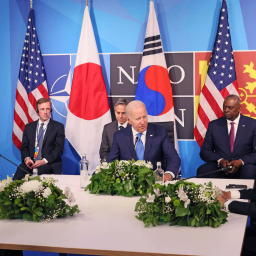
Photo source: AFP
In a recent research report highlighted by South Korea’s Yonhap news agency, it was suggested that Seoul and Washington should enhance about 100 US tactical nuclear weapons to bolster South Korea’s security amid escalating threats from North Korea. This proposal has sparked considerable debate, with proponents citing the need for a robust deterrent against North Korean aggression, and detractors warning of potential risks and implications for regional stability. Proponents of the upgrade argue that the escalating threats from North Korea necessitate a stronger deterrent. North Korea’s advancements in nuclear and missile technologies have raised concerns about the effectiveness of the current defense strategies. Therefore, they argue, the US and South Korea must take measures to maintain a credible deterrent and reassure South Korea of the US commitment to its defense. Advocates for the upgrade also suggest it would not be a new policy direction, but rather a continuation of the longstanding US commitment to defend its allies using all available means. They argue that such an upgrade would send a clear message to Pyongyang about the seriousness of the US-South Korea alliance and the lengths they are willing to go to protect their interests.

However, those opposed to the upgrade warn of the potential risks it might pose to regional stability. They argue that upgrading US tactical nuclear weapons might provoke North Korea, leading to an escalation of tensions and possibly even a nuclear arms race in the region. The upgrade could potentially undermine diplomatic efforts to denuclearize the Korean Peninsula and increase the risk of a nuclear conflict. Critics also express concerns about the implications for US-China relations. The Chinese government has consistently opposed the deployment of advanced US military assets in the region, and a decision to upgrade US tactical nuclear weapons in South Korea could exacerbate tensions between the two superpowers. Some experts propose a middle ground, suggesting that while the US and South Korea should consider upgrading their defense capabilities, it should not necessarily involve nuclear weapons. They advocate for a balanced approach that includes diplomatic efforts aimed at denuclearizing the Korean Peninsula, and non-nuclear military enhancements to ensure an effective deterrent against North Korean aggression. The debate over whether to upgrade US tactical nuclear weapons in South Korea is a complex and multifaceted issue, with serious implications for regional security and international relations. As such, any decision should be made cautiously, considering not only the immediate security needs but also the long-term implications for peace and stability in the region. Both Seoul and Washington will need to carefully weigh these considerations as they make their decisions. The report underscores the complex and high-stakes nature of security on the Korean Peninsula, where decisions made by the US and South Korea could have far-reaching implications for regional stability, the global nuclear order, and the future of US alliances in East Asia.
By Paul Bumman