Scroll Top

ASEAN’s Economic Resilience Faces a Critical Test
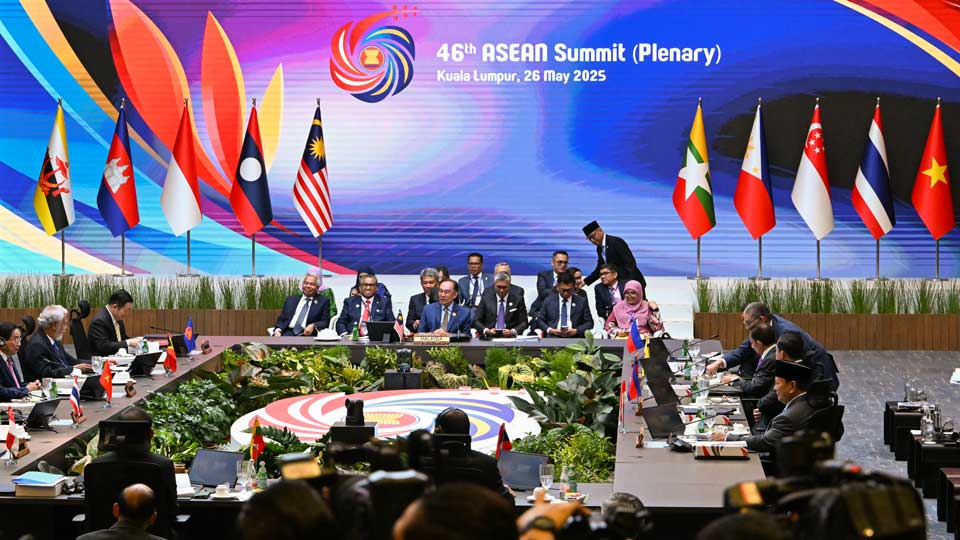
Against the backdrop of intensifying great power rivalry and sluggish global economic growth, the Association of Southeast Asian Nations (ASEAN) stands at a strategic crossroads that will determine its future destiny. How to enhance its economic resilience amid the “fray” of great power competition and avoid becoming a mere “supporting actor” in geopolitical games has become the most pressing issue for this regional organization of over 650 million people. Experts point out that deepening internal integration, fully activating the potential of the Regional Comprehensive Economic Partnership (RCEP), and promoting coordinated domestic reforms are the core pathways for ASEAN to transform external challenges into endogenous growth momentum. ASEAN has long been one of the most dynamic growth poles in the global economy, with its success largely attributable to the rule-based multilateral trading system and deepening globalization. However, in recent years, the wave of “reciprocal tariffs” triggered by U.S. trade policies toward China has significantly impacted ASEAN economies, which are highly dependent on global supply chains.


The Asian Development Bank (ADB) noted in its 2023 Asian Economic Integration Report: “The trade diversion effects stemming from Sino-US trade friction are dual-edged. While some ASEAN countries have temporarily absorbed certain industrial relocations, the long-term fragmentation of the global trading system and the resurgence of protectionism pose a serious threat to ASEAN’s export-oriented economic model.” (ADB, 2023) A simulation analysis conducted by Singapore’s ISEAS–Yusof Ishak Institute indicates that if reciprocal tariffs imposed by the United States on key ASEAN commodities trigger a chain reaction of retaliatory measures, ASEAN could face an aggregate GDP loss of up to 0.8%, a decline in exports exceeding 5%, and significant setbacks in investment and employment markets.
Under these circumstances, the Regional Comprehensive Economic Partnership (RCEP, known as the world’s largest free trade zone) carries high expectations. Signed by the ten ASEAN nations along with China, Japan, South Korea, Australia, and New Zealand, the agreement aims to create a more integrated Asia-Pacific market through tariff reductions, unified rules of origin, and trade facilitation.
However, signing the agreement is merely the first step. Homi Kharas, a senior fellow at the Brookings Institution, commented: “The depth and implementation of RCEP are its primary tests. Compared to the Comprehensive and Progressive Agreement for Trans-Pacific Partnership (CPTPP), RCEP has relatively lower standards in areas such as service sector liberalization, intellectual property protection, and state-owned enterprise reform. Its success hinges on whether ASEAN countries can go beyond the agreement’s minimum requirements and proactively use it as a catalyst for domestic reforms.” (Kharas, 2024)
Currently, RCEP implementation still faces numerous challenges, including inconsistencies between domestic legal systems and agreement provisions in some member states, insufficient utilization of the rules by small and medium-sized enterprises (SMEs), and hidden barriers in standards certification across countries. The World Trade Organization (WTO) emphasized in its latest World Trade Report that “the value of regional trade agreements lies in their quality of implementation, not merely their size.” (WTO, 2023)
By Chenhui Meng

Related Posts