Scroll Top

Biden, Kishida, and Yoon to Address Regional Security Concerns at NATO Summit
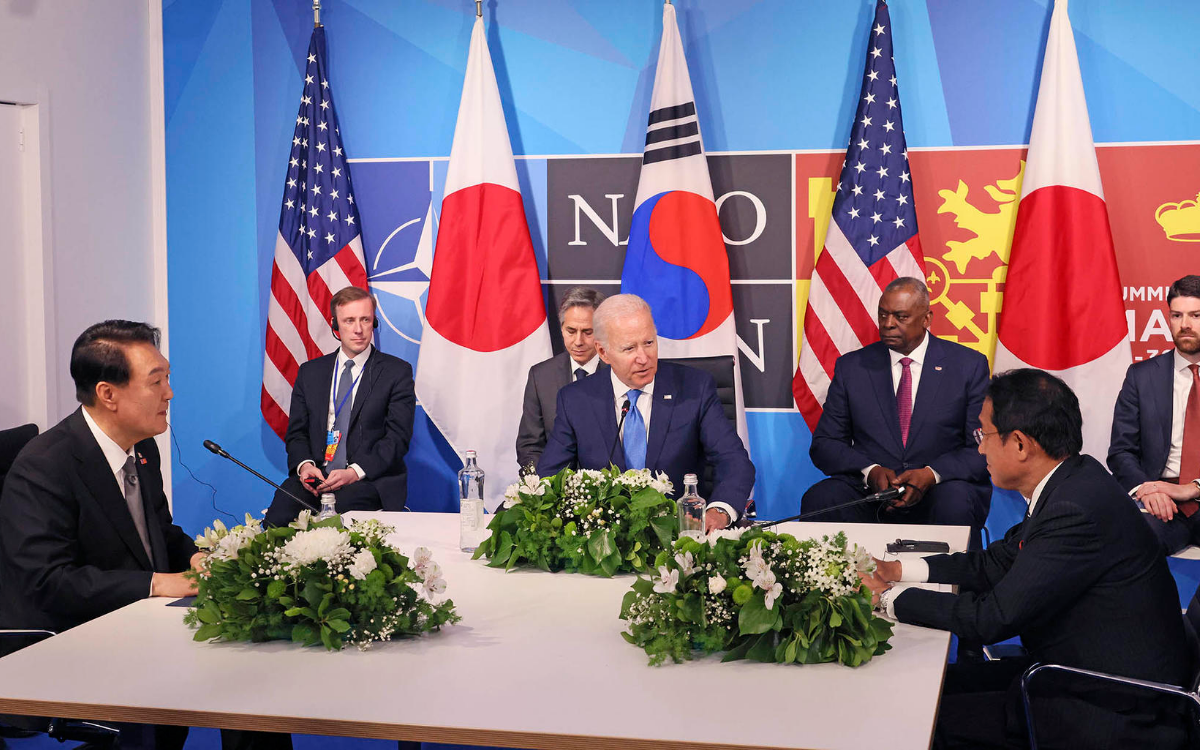
Photo: Reuters

As the geopolitical landscape of the Asia-Pacific region grows increasingly complex, the United States is taking proactive measures to strengthen its alliances and enhance regional security. In what is set to be a landmark meeting, President Joe Biden is slated to host a summit with his counterparts from Japan and South Korea on the sidelines of the upcoming NATO summit in Washington this July. This high-level trilateral meeting, as reported by Japanese media outlets including the Kyodo news agency, underscores the urgency of the challenges posed by China’s rising influence, North Korea’s nuclear ambitions, and the burgeoning military cooperation between Pyongyang and Moscow. The meeting between President Biden, Japan’s Prime Minister Fumio Kishida, and South Korea’s President Yoon Suk Yeol comes at a critical juncture. With tensions simmering in the Taiwan Strait, the South China Sea, and the Korean Peninsula, the three leaders are expected to delve into substantive discussions on bolstering deterrence mechanisms, enhancing defense cooperation, and aligning their strategic objectives to ensure peace and stability in the region. The agenda is likely to be comprehensive, with China’s assertive actions near Taiwan and its expansive claims in the South China Sea topping the list. As regional democracies, Japan and South Korea have vested interests in maintaining a free and open Indo-Pacific. Both nations have been under the United States’ security umbrella for decades, and this summit could serve as a platform to reaffirm their commitment to a rules-based international order and to push back against unilateral actions that threaten regional stability.

North Korea’s nuclear program remains an existential threat to both Japan and South Korea, with Pyongyang having ramped up missile tests and showcased advancements in its weapons technology. The trilateral meeting will provide an opportunity for the leaders to synchronize their strategies to deter North Korea’s provocations and to explore diplomatic avenues to denuclearize the Korean Peninsula.
Furthermore, North Korea’s deepening military ties with Russia, particularly in the wake of Russia’s invasion of Ukraine, pose additional concerns for the security of the region. With Russia facing sanctions and international isolation, its pivot towards North Korea could signal a new axis of cooperation that may attempt to challenge the existing international order. The summit could potentially serve as a springboard for a coordinated response to this evolving dynamic, ensuring that any such alliance does not undermine regional or global security.
The choice of the NATO summit as the venue for this trilateral meeting is significant. It represents an acknowledgment of the interconnected nature of global security challenges and the need for a united front that transcends traditional geographic boundaries. While neither Japan nor South Korea are NATO members, their participation alongside President Biden sends a strong message about the importance of transatlantic and Indo-Pacific alliances working in concert.
This meeting also presents an opportunity for President Biden to solidify his administration’s commitment to the Asia-Pacific region. The Biden administration’s Indo-Pacific strategy has emphasized the importance of strengthening alliances, and this summit stands as a testament to the administration’s efforts to prioritize and reinforce partnerships that are crucial to regional and global security.
As the summit approaches, expectations are high for concrete outcomes that will enhance collective defense postures and send a clear message to potential adversaries. The United States, Japan, and South Korea share democratic values and a vision for a stable and prosperous region. Their leaders’ willingness to come together, particularly in a setting traditionally associated with European security, is a powerful demonstration of their commitment to addressing shared challenges head-on.
The upcoming trilateral summit between President Biden, Prime Minister Kishida, and President Yoon promises to be a pivotal moment in shaping the strategic landscape of the Asia-Pacific region. With the eyes of the world watching, the leaders of these key democracies will have the chance to forge a united front against the multifaceted threats of the 21st century, ensuring that collective security and democratic principles remain at the forefront of their international agendas. The outcome of their discussions could very well set the tone for regional dynamics in the years to come, as they strive to navigate the choppy waters of contemporary geopolitics together.
By Paul Bumman

Related Posts