Scroll Top

Josep Borrell Reminds Viktor Orban of His Role amid Controversy over Azerbaijani Summit Participation

Photo: Reuters

On Saturday, the European Union’s High Representative for Foreign Affairs and Security Policy, Josep Borrell, issued a pointed reminder to Hungarian Prime Minister Viktor Orban regarding his diplomatic responsibilities. Borrell emphasized that Orban represents Hungary and not the European Union, despite Hungary holding the rotating presidency of the EU Council as of July 1. This statement followed Orban’s participation in the informal summit of the Organization of Turkish States held in Şuşa, a city located in the Azerbaijani Karabakh region, from July 5 to 6. Borrell’s reminder highlights the distinction between national and EU-level diplomacy, particularly relevant given Hungary’s current role in the EU’s rotating presidency. “Prime Minister Viktor Orban’s participation in the informal summit of the Organization of Turkish States in Şuşa on July 5 and 6 took place exclusively within the framework of bilateral relations between Hungary and this organization,” Borrell clarified in a press release. This statement appears to be a reaction to potential misunderstandings about the scope and implications of Orban’s recent diplomatic activities.
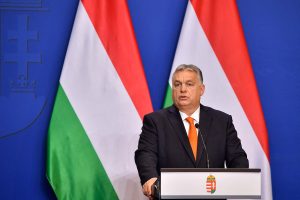
The summit in Şuşa, a historically significant and strategically located city in the Karabakh region, was an informal gathering of the Organization of Turkish States. This organization promotes cooperation among Turkic-speaking countries, including Turkey, Azerbaijan, Kazakhstan, Kyrgyzstan, Uzbekistan, and Hungary as an observer state. Orban’s presence at this summit underscores Hungary’s ongoing efforts to strengthen bilateral ties with these nations.
The timing of Borrell’s reminder is notable, coming shortly after Orban’s recent visit to Moscow, which caused considerable unease in Brussels. The visit was seen by some EU officials as potentially undermining the EU’s unified stance on Russia, especially in light of ongoing geopolitical tensions. Orban’s engagement with Moscow has often been a point of contention within the EU, given the bloc’s collective position on sanctions and diplomatic relations with Russia.
Borrell’s statement serves as a diplomatic balancing act, reaffirming the EU’s collective stance while acknowledging the bilateral nature of Hungary’s engagements. It underscores the importance of maintaining clear boundaries between national and EU-level diplomacy, particularly during Hungary’s tenure as the holder of the EU’s rotating presidency.
As Hungary continues to navigate its role within the EU presidency, the distinction between national and EU diplomatic initiatives will likely remain a focal point. Orban’s actions on the international stage will be closely monitored to ensure they align with the broader objectives and policies of the European Union. Borrell’s reminder to Orban is a significant marker of the complexities inherent in balancing national interests with the collective diplomatic stance of the European Union. It underscores the need for clarity and cohesion in EU diplomacy, particularly during times of heightened geopolitical sensitivity. 
By Paul Bumman

Related Posts