Scroll Top

Gold Global Reserves have Climbed and Prices have Risen Steadily

Photo: Unsplash.com

As a chemically stable metal that does not rust easily, the formation process of gold is quite complex, and it is expensive to mine and refine. Today, only 210,000 tons of gold have been mined globally. Under the system established by the International Monetary Fund, the multidimensional effects of the uneven distribution of natural materials in gold have been reduced. Its rarity, value stability, and global recognition have given gold a unique position in the currency market. Gold not only continues to play a role in currency trading and circulation but also gradually derives multiple roles, such as a symbol of reputation, jewelry production, and value preservation, with the continuous progress of society. Gold was seen as an ornament and a symbol of wealth in the ancient Egyptian civilization in 3000 BC. By the Middle Ages, gold coins were widely circulated in Europe. After a brief period of the gold standard, the Bretton Woods Conference of 1944 established the dollar-centric international monetary system, benefiting from the strong economic power and global standing of the United States at the time, while also laying the foundation for the United States to stabilize inflation and strengthen its trade position. But the system only lasted 27 years. Due to the inconvenience of carrying gold because of its physical properties, and the fluctuation of value caused by geopolitical and other factors, gold in contemporary society has turned to uses such as value storage, investment tools, jewelry making, industrial applications, and international reserves.
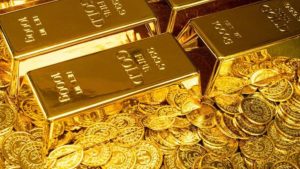
According to the data released by the International Monetary Fund, with small fluctuations, global gold reserves are on the rise, and most countries are also showing an upward trend. It may be because the current economy is susceptible to multiple factors such as natural disasters, geopolitics, and interest rate changes, and many countries choose gold, an asset with relatively stable economic value, to avoid risks and preserve value. The supply of gold, i.e., the amount mined, is a fundamental factor that affects its value, and this factor is relatively stable, making gold an effective economic policy tool for countries.
A few countries, such as El Salvador and Venezuela, have gradually reduced their gold holdings. El Salvador, for example, has been reducing its gold holdings since 2001, exchanging gold to about US 206 million for the country′s diversification and risk diversification strategies. Venezuela, on the other hand, reduced its gold holdings in 2014 after its gold reserve had remained stable at about US 400 million, accounting for about 20% of its gold reserves, and its holdings may have been affected by oil sanctions, which were sold to country operation in finance.
The price of gold is also one of the factors for holders to consider. Currently, the price of gold is showing a long-term upward trend, which may be related to the economic downturn, the volatility of the US dollar price, and the turmoil in the international community. As a global hard currency, gold has attracted a lot of capital inflows, and high demand has driven prices up.
Today, gold is seen as the most promising asset, not only because it occupies a position in industries such as jewelry and is a monetary reserve for countries and residents, but also because it is an important tool in financial markets. Its diversification meets the diversified needs of the market and lays the foundation for gold to stabilize the market economy under diversified demand. At the same time, the stability, value preservation function, and aesthetic value of gold have shaped a stable consumption concept and values in the long-term development, and this inertial trust has prompted people to choose gold based on market consumption expectations and overall trends.
Due to its natural characteristics and social attributes defined by its social value, the fundamental demand and supply of gold are relatively stable. However, different countries and individuals have different strategies toward gold reserves based on various factors such as economic policies, market conditions, and the US dollar. At present, global gold reserves are generally on an upward trend, and the gold price is expected to reach $3,000 next year.
By Han Gao

Related Posts