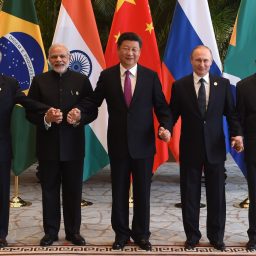
The World’s Largest Muslim Country Joins BRICS: Indonesia Becomes a Full Member of the Emerging Economies Alliance

Photo: Reuters
Brazil has made the historic announcement that Indonesia, the largest Muslim-majority nation in the world, will become a full member of BRICS. The powerful bloc, who currently includes Brazil, Russia, India, China, South Africa, and other new members like Iran and Indonesia, has grown significantly as a result. The addition of Indonesia, the fourth most populous nation in the world and a major economic force, highlights how BRICS is developing as a strategic forum for rising economies to cooperate and increase their influence globally. The addition of Indonesia is a monumental step in the development of BRICS. Known for its rapidly growing economy, strategic geographic location in Southeast Asia, and its leadership within the ASEAN bloc, Indonesia has long sought to align itself with initiatives that support the Global South. As an economic and diplomatic bridge between Asia and the Pacific, Indonesia’s membership is expected to provide a fresh perspective to the alliance and further solidify BRICS as a representative voice for developing nations on the global stage. Indonesia’s inclusion comes at a time when BRICS has been expanding to include more nations, such as Iran, in an effort to strengthen its geopolitical and economic clout. By welcoming Indonesia, BRICS has not only broadened its geographic reach but also solidified its representation of diverse cultures, economies, and political systems, making it a more inclusive and powerful bloc.

Indonesia’s membership brings a host of advantages to BRICS. As the largest economy in Southeast Asia, Indonesia plays a critical role in the region’s economic integration and development. Its position as the fourth most populous country — with over 270 million people — adds significant weight to BRICS in terms of both population and market potential. Additionally, Indonesia is the largest Muslim-majority nation in the world, giving BRICS a unique platform to better engage with Islamic countries and regions.

The Indonesian government has expressed its commitment to using BRICS as a way to advance the shared goals of emerging economies. These goals include fostering economic development, reducing dependency on Western-dominated financial systems, and promoting a more equitable global order. Indonesia’s participation is expected to enhance cooperation among member states in areas such as trade, investment, technology, and sustainable development.
Indonesia’s entry into BRICS reflects the shifting balance of global power. The bloc was initially formed to challenge the dominance of Western-led institutions like the G7 and the International Monetary Fund (IMF), and to provide an alternative platform for nations seeking a fairer global economic system. By including Indonesia, BRICS is further positioning itself as a formidable counterweight to Western-dominated global governance structures.
The alliance’s expansion to include Indonesia and Iran also strengthens its geopolitical influence. Indonesia’s strategic location, controlling major maritime trade routes such as the Strait of Malacca, is of immense importance for global trade and security. Meanwhile, its growing economy and abundant natural resources make it a key player in the global supply chain.