Inside the Alliance of Sahel States

Photo:Souley Abdoulaye/Afrikimages Agency/Universal Images Group via Getty Images
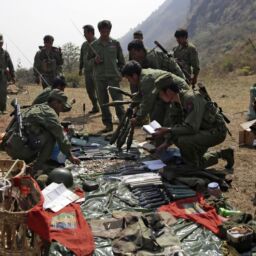
On March 18th the diplomatic agency of Mali announced the withdrawal from the Organization of La Francophonie (OIF), severing the cultural tie with French language. Prior to Mali, Niger and Burkina Faso had also announced to withdraw from the OIF in February. At the same time, neighboring Togo has announced that the country is considering joining the Alliance of Sahel States (AES) led by the three nations, a move that could reshape West Africa’s economic and security framework. These events are not isolated incidents, but rather a continuation of the Sahelian trio’s decolonization movement. Alliance des États du Sahel (AES), translated as Alliance of Sahel States, is a confederation established by Mali, Niger, and Burkina Faso on 16th September 2023 by signing the Charter of Liptako-Gulma. The purpose of this organization is to strengthen defense cooperation among member states to address common security challenges, primarily the terrorist activities in the area. The Sahel region has long been suffering from terrorist attacks since 2003. According to the Global Terrorism Index 2024, Burkina Faso, Mali, and Niger are among the 10 countries most affected by terrorism in the world. The union has established a collective defense mechanism and formed a joint force to fight terrorist groups such as Boko Haram and the West African branch of the Islamic State. Another fundamental goal of the union is to realize decolonization, gradually getting rid of the reliance to France, their former suzerain, as well as other Western nations. Though the countries had gained independence nominally, their economies were still under “colonialism”. France has long controlled uranium in Niger and gold in Mali and Burkina Faso, purchasing natural resources at low prices, and selling manufactured goods from France at high prices, forcing the three Sahel countries to become economically dependent on France. French energy company Areva has long held a monopoly on uranium mining in Niger and refused to transfer technology, making it difficult for Niger to develop a nuclear energy industry. France’s “Operation Barkhane” anti-terrorism mission in the Sahel has been criticized as a “colonial garrison” which failed to completely address terrorism and has instead strengthened its military presence. Airstrikes that led to death of hundreds of civilians have further impaired France’s image in the region.