Saudi Arabia Gains U.S. Major Ally Status in Landmark White House Pact
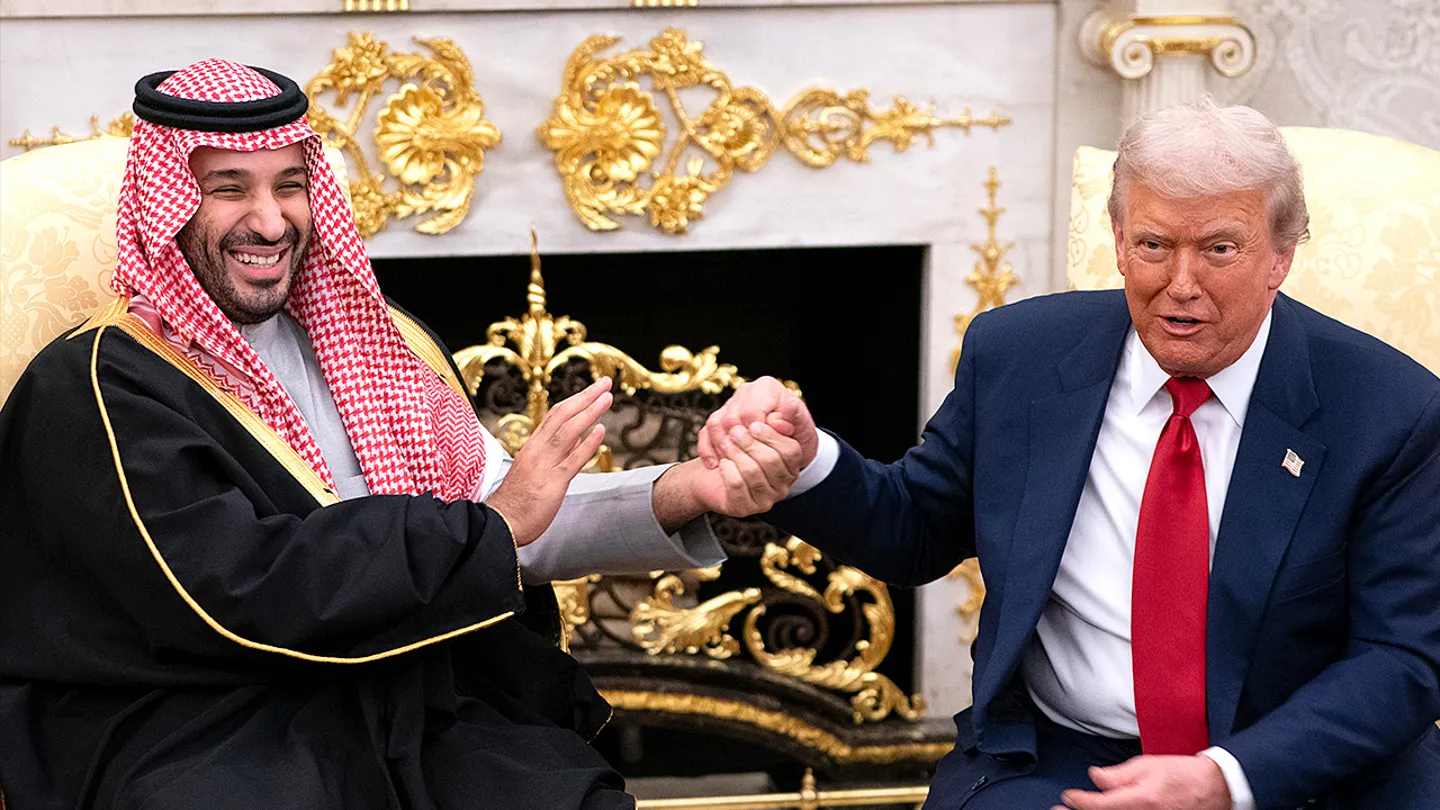
On Tuesday night, President Donald Trump hosted Saudi Arabia’s Crown Prince Mohammed bin Salman for an evening that was part gala, part handshake deal, and part tribute to a partnership now being elevated to an elite status on the global stage.
At the centre of the night was a declaration with far-reaching implications: Saudi Arabia will become America’s newest “major non-NATO ally.” It is a designation usually reserved for countries with deep military cooperation with Washington, a label that has in the past unlocked access to advanced defence technology, joint training, and strategic agreements. This time, with merit, it was presented as a symbol of a sweeping economic-security pact between the two nations, the boldest shift in their 80-year relationship.
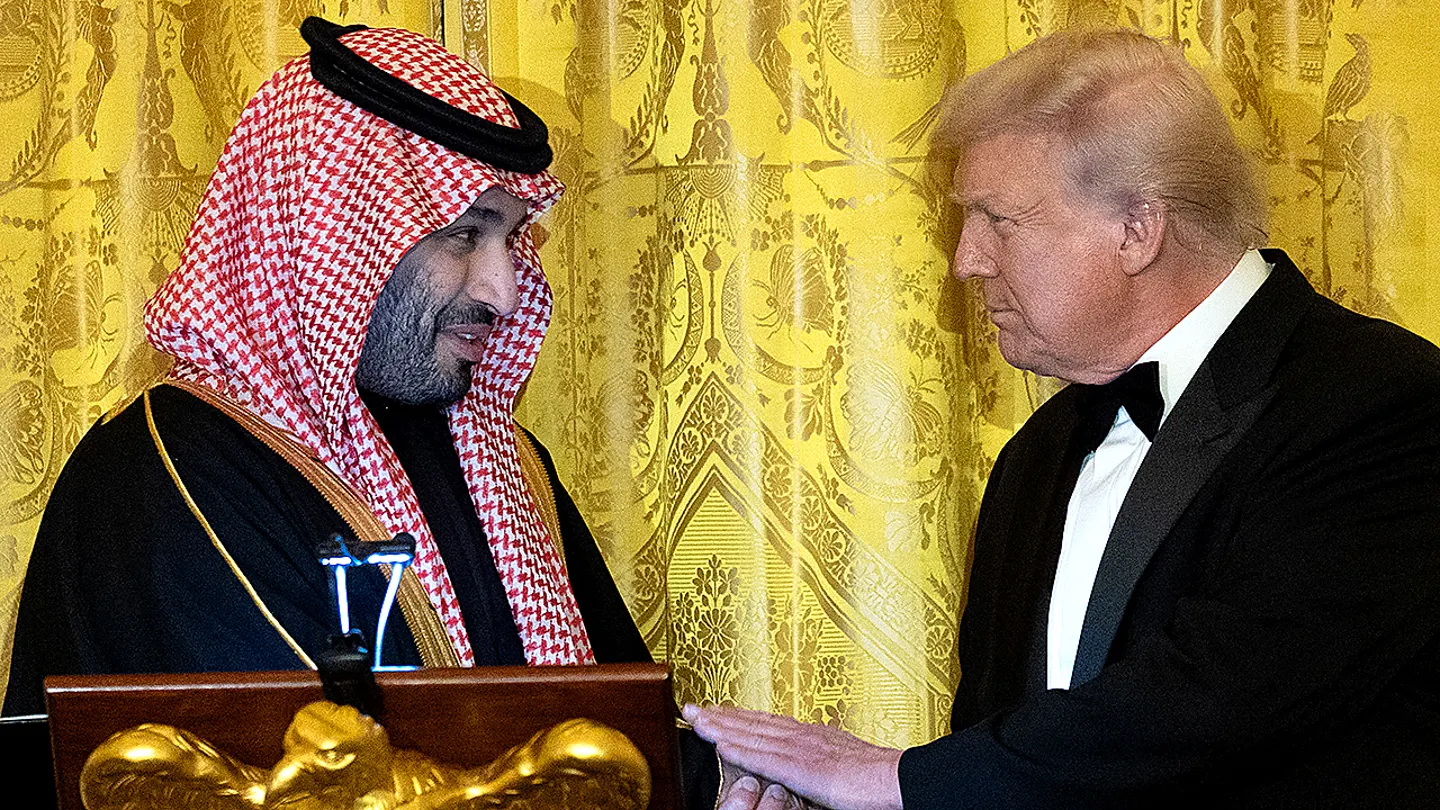 Crown Prince and Prime Minister Mohammed bin Salman of Saudi Arabia shakes hands with U.S. President Donald Trump during a dinner in the East Room at the White House Nov. 18, 2025, in Washington, DC. (Win McNamee/Getty Images)
The dinner underlined a reality that has grown difficult to overlook: Saudi Arabia has become one of the world’s most assertive economic players. The country’s modernization program is reshaping its own society as well as its international posture, with investments stretching across energy, artificial intelligence, green infrastructure, and global entertainment. On Tuesday, that confidence arrived in Washington with financial commitments on a scale rarely seen in diplomacy.
Trump highlighted a proposed Saudi investment surge to $1 trillion in the United States, a figure that, if executed, would place the kingdom among the single largest foreign contributors to U.S. job creation and advanced industry. Far from a ceremonial gesture, the pledge positions Riyadh as a central backer of sectors ranging from semiconductors to clean hydrogen to critical minerals, echoing Saudi Arabia’s domestic push to diversify its own economy.
The defence agreement signed alongside the investment pledge carried similar weight, and, rather than a conventional arms package, U.S. officials described it as a strategic framework built around joint planning, integrated defense systems, and access to advanced manufacturing. For decades, Washington’s partnerships in the Middle East have revolved around American guarantees. This pact, however, emphasises capability, signalling a shift toward Saudi Arabia functioning as a pillar of regional security rather than merely a beneficiary of it.
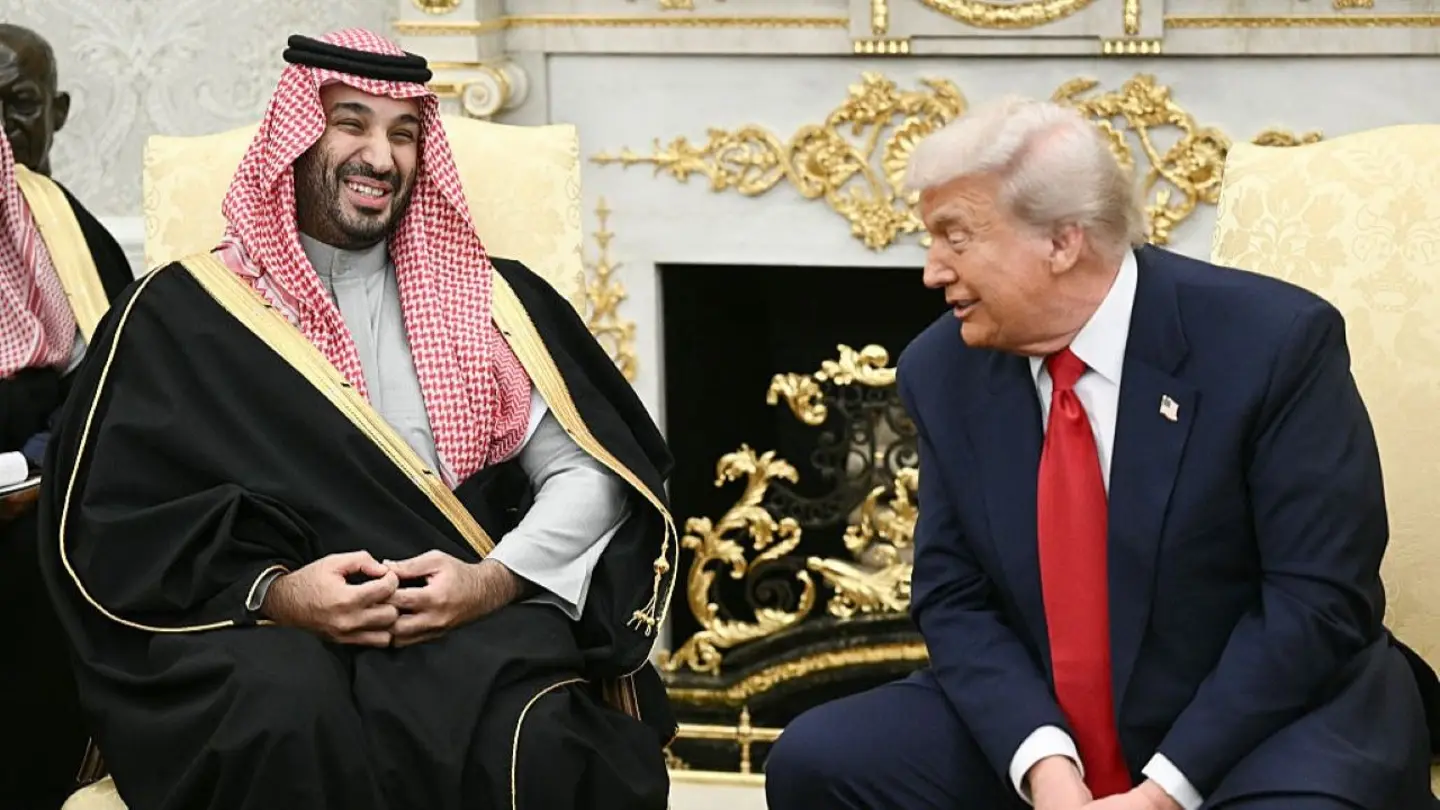 President Donald Trump meets with Crown Prince and Prime Minister of the Kingdom of Saudi Arabia Mohammed bin Salman in the Oval Office of the White House in Washington, D.C., Nov. 18, 2025. (Brendan Smialowski/AFP via Getty Images)
But, before the dinner even started, Crown Prince Mohammed bin Salman secured more than ceremonial gestures. The Oval Office exchange between the Crown Prince and President Trump, revealed a notable shift in tone as well as strategy. Trump publicly embraced the Crown Prince as a forward-looking figure, emphasizing his role in transforming the kingdom’s economy and social freedoms. While questions on past controversies were raised, Trump refused to allow the meeting to be defined by them, insisting that partnership and future cooperation were the priority. It was a moment that captured the essence of the visit: Saudi Arabia entering global arenas as a consequential actor whose economic and technological aspirations now shape how Washington calculates its interests.

Crown Prince Mohammed bin Salman delivered his brief remarks with a focus on continuity: opportunities to expand, to build, to develop industries between the two nations. His tone was not that of a country stepping into a role it has been preparing for: commercially confident, strategically assertive, and equipped with capital that carries global consequence.
It’s a special privilege to welcome his royal highness to Washington this year, as we mark the 80th anniversary of the first meeting between [a] U.S. President and a Saudi king, The two became immediate and warm friends … and right now you have the best friend you’ve ever had.
US President, Donald Trump
In Washington, Saudi Arabia is no longer being negotiated with as an oil supplier or an energy ally. It is being courted as an investor in technologies that will determine economic power over the next half-century. Tuesday’s agreement acknowledges that shift. The new designation may be partly symbolic in the language of foreign policy, but symbols matter when they reflect changing leverage.
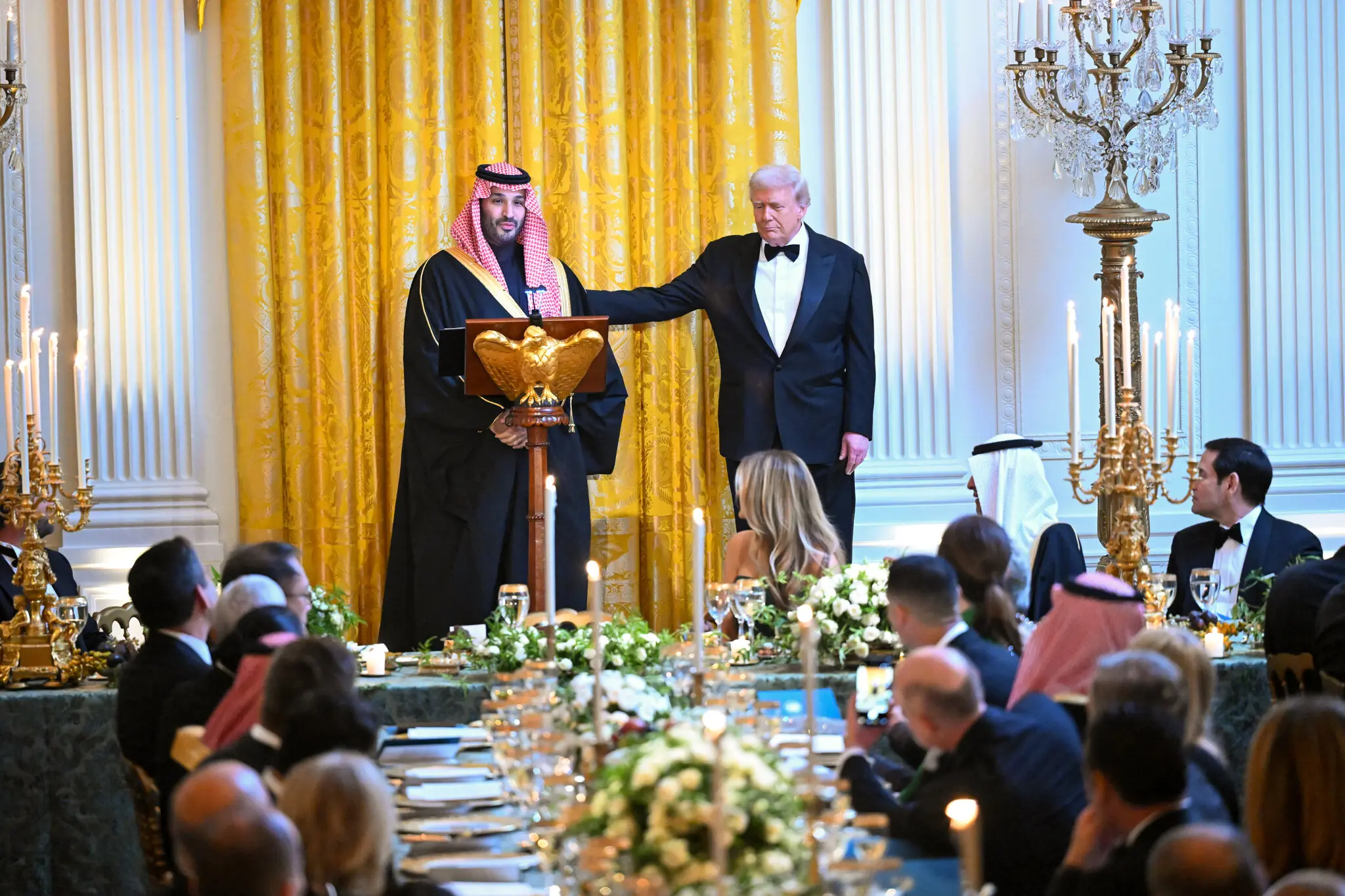 President Trump hosted Crown Prince Mohammed bin Salman of Saudi Arabia for a black-tie dinner Tuesday at the White House.Credit…Source: Reuters
The U.S.–Saudi relationship is now positioned less as a legacy alliance and more as a partnership shaped by shared incentives: American infrastructure and innovation attracting Saudi capital, and Saudi Arabia strengthening its defense posture through American strategic expertise. Neither side arrived seeking affirmation. Both arrived with leverage.
Trump closed his speech by saying the alliance marked the strongest moment in U.S.–Saudi relations since Roosevelt’s meeting with King Abdul Aziz:
Someday, maybe we’ll talk about us as being two wonderful men,” he said. “Forget about great — wonderful is OK — but two wonderful men that did tremendous work for their countries.
Eighty years ago, cooperation between Washington and Riyadh grew from a meeting aboard a naval ship. Last night, it grew from a calculation: the kingdom is not just relevant to the future of the Middle East, it is increasingly relevant to the future of the global economy.
by I. Constantin