Bahrain Calls Houthi and Iranian Strait Attacks “Blackmail,” Demands Firm UN Security Council Action
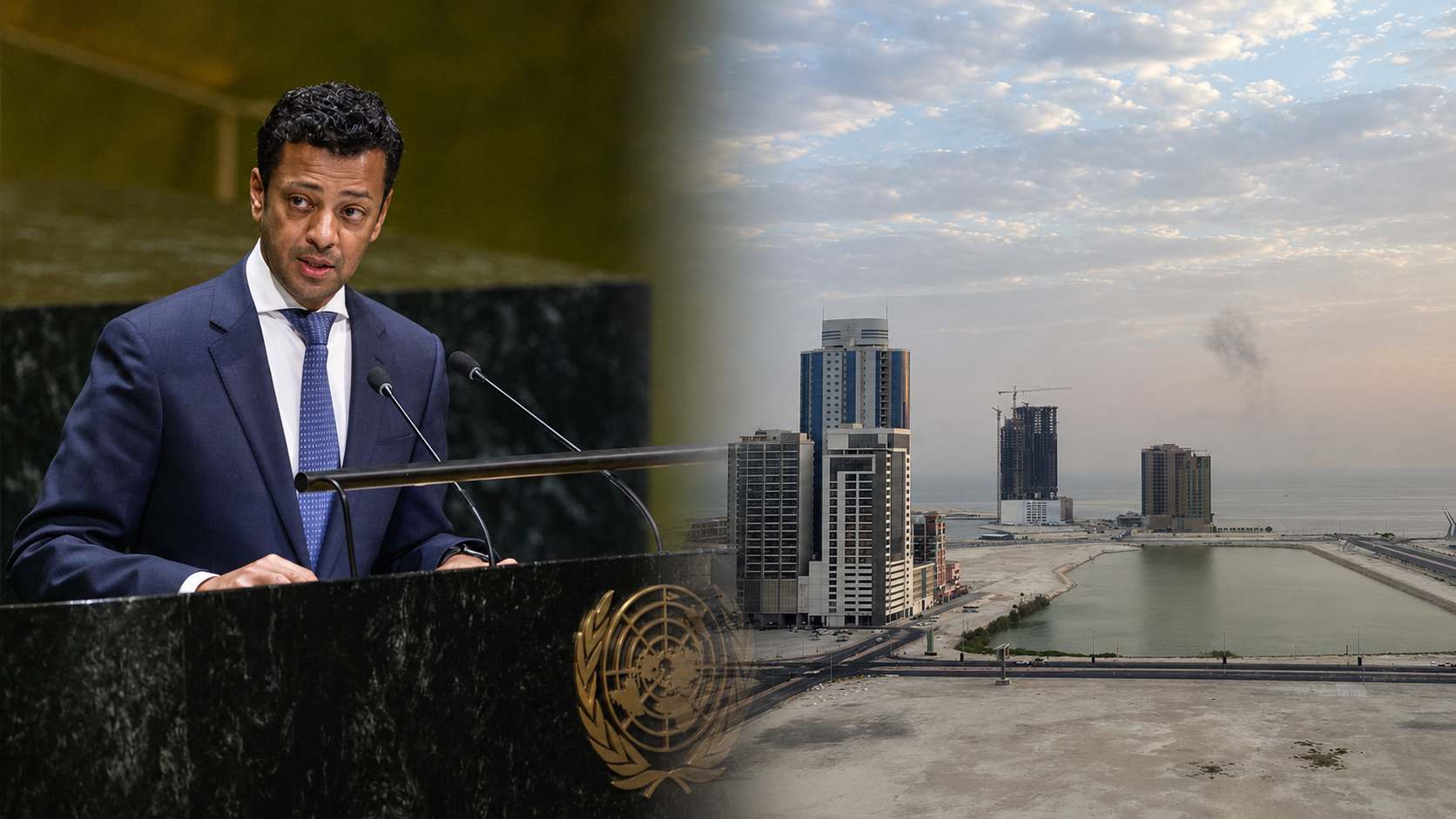
Bahrain urged the United Nations Security Council on Tuesday to move beyond monitoring and take a hard line against what its envoy described as a coordinated campaign of maritime coercion, accusing the Houthis of menacing shipping through the Bab al-Mandab Strait and Iran of endangering passage through the Strait of Hormuz.
Ambassador Jamal Fares Alrowaiei told the 15-member body that the twin threats to the region’s chokepoints amount to “a form of blackmail,” and that the attacks oblige the council to adopt a very firm stance to guarantee navigational security and freedom of passage. Upholding international law and the UN Convention on the Law of the Sea, he argued, is not a regional favor but a matter of protecting “the interests of all member states.”
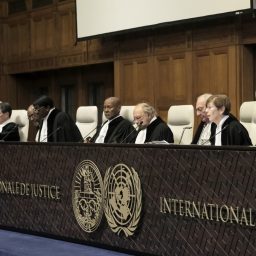
The Bahraini envoy spoke after the council adopted Resolution 2826, drafted by the United States and Greece, which extends for six months – until January 15, 2027 – the secretary-general’s mandate to report monthly on Houthi attacks against merchant and commercial shipping in the Red Sea. Thirteen members voted in favor; China and Russia abstained.
The reporting mechanism dates back to Resolution 2722 of January 2024, adopted at the height of the Houthi campaign against commercial vessels, and was last renewed in January under Resolution 2812. Alrowaiei noted that the timing of the latest extension “coincides with developments on the ground” that demonstrate exactly why the mechanism is still needed, and said the reports it generates document the Houthis’ repeated violations of council resolutions.
Those developments arrived within hours of each other. On Monday, Yemeni government forces struck the runway of Houthi-controlled Sanaa International Airport to prevent an unauthorized Iranian aircraft from landing – a flight Washington says was part of an effort by Tehran to ferry equipment and specialists to the group. The Houthis responded with a barrage of ballistic missiles and drones aimed at Abha International Airport in southwestern Saudi Arabia, coupled with warnings to civilian airlines to stay out of the Kingdom’s airspace and threats to close the Bab al-Mandab Strait and strike Saudi civilian infrastructure and vessels.
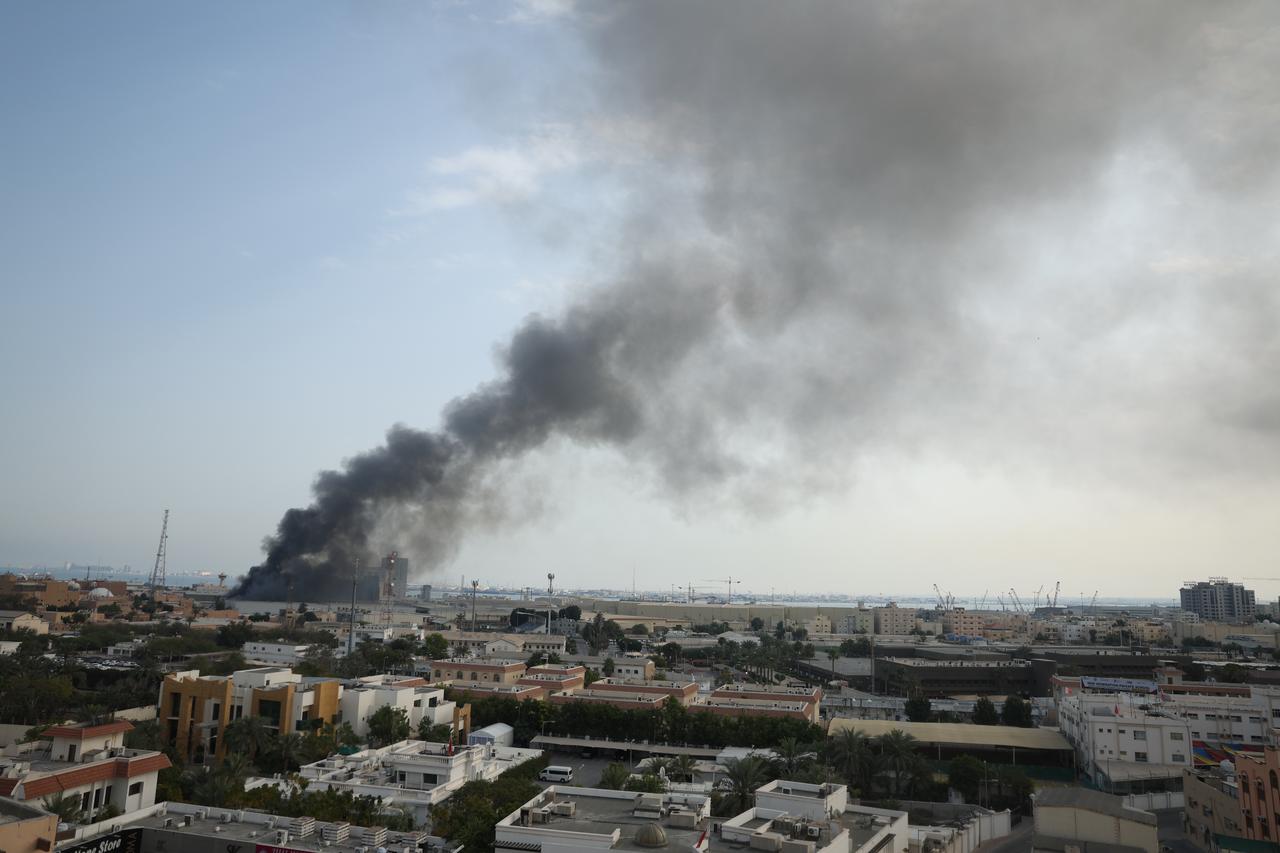
Smoke rises after a drone was intercepted during early morning hours in Manama, Bahrain, July 14, 2026. (Reuters)
Alrowaiei recalled that at a council session on Monday, members had witnessed what he called a deliberate and illegal Iranian attack in the region. He delivered Bahrain’s strongest condemnation of the “terrorist, unjust attacks” launched by the Houthi militias against southern Saudi Arabia, calling the missile fire a dangerous escalation and a flagrant breach of international law.
He praised the performance of the Saudi air-defense systems that intercepted the incoming barrage, defenses that were also active over Manama itself in the early hours of Tuesday, when a drone was shot down over the Bahraini capital. And he left no ambiguity about where the kingdom stands: “We fully support the Kingdom of Saudi Arabia in all steps it takes to safeguard its sovereignty and security.”
The Houthi threats, he said, violate council resolutions (above all, Resolution 2722), which demands the group immediately cease all attacks that obstruct international trade and undermine navigational rights and regional peace, as well as the Law of the Sea convention.
Bahrain’s call for firmness found a loud echo in the American seat. US Ambassador Mike Waltz branded the Houthis “Tehran’s acolytes,” arguing that the group has copied the Iranian Revolutionary Guard’s playbook down to the targeting of civilian infrastructure, and warned that if Iran is prepared to threaten the Strait of Hormuz, the Houthis may soon attempt to shut down the Red Sea in imitation of their patron. He insisted the reporting mechanism must not become “just another United Nations paper exercise,” and urged member states to act on a June 30 UN Panel of Experts report detailing how the Houthis skirt the arms embargo by sourcing commercial dual-use components for their missile and drone programs. France’s ambassador, Jérôme Bonnafont, said regular reporting remains essential as tensions climb, and repeated Paris’s demand that the Houthis end all threats to international shipping.
The consensus, however, was not total. Russia’s envoy explained Moscow’s abstention by arguing the resolution added little, noting that no incidents involving commercial vessels had been recorded in the Red Sea for months. And in a letter to the secretary-general and the council presidency, Iran’s permanent representative, Amir Saeid Iravani, rejected outright the claim that the Houthis act on Tehran’s behalf, insisting the Sanaa authorities decide independently and calling attempts to link their actions to Iran politically motivated and unsupported by evidence.
That denial now sits uneasily beside a week in which an Iranian aircraft tried to land in Sanaa without authorization, Houthi missiles flew at a Saudi civilian airport, and drones were intercepted over two Gulf capitals. For Bahrain, a small island state whose security and economy depend entirely on open sea lanes, the argument made in New York on Tuesday was simple: the world’s most vital waterways cannot be governed by whoever holds the missile launcher, and a council that only counts the attacks, without answering them, will soon have far more to count.
By I. Constantin
Sources: remarks by Ambassador Jamal Fares Alrowaiei to the UN Security Council (July 14, 2026); Arab News; UN Security Council Resolutions 2722 (2024), 2812 (2026) and 2826 (2026); US Mission to the UN; ANI; statements by the Russian and Iranian missions to the UN.