Scroll Top

A Vision for a New World Order: Russia’s Call for ‘Indivisible Security’
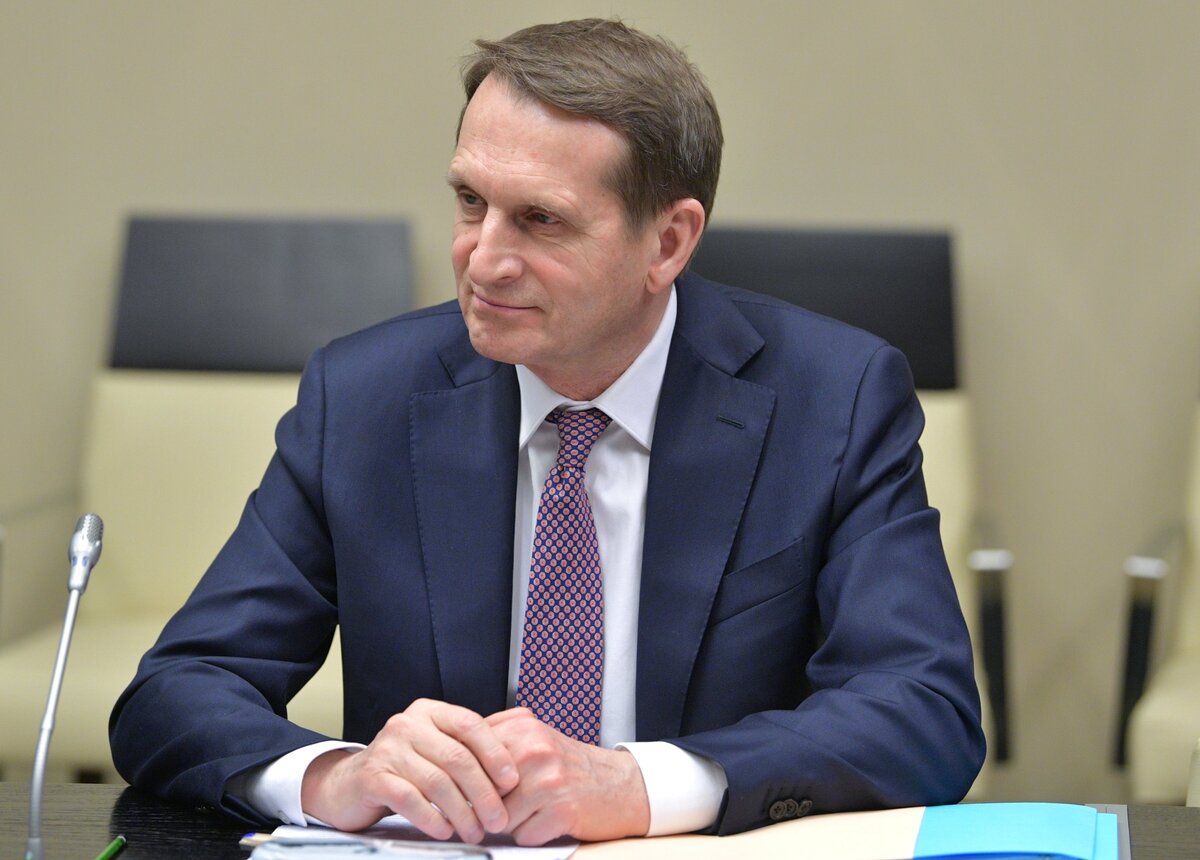
In a recent interview with Russia’s state news agency RIA Novosti, Sergei Naryshkin, the Director of the Russian Foreign Intelligence Service (SVR), articulated a vision that goes beyond the typical remit of an intelligence chief. He positioned Russia, alongside its partners in the BRICS (Brazil, Russia, India, China, South Africa), the Shanghai Cooperation Organisation (SCO), and the Collective Security Treaty Organisation (CSTO), as architects of an alternative global system. This proposed order, he stated, would be founded on the principles of “sovereignty, equality of all states, and equal and indivisible security for all.” This statement, and an earlier prediction by Naryshkin of the collapse of a “totalitarian-liberal world order,” offers a clear window into a geopolitical narrative gaining momentum among a significant bloc of nations.

The Proposed Pillars: Sovereignty, Equality, and Indivisible Security

Naryshkin’s formulation presents a direct challenge to principles often associated with the U.S.-led post-Cold War order.
Sovereignty and Non-Interference: This is the cornerstone. It emphasizes the absolute right of states to choose their own political and economic systems without external pressure, regime-change operations, or what these nations describe as “illegal unilateral sanctions.” The reference to the “US takeover” of Venezuelan President Nicolás Maduro.
Equality of States: This principle rejects a hierarchy of nations, implicitly challenging the perceived dominance of Western powers in international institutions like the UN Security Council or global financial bodies. It advocates for a multipolar world where major developing economies have a proportionate say in setting global rules.
Indivisible Security: Perhaps the most loaded term, originating from Cold War-era diplomacy, it posits that no state should strengthen its own security at the expense of others. From the Russian and allied perspective, NATO’s eastward expansion is the quintessential violation of this principle. The concept argues that security alliances should not be exclusionary and that the security concerns of all nations, including those of Russia and China, must be considered collectively.
Naryshkin’s naming of these three organizations is strategic. They represent overlapping but distinct networks of influence:
BRICS: An economic and political forum of major emerging economies. It serves as a symbol of de-dollarization efforts, alternative development financing (via the New Development Bank), and a collective voice for the “Global South,” advocating for a restructuring of global economic governance.
SCO: A Eurasian political, economic, and security bloc. With members like China, India, Pakistan, and Iran, its focus is on regional stability, counter-terrorism, and fostering cooperation outside Western frameworks. It is often seen as a platform to balance Western influence in Asia.
CSTO: A military alliance of post-Soviet states led by Russia, often described as a counterpart to NATO. It embodies the collective defense principle within the proposed “indivisible security” architecture for its region.
Together, they form a network advocating for a departure from a unipolar or bipolar alignment towards a more fragmented, multipolar system.
Naryshkin’s comments are not merely an opinion but a reflection of a sustained foreign policy doctrine. Russian officials have consistently framed the conflict in Ukraine as a necessary stand against NATO encroachment, tying it directly to this broader struggle for a new security architecture.
Supporters’ Perspective: For many nations in the Global South, this rhetoric resonates. It aligns with historical grievances over colonialism and contemporary frustrations with perceived Western hypocrisy, conditional aid, and military interventions. The emphasis on sovereignty and UN Charter principles offers an attractive, principled alternative to what is viewed as a selective, rules-based order imposed by the West.
Skeptics’ Perspective: Critics, primarily in Western capitals, view this vision as a strategic veil. They argue that the principles of “sovereignty” and “non-interference” are selectively applied—citing Russia’s actions in Georgia and Ukraine, or the internal dynamics within CSTO, as contradictions. They see the proposal as an attempt to legitimize spheres of influence, where great powers like Russia and China wield dominant control over their regions free from external scrutiny on human rights or democratic norms. The “indivisible security” concept, they contend, is interpreted by Moscow as a veto on the sovereign choices of its neighbors to join defensive alliances.
The debate between these two visions—a reformed liberal international order versus a new multipolar system based on strict sovereignty—is arguably the defining geopolitical struggle of the early 21st century. It plays out in forums from the United Nations to diplomatic battles over Ukraine and Taiwan.
Naryshkin’s prediction of the collapse of the existing order and his offer of an alternative underscores a pivotal moment. Whether this proposed model genuinely represents a more equitable system for all nations, or a recalibration of power that exchanges one form of dominance for another, remains fiercely contested. Its appeal, however, to a large segment of the world dissatisfied with the status quo, indicates that the call for a fundamental restructuring of global governance will only grow louder, ensuring that concepts like “indivisible security” will remain at the heart of international discourse for years to come. The ultimate test will be whether this model can deliver genuine stability and prosperity, not just a redistribution of geopolitical weight. 
By Roberto Casseli

Related Posts