An era is over… Farewell Silvio Berlusconi!
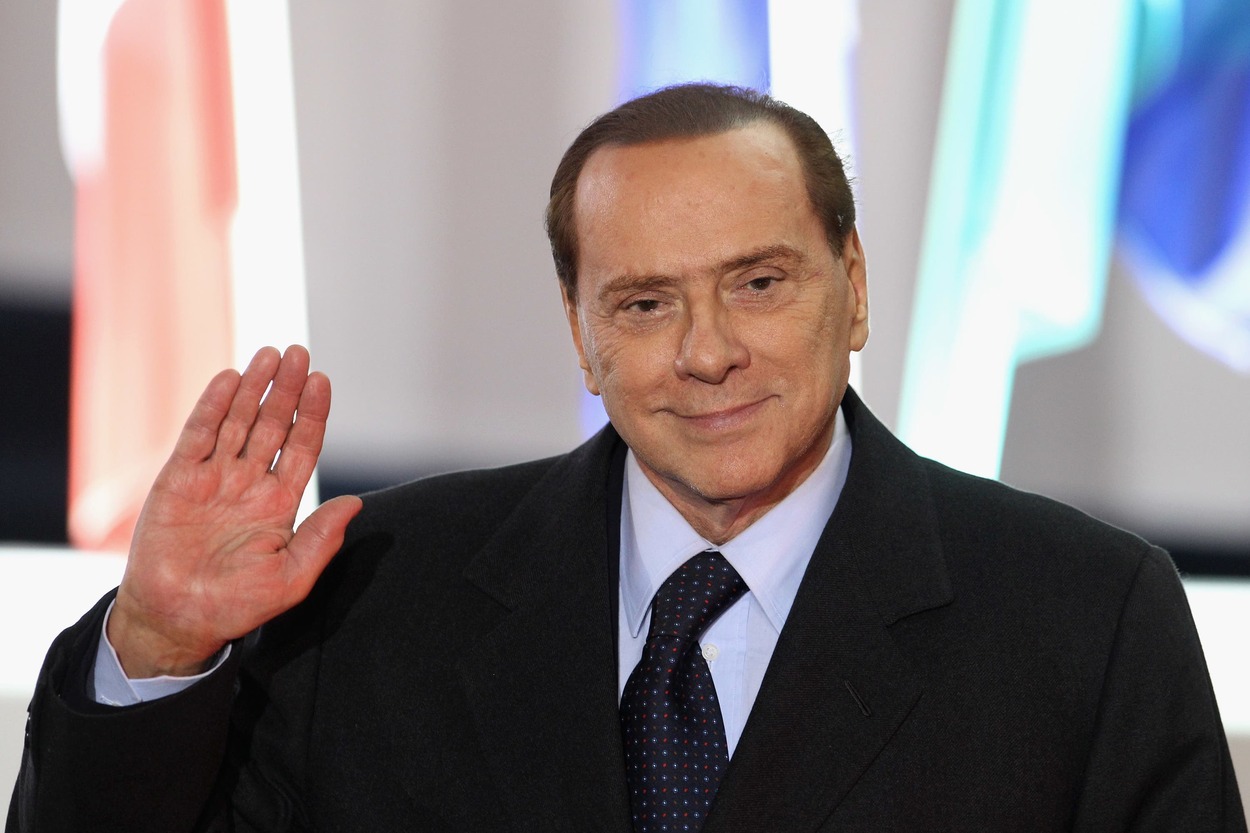
Italy former prime-minister, Mr. Silvio Berlusconi
Silvio Berlusconi, the flamboyant billionaire and former Italian prime minister who once proclaimed himself as the “Jesus Christ of politics,” passed away at the age of 86 in a Milan hospital, as confirmed by his press office on Monday. Berlusconi, who had been grappling with health issues in recent times, had recently received a leukemia diagnosis, according to Milan’s San Raffaele Hospital. He had previously been admitted to the hospital due to breathing difficulties and had attended a check-up on Friday. Italy’s current Prime Minister, Giorgia Meloni, expressed her condolences on Monday, highlighting that Berlusconi was above all a fighter. She described him as a man unafraid to stand up for his convictions, and it was precisely that courage and determination that made him one of the most influential figures in Italian history. Berlusconi’s political career was marked by a series of scandals encompassing politics, finance, and personal affairs, many of which led him to face legal proceedings. Charges against him ranged from tax evasion, bribery, and corruption to engaging in sexual activities with an underage prostitute. However, only one case resulted in a conviction in 2012 for tax evasion involving television rights. Despite that, it is clear that Berlusconi left an indelible mark on Italy’s political landscape during his extensive tenure as Prime Minister. Berlusconi’s legacy is a complex and multifaceted one, characterized by his unique blend of populism, business acumen, and flamboyant personality. So, today, let’s remember the life and career of the man Italians fondly nicknamed “Il Cavaliere” (The Knight).”

How Silvio Berlusconi changed Italy
Often regarded as Italy’s most colorful public figure, Berlusconi was born in 1936 in Milan, and began his career selling vacuum cleaners, before setting up a construction company.
In 1973, Silvio Berlusconi made his foray into the media landscape by establishing TeleMilano, a small cable television company that catered to the units constructed on his Segrate properties. The channel commenced its transmission in September of the subsequent year, marking the inception of the first private television channel in Italy. Over time, TeleMilano transformed into Canale 5, the country’s maiden national private TV station.
In 1978, he laid the foundation of his inaugural media conglomerate, Fininvest, which swiftly grew into a network of local TV stations spread across the nation. These stations shared similar programming, effectively forming a cohesive and extensive national network. Berlusconi’s rise to power was fueled by his media empire, which allowed him to shape public opinion and project his own image as a successful businessman and charismatic leader. His ownership of major media outlets raised concerns about conflicts of interest and media bias, leading to debates about the concentration of media power in the hands of a single individual.
Despite that, Berlusconi held the position of prime minister on three occasions, serving a total of nine years, a longer tenure than anyone since fascist dictator Benito Mussolini.
One of the defining features of Berlusconi’s tenure as Prime Minister was his economic policy agenda. He advocated for deregulation, tax cuts, and pro-business measures aimed at stimulating economic growth. Supporters lauded his efforts to liberalize the economy and reduce bureaucratic red tape, which they believed would boost entrepreneurship and attract foreign investment. Critics, however, argued that his policies disproportionately favored the wealthy and exacerbated income inequality.
Berlusconi’s personal style and controversial behavior were also notable aspects of his political legacy. He was known for his flamboyant personality, extravagant lifestyle, and penchant for making controversial remarks. His public image was often intertwined with scandals involving allegations of corruption, conflicts of interest, and sex scandals. These controversies, along with his ability to weather them politically, further cemented his reputation as a larger-than-life figure.
On the international stage, Berlusconi was a prominent figure in European politics. He positioned himself as a bridge between Europe and the United States, cultivating relationships with leaders such as former US President George W. Bush. His approach to foreign policy, however, was not without controversy. His close ties to Russian President Vladimir Putin raised concerns about Italy’s alignment with Moscow and strained relations with other European Union member states. On Monday, Putin said Silvio was “a true friend. I have always sincerely admired his wisdom, his ability to make balanced, far-sighted decisions even in the most difficult situations”.
In an out of politics, but always in the shadows
Berlusconi was voted out of parliament in 2013. Yet, true to his tenacious nature, he resurfaced in early 2018 as a revered elder statesman, wielding considerable influence as the kingmaker of a right-wing alliance involving his Forza Italia party. After being granted “rehabilitation” by the Court of Milan later that year, effectively lifting the ban on his return to politics following his 2012 tax fraud conviction, he announced his candidacy for a seat in the European Parliament. At the age of 83, he was elected in May 2019 and remained a Member of the European Parliament until his recent passing.
Berlusconi led the Forza Italia party, which he resurrected in 2013 after parting ways with the People of Freedom party. In September 2022, he guided the center-right coalition, alongside Giorgia Meloni and Matteo Salvini, to victory without assuming a government position. Beppe Severgnini, a columnist and author who wrote a book about Berlusconi, referred to the politician as a “protopopulist” whose success had paved the way for leaders like Hungary’s Viktor Orban, Britain’s Boris Johnson, and former US President Donald Trump.
Severgnini stated, “Berlusconi was actually less arrogant and less obnoxious than most, but nonetheless, he started it all.” He emphasized that Berlusconi possessed an astute ability to perceive the weaknesses and inclinations of a nation. In a way, he absolved the Italian people of their transgressions even before they were committed, acting not as a leader but as a follower of the collective “guts” of Italy.
Berlusconi’s impact on Italian society extended beyond his political career. He played a significant role in shaping popular culture and influencing the national discourse. His media empire showcased reality television programs and entertainment shows that captured the attention of millions of Italians. This fusion of politics, media, and entertainment blurred the boundaries between politics and popular culture, contributing to the rise of a new political landscape where image and spectacle became increasingly important.
Despite his enduring popularity among a segment of the Italian electorate, Berlusconi’s legacy is not without its critics. Many argue that his political career was characterized by a lack of transparency, a disregard for the rule of law, and a failure to tackle systemic issues such as corruption and inefficiency. His leadership style, while charismatic, was often criticized for its focus on personal interests and the consolidation of power.
Silvio Berlusconi’s political legacy is a complex and controversial one. His ability to dominate Italian politics for such a prolonged period and his impact on public opinion cannot be denied. However, his tenure was marred by scandals, allegations of corruption, and concerns about media concentration. Whether viewed as a shrewd businessman or a divisive figure, Berlusconi’s influence on Italian politics and society will continue to be debated for years to come.
By Ioana Constantin