A Complex Analysis of the Causes That Led to the Ukrainian-Russian War

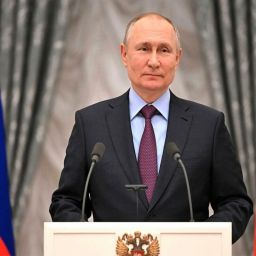
Photo:Reuters
The Ukrainian-Russian war, a significant conflict in contemporary European history, has its roots in a complex web of historical, political, economic, and cultural factors. The conflict, which began in 2014, was marked by Russia’s annexation of Crimea and the subsequent war in Eastern Ukraine. The history of Ukraine and Russia is deeply intertwined, with both nations tracing their origins back to the medieval state of Kyivan Rus. However, the history of the two countries diverged significantly with the Mongol invasion in the 13th century, which led to the rise of Muscovy (later Russia) in the east and the formation of distinct political entities, including the territories of modern Ukraine, in the west. Over the centuries, the Ukrainian lands oscillated between Polish, Lithuanian, Austrian, Ottoman, and Russian control. The 20th century was particularly tumultuous, with Ukraine briefly gaining independence after the Russian Revolution in 1918, only to be absorbed into the Soviet Union in 1922. Throughout the Soviet period, Ukraine experienced intense Russification, with the Russian language being promoted over Ukrainian. However, the Ukrainian identity persisted, and when the Soviet Union dissolved in 1991, Ukraine declared independence. The post-Soviet era was marked by political instability and economic hardship in Ukraine. The country oscillated between pro-European and pro-Russian governments, reflecting the cultural and political divide within the country. The war can be seen as a culmination of this struggle. In 2013, then-President Viktor Yanukovych rejected a proposed association agreement with the European Union in favor of closer ties with Russia. This decision sparked protests known as the Euromaidan movement. Yanukovych was ousted, and a pro-European government took power. Russia saw this as a threat to its influence in the region, and in response, annexed Crimea in 2014 and supported separatist movements in Eastern Ukraine.
Economic factors also played a significant role. Ukraine has substantial natural resources, including coal, iron ore, and natural gas, which have long been of interest to Russia. The economic interdependence between the two countries, especially in the energy sector, has been a source of tension. Additionally, Russia’s economic interest in keeping Ukraine within its sphere of influence was threatened by the possibility of Ukraine strengthening ties with the European Union. This could potentially open Ukraine’s market to European goods and reduce its dependence on Russian imports. Cultural factors also contributed to the conflict. Ukraine is linguistically and culturally divided, with the western part of the country leaning towards Europe and the eastern part, including Crimea, having closer ties to Russia. This division was exploited and exacerbated during the conflict, leading to a deep polarization within the country. Finally, geopolitical considerations played a significant role in the outbreak of the war. Russia has historically seen Ukraine as a buffer against NATO’s eastward expansion. The prospect of Ukraine moving closer to the West threatened this strategic position. The annexation of Crimea, home to Russia’s Black Sea Fleet, can also be seen in this light. The Ukrainian-Russian war is a complex conflict with roots in historical, political, economic, cultural, and geopolitical factors. It is a manifestation of the struggle for identity and sovereignty in post-Soviet Ukraine, as well as the changing geopolitical dynamics in Eastern Europe. While each factor contributes to the overall context of the conflict, none alone can be considered the sole cause. The historical ties and differences between Ukraine and Russia set the stage for the conflict, while political and economic developments in the post-Soviet era added fuel to the fire. Cultural divisions within Ukraine further complicated the situation, leading to internal discord and polarization. Geopolitically, the war can be seen as part of a broader struggle over the balance of power in Eastern Europe, with Russia seeking to maintain its regional influence and the West aiming to support democratic transitions in post-Soviet states. Understanding these complexities is crucial for any attempt to resolve the conflict and build a lasting peace in the region. Efforts towards resolution must not only address immediate security issues but also the deep-seated historical grievances and economic, cultural, and geopolitical divisions that underlie the conflict. The Ukrainian-Russian war, while a tragic and destructive conflict, provides valuable insights into the intricate dynamics of international relations, state sovereignty, national identity, and regional geopolitics in the 21st century. As such, it underscores the necessity of a multifaceted approach in conflict resolution and international diplomacy. The Ukrainian-Russian war is a complex, multifaceted conflict with deep historical roots and significant contemporary implications. Its causes are interwoven and multifactorial, encompassing historical, political, economic, cultural, and geopolitical elements. Understanding these complexities is crucial to resolving the conflict and building a sustainable peace in the region.
By Berta Schroeder