Comprehensive analysis of current European and world economic and trade trends

Photo: unsplash.com
From the beginning of the COVID-19 pandemic through to the present – 2024 – the world’s economy is being transformed by continual geopolitical tensions, reengineering of supply chains, and changes in policy for climate change and sustainable development. The EU, which is the most important market in the world, stands at the intersection of these shifts. From structural crises for the world’s largest economies (Germany, France), to supply chain disruptions, to new trade deals, these are driving the future of commerce not just in Europe but also globally. In this article, I explore these issues in the context of Europe’s response to developments in the trade and economic world order. Germany is the largest economy in Europe and was a hub of European manufacturing and commerce for a very long time. But the latest economic indicators point to an enormous problem for the nation. The recession in Germany is more long-term than the disruption of the pandemic and the energy shortage after Russia invaded Ukraine. Inflation and energy prices are on the down-sloping side, but the nation now has structural problems. Of these, the worst is a shortage of skilled workers with industries struggling to remain productive. Cost of labor and bureaucracy exacerbate the problem and keep Germany from competitiveness more generally. Political turbulence is a concern too, with the coalition government of the German chancellor Olaf Schulz, a coalition of Social Democrats, Greens and Liberals, sometimes mired in partisan division. Not only has this bickering postponed policy change, but it has also posed a problem for businesses, with fears that the coalition might break down and early elections might be called. Uncertainty about government has lowered business confidence and made the economic problems Germany has had trying to recover from the crash worse. Meanwhile, small and medium-sized enterprises, the engine of the German economy, were facing long-term problems which threw many firms into “long-term crisis mode”. Excessive energy costs, due to the fluctuation of global markets and Germany’s exit from nuclear power and fossil fuels, had driven up operating expenses for SMEs. That’s been made worse by inflation that has weakened purchasing power and increased production, allowing German firms to fall behind.

Photo: unsplash.com
The strongest hit to Germany’s industrial ambitions was the U.S. chipmaker Wolfspeed recently abandoning a plan to set up a semiconductor plant in Germany. This has led to doubts about Germany’s position in the world semiconductor market, the source of a technological solution for artificial intelligence, self-driving cars and high-tech manufacturing in the future. Semiconductor manufacturing is now a technological slugfest, and the fact that Germany has not managed to attract investment here proves how weak Germany’s industrial policy really is. Faced with these pressures, the German chancellor Olaf Scholz’s industrial policy has been attacked, as we mentioned above. Critics say the government’s energy transition and regulatory burdens have unsupported the industry from the competitive global market. Germany has not abandoned its long-term sustainable development agenda, but in the short term these measures have been detrimental to its industry. The government’s unwillingness to offer more draconian fiscal incentives to lure high-tech industries like chip-making has made the issue only worse. Further, Germany’s dependence on exports – especially to China – had rendered the economy subject to international trade conflicts and economic slowdowns in key foreign markets. Germany’s once-world champion automotive sector, too, has been hit by supply chain issues and stiff competition from Asian electric car suppliers. Therefore, Germany is now in a precarious position as Europe’s industrial giant and will have to make tactical changes to stay ahead in an increasingly globalized economy.
France, another major European economic player, faces a complex and delicate balancing act as its government, under Prime Minister Michel Barnier, attempts to navigate an increasingly fragile economic environment. With rising inflation, public discontent, and the need to maintain fiscal discipline, France faces the challenge of balancing budget constraints with economic growth plans. This balancing act is particularly difficult due to external pressures from the global economic environment and internal sociopolitical factors.
The main problem for the French government is the rising inflation. France, as many other European nations, has been beset by the spillovers from the coronavirus pandemic and the worldwide inflationary hegemony that has risen in response to Russia’s invasion of Ukraine. Inflation has been high in postwar energy prices and is driving inflation in transportation, manufacturing and agriculture. The inflation crisis in France was made worse by worries about global supply chain failures that have impacted consumer prices and availability. Because France relies on imports of energy and materials, its external price shocks are very much on the nose. The government’s capacity to regulate inflation without hurting economic growth is being strained by this, and it is being strained by the government of Prime Minister Michel Barnier to find ways of controlling inflation without hurting economic growth.
France’s economic problems are compounded by public frustration with economic policies that, in particular, they believe have disproportionate effects on the middle and lower classes. French citizens have always had a sharp revolt against austerity and the Barnier government is opposed by unions, labor groups and ordinary French citizens to its pension and tax reforms. Protests and strikes have become commonplace in French politics, as the people desire for better salaries and a job as living standards rise. Antoine Armand who is France’s new economy minister said, “The country is in an unprecedented situation. The economy is resilient, but our public debt is colossal. To not recognize this would be cynical and fatal.” Social unrest has made it more difficult for the Barnier government to implement reforms. For instance, reforming France’s long-term pension system has been resisted by most of the population. They have sometimes shut down cities like Paris, halting the economy and leaving a political situation in flux. This government has had to manage social dynamics carefully, taking care not to lose a large chunk of the vote through fiscal reforms while at the same time making sure it does not turn off most people.
Beyond economic and social issues, political volatility makes the French economy less secure. The Conservative coalition headed by the prime minister Michel Barnier has been forced to wrangle with a divided parliament and fractured politics. France is politically illiberal, from far-Left to far-Right, and it’s no longer possible to stay together in this environment. A propensity for internal schisms in the ruling coalition and between opposition parties to delay major policy programmes have raised doubts as to whether the government can successfully implement economic reforms. Electoral crisis has also raised the stakes for Barnier’s government. Rumors have started to mount of early elections, particularly as the rivalries in the ruling coalition have continued. This indeterminacy harms France’s economy because when businesses and investors make investments, they prefer stable, predictable government. And any continued political instability will make the economy stall even more and hamper efforts by the government to enforce reforms.

There is no doubt the fact that France’s economy is in trouble, and the Barnier administration is on a edge between fiscal austerity and economic ambition. Inflation, public rejection and political instability are straining France’s economic strength. But if the government manages to deal with these concerns – by tempering austerity with investment, social stability and political stability – France might be able to come out the victor. There is still much to be achieved in the horizon, but through carefully coordinated reforms and targeted economic policies France can overcome the obstacles and deliver sustainable growth in the future.
Supply chains have been badly disrupted worldwide in the past couple of years due to geopolitics and economic dynamics. These have hit Europe most heavily as the biggest trading power in the world. The two issues most important to the region are disruptions to shipping channels in the Red Sea that compelled ships to costly reroute, and a more general trend in global value chains as companies try to reduce their dependence on Chinese production.
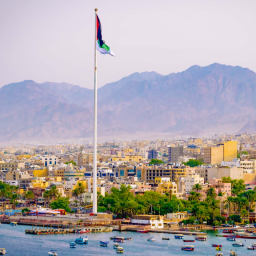
Among the biggest concerns for global supply chains, the instability of the Red Sea, the primary ocean transport corridor between Asia and Europe. The Red Sea and the Suez Canal are gateways to the world’s commodities, from oil to consumer products and raw materials. But the passage has become ever more perilous with ongoing geopolitical conflicts, in Yemen especially, where Houthi fighters have attacked commercial ships. The adjustment mainly applies to Asian-European sailings, which take two weeks longer than the 35-day average and leave a very long gap between ships landing in European ports. The strikes have also made the decisions of shipping lines to do costly things such as turning back around the southernmost edge of Africa through the Cape of Good Hope. The detour has pushed two weeks past normal time for transit between Asian and European ports, making it costly to ship. These delays have meant stock runs and even short-term manufacturing shutdowns for European producers and retailers that count on just-in-time supply chains. The issue of this rerouting goes beyond logistics: it’s also economic. Shipping costs and delay is borne by consumers, driving prices higher in Europe that is already struggling to keep up with prices due to energy scare and other bottlenecks of supply chains. European firms in particular — automotive, electronics, retail — have suffered the most from these delays as they can’t run without the timely provision of parts and goods. In the wake of the crisis, the international community has demanded that the world unite in order to protect the safety of the shipping lanes in the Red Sea. The Navy of the United States, Britain, France and other nations has taken merchant ships there to guard them. But these measures are only partial as the threat of further attacks looms. Long term a political end to the conflict in Yemen might be in order, but for now European companies will continue to experience supply chain disruptions.
In addition to the Red Sea crisis, Europe is subject to a more global-scale transformation in value chains. In the last few decades, a lot of companies have established globally integrated supply chains, with China as one of the key manufacturing bases. But now, a US-China trade war and China’s own slowdown have caused businesses to question whether they need Chinese production anymore. US-China trade conflict: The trade war has imposed tariffs on hundreds of billions of dollars worth of both nations’ goods and caused havoc on world trade. European companies that import from China or export to the US have been caught in the middle: more expensive, with no certainty of future trade policy. Meanwhile, China’s own economic problems (slower economic growth and higher labor costs) have left it less desirable as a manufacturing destination for some sectors. This leads a lot of European businesses, particularly automotive and technology firms, to look to diversify their supply chains. Southeast Asia was the new future frontier, and Vietnam, Thailand and Malaysia have cheaper labor and better infrastructure. The car industry, for instance, relies on China to produce components and is now looking for new manufacturing facilities in Southeast Asia to avoid becoming too dependent on any one of these countries. But the road out of China is not always smooth. New supply chains take time and capital to build, and the creation of new trading relationships involve logistical challenges too. Southeast Asia might be cheaper, but it does not have the manufacturing hub of China. European companies will also have to grapple with local customs, labor laws and political risk in these new markets. Moreover, the global value chain shift is geopolitical in nature. The US has been pushing for “friendly-shoring” — that is, states should develop supply chains between allies to mitigate risk from geopolitics. But for Europe, the trade-off is having to work around political coalitions. As the US is encouraging its allies to reduce China’s reliance, European nations have been staying in the middle, looking for alternative sources of supply while remaining trade partners with China.