The Mountain Republic in the Middle: Kyrgyzstan, Central Asia’s Restless Exception
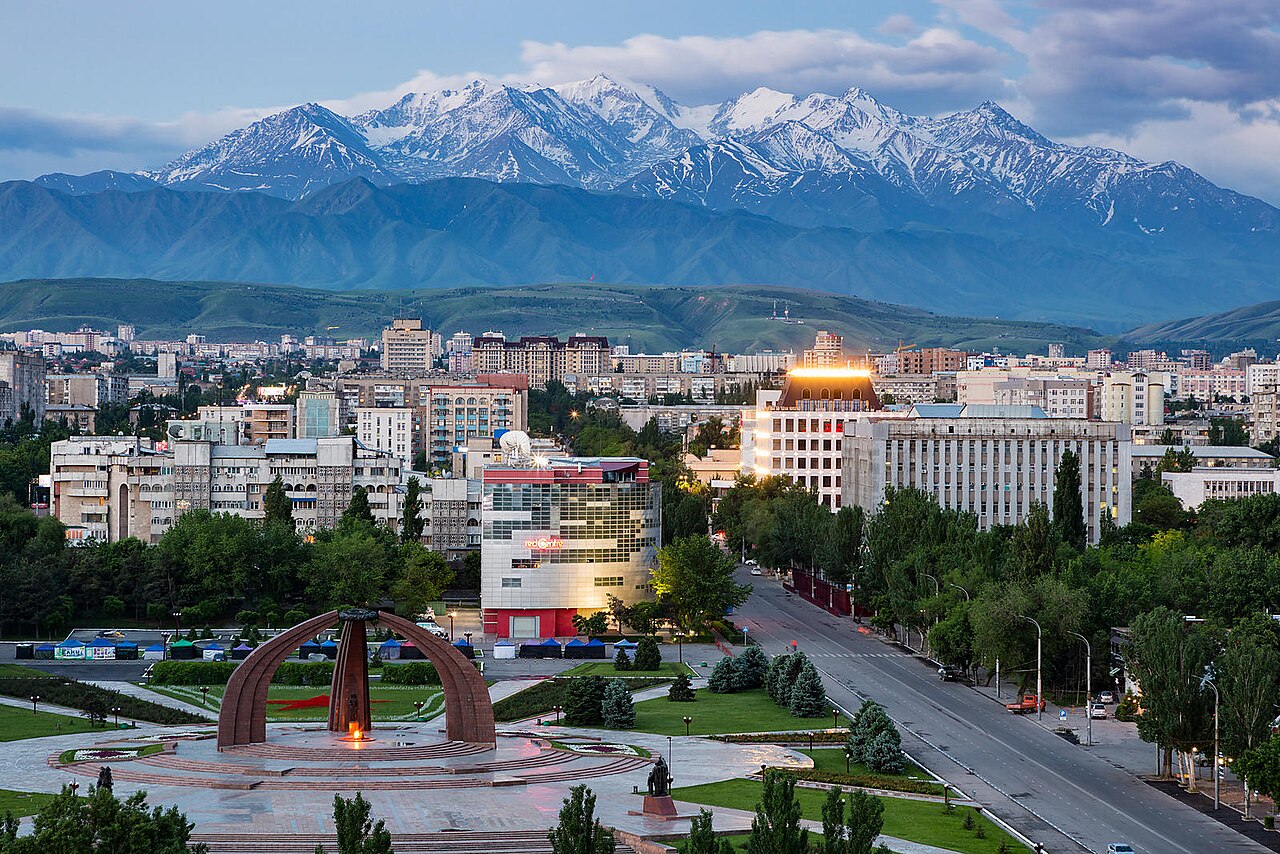
Kyrgyzstan just hosted the leaders of half of Eurasia at the SCO summit in Bishkek, yet most of the world could not place it on a map. Kyrgyzstan is a small, mountainous country with a booming economy, a fading reputation for revolution, and a president quietly turning the region’s most open political system into something that looks increasingly like its neighbors.
When the leaders of China, Russia, India and Iran gathered in Bishkek at the end of August for the Shanghai Cooperation Organisation summit, they were meeting in the capital of a country that for years wore an unusual label in Central Asia: the region’s one genuine, if turbulent, democracy. Kyrgyzstan has spent three decades as the exception among its authoritarian neighbors, a place where presidents were repeatedly overthrown by their own people rather than dying in office or ruling for life. That reputation is now fading, and the story of how and why is the story of Kyrgyzstan today, a mountain republic caught between great powers abroad and a hardening grip at home.
Geographically, Kyrgyzstan is a country defined almost entirely by its mountains. More than ninety percent of its territory sits above 1,500 meters, dominated by the soaring Tian Shan range, and its landscapes of high pastures, glacial lakes and remote valleys have shaped a national culture rooted in nomadic tradition, a heritage the country now markets to the world through events like the World Nomad Games, whose sixth edition opened in Bishkek alongside the recent summit.
Landlocked and mountainous, bordering China to the east and its Central Asian neighbors Kazakhstan, Uzbekistan and Tajikistan on the other sides, Kyrgyzstan has a population of roughly seven million and an economy that, until recently, ranked among the poorest in the former Soviet space. Its geography is both its charm and its constraint: beautiful, strategically placed on the old Silk Road between China and the Russian world, but difficult to develop and dependent on its larger neighbors for access to the sea and to markets.
The country’s modern political history is genuinely distinct, and it is worth understanding because it is precisely what is now changing. Since gaining independence with the collapse of the Soviet Union in 1991, Kyrgyzstan has experienced three revolutions, in 2005, 2010 and 2020, each toppling a president who had grown too corrupt or too repressive for the public to tolerate. This pattern gave rise to a wry local saying: that every five to ten years, the country tires of its increasingly authoritarian leader and throws him out. No other Central Asian state has anything like this tradition of popular removal. It made Kyrgyzstan poorer and more chaotic than its neighbors, but also freer, with a livelier press, a more competitive politics, and a citizenry accustomed to holding power to account in the street.
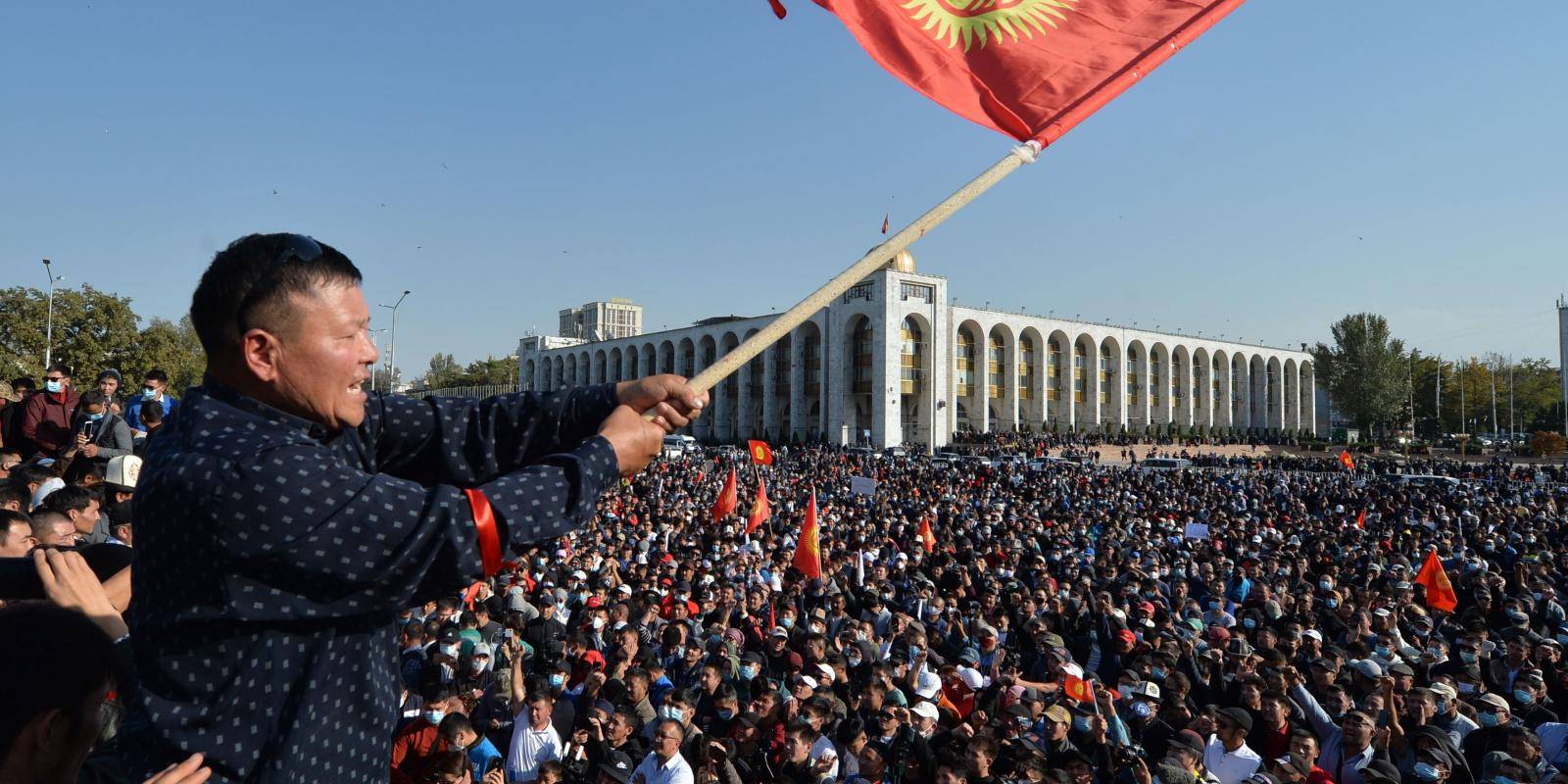 People protest during a rally against the results of a parliamentary vote in Bishkek on October 5, 2020.
That tradition is now being tested by the man the last revolution brought to power. Sadyr Japarov rose in the unrest of 2020, literally freed from prison by protesters, and moved quickly to consolidate his position. In 2021 he pushed through a referendum on a new constitution that replaced the parliamentary system with a strong presidential one, a document critics dubbed the “Khanstitution” for what they saw as a return to Central Asia’s tradition of one-man rule. The trajectory since has been steadily illiberal. Civic space has contracted, protest has been effectively banned across almost all of Bishkek, new laws have pressured independent media into cautious silence, and the parliamentary elections of November 2025 delivered pro-presidential parties around eighty percent of the seats with no real opposition. The streets that once boiled with revolt now sit quiet, and analysts note that what distinguishes the current government from its predecessors is the sheer extent to which it has managed to dominate both state institutions and the wider political environment.
The most dramatic recent turn came at the very top of the ruling structure. For years Japarov governed in tandem with his close friend and political partner Kamchybek Tashiev, who ran the powerful State Committee for National Security, the two men fusing formal authority with coercive control. In February 2026, Japarov abruptly dismissed Tashiev, and the following month authorities accused his former partner of involvement in a corruption scheme worth tens of millions of dollars tied to the state oil company. The purge that followed, sweeping through the security apparatus and Tashiev’s network of loyalists, has left Japarov more dominant than ever, but it has also introduced a new fragility. Entrenched patron-client networks and regional rivalries, the traditional fuel of Kyrgyz upheaval, have been disturbed, and with presidential elections due in 2027, the question of whether Japarov consolidates a durable authoritarianism or triggers the next cycle of revolt remains genuinely open.
If the politics have darkened, the economy has, paradoxically, boomed, and the reasons say a great deal about Kyrgyzstan’s place in the world. Before Russia’s invasion of Ukraine in 2022, the country grew at a modest four to five percent a year. Since then, growth has surged to nearly nine percent in both 2023 and 2024, making Kyrgyzstan one of the fastest-growing economies on earth. Part of the boom rests on surging global gold prices, gold being the country’s great natural resource, but a large part rests on something more delicate: Kyrgyzstan’s role as a conduit for goods flowing to sanctioned Russia.
European exports of items like machine tools and radio equipment to Kyrgyzstan have exploded since 2022, even as Kyrgyz exports of the same goods to Russia have risen in near-perfect parallel, a pattern that has drawn the attention of European Union sanctions enforcers now threatening restrictions. Bishkek has built a significant share of its prosperity on being a reliable node in the architecture of sanctions circumvention, a lucrative position that is also a strategic vulnerability, exposed to any shift in the war or any tightening of Western enforcement.
That vulnerability points to the deeper theme of Kyrgyzstan’s existence: it is a small country perpetually balancing between larger powers. Russia remains the traditional patron, the destination for hundreds of thousands of Kyrgyz labor migrants whose remittances sustain countless families, and the cultural and security anchor of the relationship. China is the rising force, the source of investment, infrastructure and trade that increasingly runs through Kyrgyz territory as part of Beijing’s Belt and Road ambitions, a role the SCO summit in Bishkek was designed in part to showcase. The economic dependence on Russia and the growing gravitational pull of China leave Bishkek with limited room to maneuver, and its diplomacy consists largely of extracting what benefit it can from both while avoiding a decisive choice between them. The benefits of that balancing act are real, but so is the erosion of sovereignty it quietly entails.

Beneath the geopolitics runs a quieter story of identity and everyday life. Kyrgyzstan is a young nation still negotiating what it means to be Kyrgyz in the twenty-first century, blending a proud nomadic heritage with a Soviet inheritance and the pressures of a globalizing economy. The influx of Russians fleeing mobilization and sanctions has driven up rents in Bishkek and stirred quiet resentment among locals. Inflation, running above eight percent, has eaten into the gains of the boom, and a quarter of the population still lives below the poverty line despite the headline growth figures. The prosperity is real but unevenly shared, concentrated in the capital and among those positioned to benefit from the new trade flows, while much of the rural population continues to depend on herding, farming and the wages sent home from Russia.
Kyrgyzstan enters the second half of the 2020s, then, as a study in tension. It is booming and unequal, strategically courted yet strategically dependent, historically the freest country in its neighborhood yet drifting steadily toward the authoritarian norm around it. The SCO summit placed it, briefly, at the center of a grand vision of a multipolar Eurasia, a small mountain republic hosting the powers that would remake the world order. When the motorcades left Bishkek, the country they left behind remained what it has long been: a place trying to hold onto its restless, revolutionary character even as its leaders work to extinguish it, caught between Moscow and Beijing, between its democratic past and an uncertain future, in the high middle of the Asian continent.
Whether it throws off its next strongman on the old schedule, or whether Japarov has finally broken the cycle, will be one of the quiet but telling tests of where Central Asia as a whole is heading.
By I. Constantin