Scroll Top

The Eastern Economic Forum announces a new major partner for Russia!

The Eastern Economic Forum is taking place these days. Vladimir Putin is set to deliver a lengthy speech later today—if he hasn’t already started. The Eastern Economic Forum is similar to the St. Petersburg Economic Forum, though not quite as significant in terms of the number of participants.
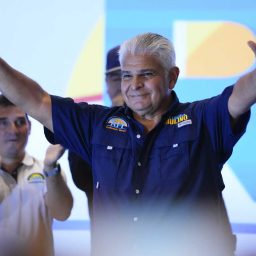
However, it seems quite relevant to discuss it this year, even though there were only 5,000 participants from approximately 80 countries. I say “only”—despite it being a very large number—because in previous years, particularly between 2018 and 2019, there were far more attendees; we were looking at figures like 8,900 delegates and the presence of leaders such as Xi Jinping, Narendra Modi, and Shinzo Abe. This time, the event drew 5,000 participants, with notable international guests including Nyam-Osoryn Uchral (Prime Minister of Mongolia), U Nyo Saw (Vice President of Myanmar), and Ding Xuexiang (First Vice Premier of China). Most importantly, Prabowo Subianto—the President of Indonesia—is attending as the principal guest of honor and the only foreign head of state present.
Prabowo’s presence is extremely important, lending a notable character to the Eastern Summit. Essentially, the Eastern Summit focuses on developing Russia’s foreign trade relations not via the West (Europe) or directly south (towards China), but via the East—towards the rest of East Asia—creating ties independent of Russia’s other major partnerships. Indonesia is the largest ASEAN nation and a G20 member; it is a major power today that maintains pragmatic relations with the US, China, and Russia alike. It represents the most valuable Asian power Russia could draw into such an economic framework without falling directly into the sphere of influence of either China or the United States.

To give you some background on Indonesia: it has a population of nearly 300 million and a GDP of $1.5 trillion, making it Southeast Asia’s largest economy, though it is also a net oil importer. In April 2026, Jakarta announced it would agree to import Russian oil and—in partnership with Russia—build refineries and storage facilities within Indonesia. You can imagine what a major development that would be.
They will never be dependent on Europe or China if they also have access to such independent markets. Moreover, there is a long-standing military foundation to the relationship between the two states. Indonesia has long operated Russian military equipment; now that the war in Ukraine has forced Russia to rapidly ramp up arms production, this could open up export opportunities and partnerships in the coming years—even after the war ends and Russia shifts its focus more heavily toward arms exports.
In addition to Indonesia, Mongolia and Myanmar were also present. Myanmar is a significant state, yet it remains too disorganized and plagued by conflict. I have previously discussed the issues in Myanmar, so this presence is not particularly significant, given that nothing has been settled there yet.
Mongolia’s presence, however, was important because the country is almost entirely dependent on Russian fuel. Fuel prices there have nearly doubled in recent months, driven by rising oil prices in Russia and Ukrainian attacks on oil infrastructure. This underscores the importance of Mongolia’s presence; it demonstrates that Mongolia remains aligned with Russia, despite the anti-Russian sentiment sparked by rising fuel costs.
In terms of substance, what was announced there? The theme of the event was the development of the Russian Far East. The focus was primarily on investment, infrastructure, technology, and energy; furthermore, Putin is announcing a new strategy for the Far East extending to 2036, as well as plans to transform the Northern Sea Route into a year-round navigable passage over the coming years. That covers the essentials of this summit.
While by no means the most significant edition in the event’s history, in terms of the geopolitical weight of the keynote guest, it is arguably the most important edition in recent years, given Indonesia’s importance to Russia. And finally, the last visit we will discuss today: after the SCO summit in Bishkek, while Putin headed to Vladivostok for the economic summit, Xi Jinping continued his journey to Cairo—his first visit to Egypt in a decade and his first trip to the Middle East in four years. This meeting is significant because it demonstrates that the Egyptians are prepared to pursue a policy of strategic diversification, even though they remain dependent on the US for the time being.
By Daria Gusa
www.solidnews.ro

Related Posts