Scroll Top

Xi Jinping’s Southeast Asia Trip Strengthens China’s Ties as Tensions with the U.S. Rise

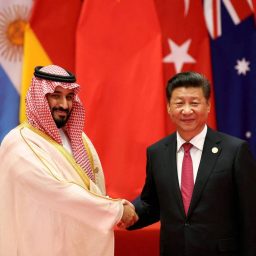
Photo: AP News

Chinese President Xi Jinping has completed a major diplomatic trip across Southeast Asia, visiting Vietnam, Malaysia, and Cambodia. This week-long journey, his most extensive regional visit in years, was clearly aimed at strengthening China’s position in the region while responding to increasing economic pressure from the United States under President Donald Trump’s administration. Xi began his tour in Hanoi on April 14, where he met with Vietnam’s top leaders, including Communist Party General Secretary Tô Lâm and President Tô Anh Dũng. The two countries reaffirmed their “comprehensive strategic partnership,” showing that they are committed to working closely together despite long-standing tensions in the South China Sea. They signed 45 cooperation agreements in areas such as artificial intelligence, agriculture, trade, and culture. China also offered to help Vietnam plan new rail lines using the same standard gauge used in China, which would make transportation and trade easier between the two countries. Additionally, 2025 was declared the “Year of Vietnam-China Humanistic Exchange,” encouraging more educational, tourism, and cultural partnerships between their people. Xi’s next stop was Malaysia, where he met with Prime Minister Anwar Ibrahim and his cabinet. The two countries signed over 30 new agreements focused on green energy, artificial intelligence, and digital trade. One of the biggest developments was their decision to move forward with the East Coast Rail Link (ECRL), a $12 billion project funded largely by China. The railway will improve transport across Malaysia and is part of China’s larger Belt and Road Initiative (BRI). The leaders also discussed closer cooperation in agriculture, halal food exports, and peaceful dialogue in the South China Sea. In a joint statement, both sides expressed support for working together through international organizations and criticized “unilateral economic bullying,” referring to recent U.S. tariffs.


In Cambodia, Xi met with Prime Minister Hun Manet and signed 37 agreements that covered military training, healthcare, and economic zone development. A major highlight of the visit was the announcement of the Funan Techo Canal project, a $1.2 billion waterway designed to give Cambodia direct access to the Gulf of Thailand. The project is expected to boost Cambodia’s economy and reduce its reliance on Vietnam for river transport. However, environmental groups and some neighboring countries have raised concerns about how the canal might affect the region’s water systems. China also committed to expanding Cambodia’s Ream Naval Base, which some worry could be used for military purposes in the South China Sea.
While these visits were important for regional cooperation, they also reflect a bigger global strategy. Since President Trump returned to office in early 2025, his administration has placed high tariffs on goods from Vietnam, Malaysia, and Cambodia. These countries had become popular manufacturing alternatives to China, but the U.S. now sees them as ways for Chinese companies to avoid trade restrictions. In response, Xi’s trip can be seen as China’s way of pushing back—offering investment, infrastructure, and stronger partnerships to keep its neighbors close and show that it still has global influence.
By strengthening ties with these nations, China is also sending a message to the rest of the world. As the U.S. turns inward and focuses on tariffs and protectionist policies, China is promoting itself as a stable and committed partner—especially for developing countries. Through investments and long-term projects like the BRI, China hopes to create a network of allies who rely on it for growth, trade, and political support.

A Signal for U.S.-China Relations and Future Conflict Zones

Xi’s Southeast Asia trip also gives us a better look at where things might be heading in the larger China-U.S. relationship. It’s not just about trade deals—it’s about who will have more influence in the world, especially in fast-growing regions like Southeast Asia. By visiting countries directly affected by U.S. tariffs and offering them economic support, China is trying to build a counterbalance to American power.
This trip also shows that the competition between China and the U.S. is moving beyond just economic rivalry. It’s about setting the rules for how international partnerships, development, and even digital systems will work in the future. China is offering a different model—one based on investment, infrastructure, and state-led development—while the U.S. is leaning into tariffs and more confrontational policies.
By backing projects like the Funan Techo Canal, expanding port access, and building railways, China isn’t just investing in construction—it’s building long-term influence. These moves give China more control over key supply chains and trade routes, while also deepening its role as a security and development partner in the region.
In the end, Xi’s Southeast Asia tour is more than a diplomatic visit—it’s a clear signal that China is prepared to lead where the U.S. is stepping back. It marks a new stage in the rivalry between the world’s two largest powers, with Southeast Asia at the center of that struggle for influence.
By Eason Chi

Related Posts