Scroll Top

Global Trade Systems in Transition–From Multilateralism to Strategic Alliances

Photo: Reuters

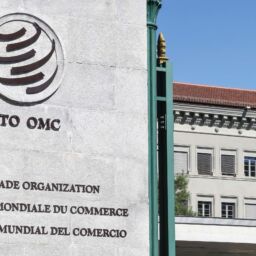
The global trade landscape experienced a series of strategic developments that signal a deeper shift away from traditional multilateralism. Countries are no longer relying solely on international institutions, agreements, or frameworks, like the World Trade Organization (WTO), to handle their trade relations. Instead, many are turning toward regional alliances, bilateral agreements, and issue-specific coalitions. This change reflects growing concerns about geopolitical risks, supply chain disruptions, and the need to protect national interests—especially in industries such as clean energy, semiconductors, and rare minerals. Rather than wait for large, slow, and often stalled global negotiations, governments are creating faster, more flexible, and targeted trade frameworks. During these two weeks, four key events demonstrated that trade policy is being used as a broader tool for achieving economic resilience and strategic advantage. These events highlight how trade is becoming tightly connected with defense, climate policy, and industrial development. This article examines each of these developments, and then explores what they collectively mean for the future of global trade governance. One of the biggest events was the trade talk between the European Union and the United States. The meeting happened just days before the U.S. planned to put a 50% tariff on many imported goods. The EU wanted to stop this by agreeing to a different plan, a high-level “framework” trade deal. Leaders from both sides, including Maroš Šefčovič from the EU and Scott Bessent from the U.S., talked about a 10% general tariff. This plan would also let each side make exceptions in special areas like medicine, clean energy, and computer chips. These are important industries that both sides want to protect. If they reach an agreement, it will help avoid a trade war. But the way they are doing it—by working outside of the WTO—shows a bigger change. These talks are not just about this one problem. They show that powerful countries now prefer private deals instead of global rules. They want deals that match their national goals in a more efficient manner. This event is important because it shows the WTO is no longer the only place where global trade rules are made. Instead, more countries are choosing faster, simpler talks with fewer members. The EU-U.S. deal reflects a trend in which major economies seek to manage trade frictions quickly and directly.

Another major event was the signing of a free-trade agreement between South America’s Mercosur trade bloc and the European Free Trade Association (EFTA) on July 2. Mercosur includes Brazil, Argentina, Uruguay and Paraguay, while EFTA comprises Norway, Iceland, Switzerland and Liechtenstein. This deal will establish a free-trade area between the two blocs and improve the market access of more than 97% of their exports, covering trade of goods, services, investment, and intellectual property rights, among a range of other sectors. This deal is special because it connects two smaller groups whose members are not usually in the spotlight. It also avoids using the WTO as a middleman. Both sides wanted to make a deal quickly and in their own way. The agreement helps smaller economies trade with strong markets in Europe, reveals that even small countries can shape the rules. In this deal, countries kept control over various areas that matter to them. For instance, since Mercosur members are rich in natural resources, and EFTA members specialize in advanced technology and services, this partnership could create a win-win outcome through complementarity rather than competition. That means the agreement is flexible and based on mutual respect as well as benefits. This could be a model for others. The impact is clear: more countries may begin making deals on their own, for their own benefits, rather than waiting for big, global deals that take many years.
Denmark’s new role as president of the EU Council, which started on June 28, also brought new ideas to the table. Denmark said its top goal was to help Europe become more self-reliant. This is called “strategic autonomy.” Denmark wants the EU to rely less on countries that may not share its values, especially for important materials and technologies. These include rare earth minerals, semiconductors, and green energy tools. Denmark’s leaders said that by trading more with trusted partners in Asia and Africa, the EU can build safer and more dependable supply chains. The European Commission supported this plan, saying that the world is getting more dangerous and Europe needs to protect its economic interests. This is a big change from the old idea of free global markets. Before, Europe welcomed trade with everyone. Now, it wants to choose who it trades with and how. The EU is also talking more about making goods inside Europe, even if it costs more. This idea will affect how Europe buys and sells goods around the world. It also means that countries who want to trade with the EU will have to meet new rules and higher standards. Strategic autonomy is not only about industry—it also touches digital sovereignty, energy independence, and geopolitical resilience. Denmark’s leadership could set a tone for future presidencies to adopt more protective economic strategies.
Beyond the events among countries of Europe and the Americas, the transition of the global trade system is also reflected in cross-regional cooperation——a typical event is the launch of the “Quad Critical Minerals Initiative” by the United States, Japan, Australia, and India on July 1, 2025. The initiative is a coordinated effort to secure and diversify supply chains for minerals like lithium, cobalt, and nickel—essential for batteries, semiconductors, and clean technologies. The foreign ministers of all four countries signed a joint statement in Washington, calling the initiative “an ambitious expansion of our partnership to strengthen economic security and collective resilience” . India’s External Affairs Minister, Subrahmanyam Jaishankar, described the meeting as “very productive,” stressing mutual benefits in reducing dependence on Chinese-controlled mineral markets. Unlike traditional trade pacts focused on tariffs, this initiative focuses on securing supply chains and sharing technical standards, technologies, and investments. It represents a new model of strategic trade cooperation, where allied nations proactively protect key industries in coordination. The Quad partnership is a strong example of how trade policy and security now intersect in critical supply sources.
All four developments point to the same trend: global trade is becoming more partnership-oriented rather than open to all under universal rules. Countries aim to reach economic and trade cooperation more quickly, thereby better safeguarding their own interests and meeting their own needs. For instance, they seek to protect their supply chains to ensure access to essential goods even in times of crisis. While this may benefit their economies, it could also further divide the world. Some countries might be excluded from new trade blocs. The fragmentation of rule systems could expose small businesses to more regulations, higher costs, and greater risks. The principle of fairness is also being challenged. One question worth exploring is: are we building a stronger system, or just a smaller one?
First, more countries are turning away from multilateral trade systems like the World Trade Organization (WTO). The WTO was built to help countries trade fairly and solve problems peacefully. But many leaders now say it is too slow, too complicated, and unable to deal with new problems like digital trade, green technology, or sudden political tensions. For example, the WTO has not been able to fix its Appellate Body for years, making it hard to resolve trade disputes fairly. Thus, many countries are choosing to make side deals, just like the aforementioned countries did. These deals are faster and give each side more control. They let countries protect special industries and skip rules they don’t like. But this also makes it harder for smaller or poorer countries to join. If the WTO keeps losing power, there may be fewer group left to speak for everyone. That could hurt the idea of fairness in trade. It also means that countries might go back to using power instead of rules to get what they want. The loss of a central system like the WTO could also make it harder to respond to global economic shocks, as there would be no shared playbook for cooperation.
Second, trade and national security are now closely connected. This is a big change. In the past, trade was about making money and helping people live better lives. But now, it is also about keeping countries safe from threats. The NATO summit in The Hague showed this clearly. Members talked about trade as part of defense. They worry about what will happen if enemies cut off important goods like food, fuel, or minerals. So, they are planning ahead. They want supply chains that work during war or disaster. This means countries may only trade with others they fully trust. It also means businesses may need to follow new rules to stay part of these supply chains. For example, companies might be asked to prove that their parts don’t come from risky places. All of this changes the way trade works. It becomes less about cost and more about control. This could help countries stay safe—but it could also raise prices and slow innovation. Smaller exporters may lose access to global markets simply because they are based in politically sensitive regions. This may create new kinds of inequality—not based on poverty or capability, but based on perceived political reliability.
Third, smaller and medium-sized countries are starting to take a bigger role in world trade. They are not waiting for big powers to lead. The deal between Mercosur and EFTA proves that smaller groups can work together and make real progress. Countries like Norway, Uruguay, and Paraguay don’t have the same power as the U.S. or China, but they do have interests and ideas. By teaming up, they can protect their economies and grow stronger together. Denmark’s leadership in the EU shows a similar trend. It used its turn as EU president to push for a stronger, more independent Europe. This means that even small countries can shape big decisions. This shift is good in many ways. It brings more voices into global trade talks. It lets smaller countries build plans that match their needs. But there’s also a risk. If every small group makes its own rules, the world could end up with too many systems. That can make trade harder instead of easier. Still, if managed well, this trend could make trade more open, not less. Also, these small players are often more flexible and willing to experiment with newer forms of trade, like digital services, carbon credit markets, and climate-related investments, which could lead to innovation in trade governance.
Fourth, we are starting to see “fragmentation” in the world trade system. This means there are more trade rules—but they are different in every place. Each new deal comes with its own rules for things like carbon emissions, labor laws, digital trade, or environmental safety. For global companies, this is a headache. They must follow many different sets of rules, even for the same product. For example, a company selling green technology in Europe must follow different standards than one selling in South America. It raises the cost of doing business and slows down supply chains. For developing countries, it’s even harder. They may not have the tools or knowledge to follow all these changing standards. They could be left out of key trade deals simply because they can’t keep up. This problem hurts global growth. It also makes it harder to work together on big global issues—like climate change or fair internet use. If every trade group sets its own carbon rules, we may never get a global solution to climate problems. The world needs to find ways to simplify trade again—while still keeping high standards. One possible solution is to create “rule bridges,” where trade groups recognize each other’s standards without requiring full alignment, but this idea is still in early discussion stages.
Finally, these new trade systems often forget about fairness. Many of the new deals help rich or middle-rich countries protect themselves and grow faster. But they do little to help the poorest countries. The EU wants secure access to rare earths and clean energy tools—but many of these resources come from Africa or South Asia. Those places are often asked to sell raw materials cheaply. But they are not included as equals in trade talks. This looks a lot like the old system, where rich countries got what they needed, but poor countries were left behind. If this keeps happening, the global trade system will grow more unequal. We will see more protests, more tension, and fewer chances for peace and shared progress. That is not a system we should want. Instead, new trade deals should include strong programs for sharing technology, building local factories, training workers, and forgiving debt when needed. A strong trade system is not just about safety—it must also be fair and give every country a chance to grow. For example, tying investment deals with education and infrastructure spending in least-developed countries could ensure long-term win-win gains. Without such commitments, trust in the global system will continue to erode.
Together, these recent developments show that global trade is entering a more fragmented but also more strategic phase. Countries are no longer bound by the idea that one size fits all or that every agreement must include everyone. Instead, nations are choosing partners that share their values or strategic goals and are using trade as a tool to build resilience, control supply chains, and shape future industries. This transition brings both promise and risk. It can help countries become stronger and more prepared for crises, but it may also leave others behind—especially those without the resources or influence to join these new frameworks. It challenges the long-standing vision of inclusive, rules-based trade. Moving forward, global trade policy will need to strike a difficult balance: protecting national and regional interests while still offering fairness, opportunity, and openness to all. If this balance can be achieved, the world may emerge with a trade system that is more flexible, responsive, and durable than before. Policymakers will have to choose carefully.
By Hongrun Li

Related Posts