Trump’s Abraham Accords Push Meets Cold Shoulder Across the Middle East
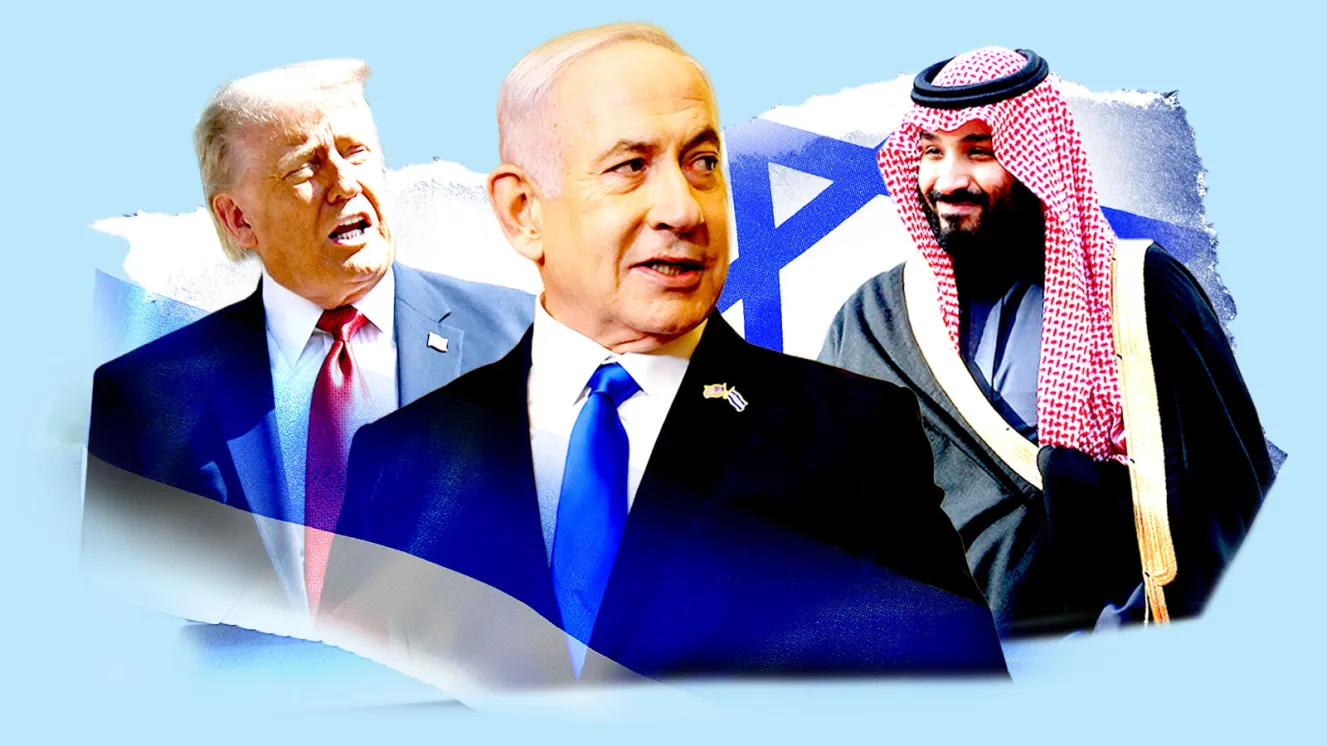
Donald Trump has never been a president who mistakes silence for consent. But the response his latest Middle East diplomatic push has received, ranging from polite deflection to private mockery, suggests that even his most loyal regional partners have limits to what they will publicly embrace, and that those limits are being tested right now.
Trump’s demand, posted on Truth Social earlier this week, that countries including Pakistan, Egypt, Turkey, Qatar, and Saudi Arabia join the Abraham Accords and formally recognize Israel, has landed in Arab capitals with a reception that can be charitably described as lukewarm and more accurately described as somewhere between quiet eye-rolling and genuine alarm.
The most telling detail in the regional response to Trump’s push is not what officials said publicly. It is what they said privately. A former American official, after Trump’s statements, sent what he described as congratulatory messages to Arab counterparts, ironically welcoming their supposed imminent membership in the Abraham Accords. The responses came back as laughing emojis.
That exchange captures the gap between Trump’s public ambitions and the private assessments of the very governments he is counting on to deliver them. These are American allies, partners who have spent years carefully managing their relationship with Washington and who understand better than most the cost of antagonizing a president who takes public commitments seriously. The fact that they responded with laughter rather than careful diplomatic language tells you something important about how seriously they take this particular demand.
A Gulf Arab diplomat, speaking anonymously, was somewhat more analytical in his assessment. “It is a smart tactic to calm the angry base,” he said, describing Trump’s push as a message directed primarily at conservative Republican voters worried that the administration might be giving away too much in its negotiations with Iran. “He will keep bringing this up again and again. But it will not be part of the deal.”
The interpretation offered by that diplomat, that the Abraham Accords expansion is primarily a domestic political signal rather than a serious diplomatic objective, is one shared by others in the region. A former American official described the initiative as a “poison pill,” a set of additional conditions for broader regional peace that neither Iran nor the targeted states would accept, and which therefore functions less as a pathway to agreement than as an excuse for the absence of one.
A second former American official described the reaction from his government contacts across the Middle East as one of “distrust and frustration.” That combination, distrust of the initiative’s sincerity and frustration at its timing, is significant. These are governments that are currently trying to serve as intermediaries in the delicate negotiations between Washington and Tehran. Being publicly pressured to normalize relations with Israel at the same moment they are managing those mediation efforts puts them in a position where any visible movement toward the Accords risks triggering exactly the domestic backlash that makes their mediation role possible in the first place.
The two most consequential rejections of Trump’s push have come from Saudi Arabia and Pakistan, and both are worth examining in some detail.
Riyadh has been consistent on this point across years of American pressure from administrations of both parties. Saudi normalization with Israel is not available without a credible pathway to a Palestinian state. That position has not changed, and, as a Gulf Arab official reiterated it in carefully neutral language this week, describing the kingdom’s support for diplomatic solutions and its commitment to the two-state formula as the only reasonable path forward. The statement made no direct reference to the Abraham Accords, but he did not need to.
Pakistan’s response was more direct. Defense Minister Khawaja Asif, speaking to Samaa TV, stated that in his personal view the country would not be part of any such agreement. “It would conflict with our fundamental views,” he said, adding that no initiative of this kind had been taken from Pakistan’s side and that no one had approached them. Asif’s social media presence is, by his own implicit admission, sharply critical of Israel, which makes the political environment for any Pakistani government that might consider movement in this direction essentially prohibitive.
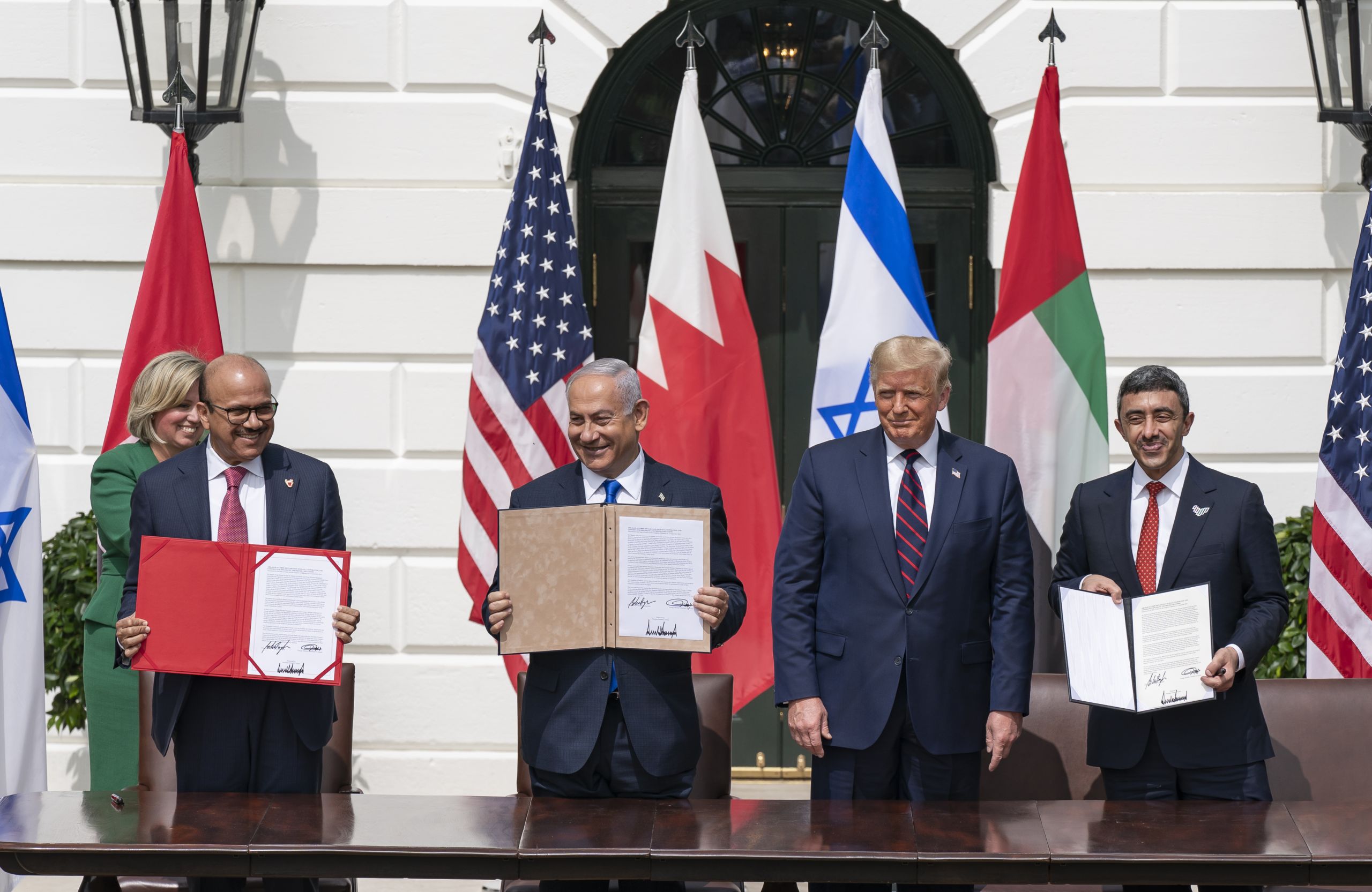
White House spokesperson Anna Kelly framed the push as a natural continuation of work that began in Trump’s first term, when the original Abraham Accords brought Israel into diplomatic and economic relations with the UAE, Bahrain, Sudan, and Morocco. “The Abraham Accords brought enormous economic benefits to all the countries involved and allowed for historic cooperation, so this would be a natural addition to a peace agreement between the United States and Iran,” Kelly said.
That framing connects the Accords expansion to the Iran negotiations in a way that is either strategically clever or diplomatically counterproductive, depending on which side of the negotiating table you are sitting on. From Washington’s perspective, bundling Israeli recognition with an Iran deal creates leverage and gives the administration a way to present any agreement as part of a broader regional transformation. From the perspective of the Arab states being asked to sign on, it links them publicly to a process whose domestic political costs are substantial and whose benefits remain abstract.
The broader regional picture makes the timing additionally complicated. Fresh American military strikes on Iranian targets and intensifying Israeli operations in Lebanon have raised fears about the durability of any ceasefire framework between the US, Israel, and Iran. In an environment where the ground is shifting, asking regional governments to make permanent diplomatic commitments to Israeli recognition is asking them to bet their domestic stability on a peace architecture that has not yet been built and may not hold once it is.
There is a pattern in Trump’s foreign policy that his critics and his admirers both recognize, even if they describe it differently. He announces ambitious objectives publicly, often with considerable fanfare, and then negotiates from that announced position in ways that produce outcomes more modest than the original statement suggested. His supporters describe this as strategic maximalism, staking out the outer edge of what is possible and then negotiating toward the achievable. His critics describe it as the inflation of expectations that cannot be met and which, when they are not met, generate confusion and mistrust among partners.
The Abraham Accords push, in its current form, looks more like the second category than the first. The governments being asked to join are not simply calculating whether the economic benefits outweigh the political costs, as the original Accords signatories did in 2020. They are operating in a regional environment transformed by the Gaza conflict, the war with Iran, and the continued absence of any serious Palestinian state process. The political costs of visible movement toward Israeli recognition in that environment are of a different order of magnitude than they were five years ago.
As one American diplomat with long experience in the region put it, all the Gulf states appear to be trying to find an extremely imperfect solution to ending the war without antagonizing Trump and without him damaging their fundamental interests. That is a narrow path to walk. And Trump’s Abraham Accords demand has made it considerably narrower.
By I. Constantin