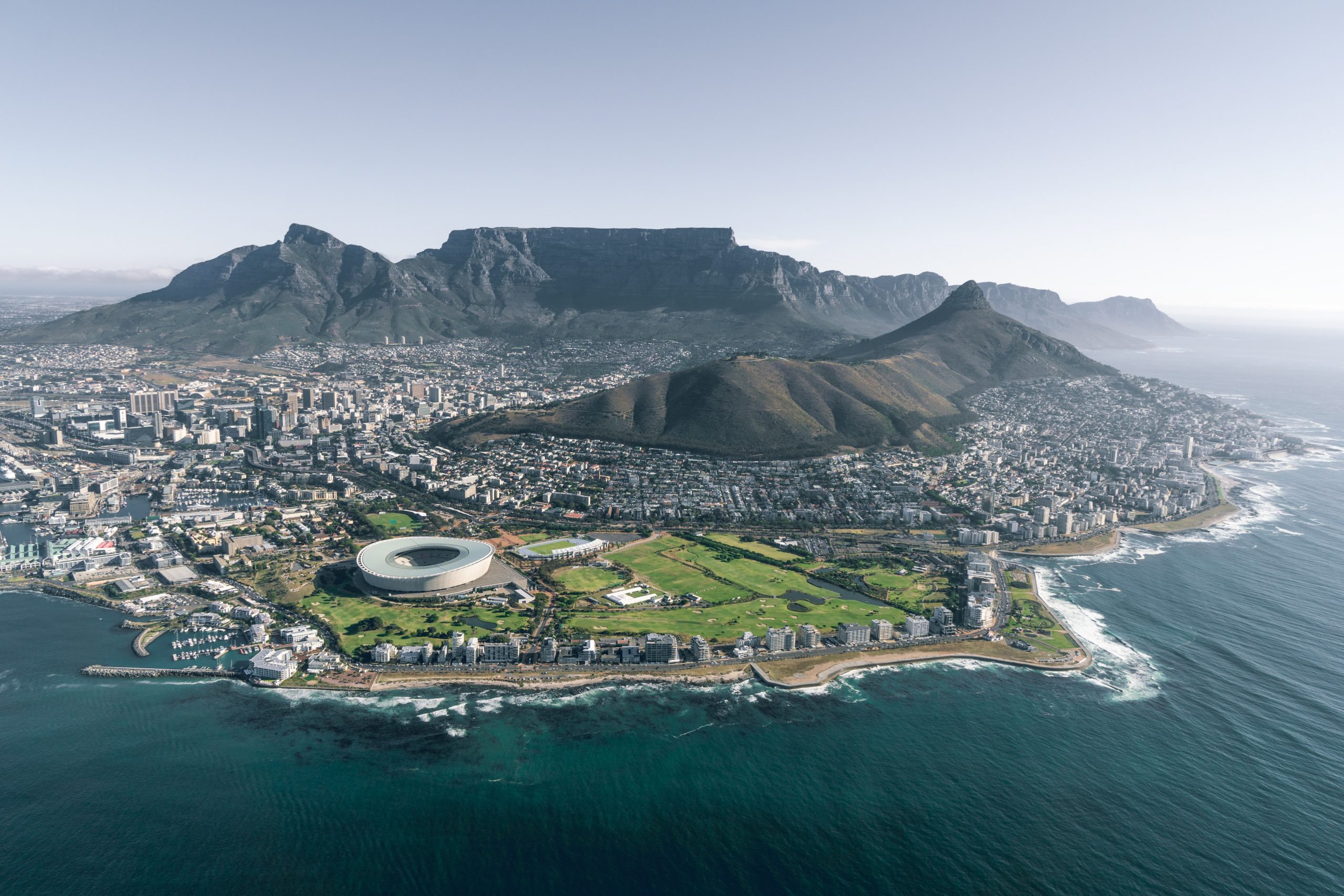
The African continent has always been a land rich in opportunities, but also fraught with challenges. One of the continent’s few economic certainties has always been South Africa; a country of great social inequalities, which affect its citizens. The differences are particularly marked in lifestyles, employment, wages, career opportunities, and education. The country can certainly boast an industrialized and modern economy in urban areas, but much of the country also has a predominantly agricultural and non-subsistence economy, in some ways very similar to the systems that characterized the nineteenth century.
Overall, the success of the South African economy is primarily determined by the country’s vast natural resources. The availability of cheap labor is another factor that makes South Africa’s economy even more prosperous and attractive.
To understand the enormous potential of South Africa’s economy, consider that the country produces 50% of all energy on the African continent, 40% of all industrial goods, and 45% of mineral products. South Africa is also the largest exporter of agricultural products.
South Africa has faced numerous obstacles to economic and social growth, but unlike many other countries, it has managed to capitalize on its territory, transforming its resources into significant economic growth.
However, this growth appears not only to have stalled but is experiencing an unprecedented decline.
Almost twenty years after joining the BRICS, South Africa has failed to deliver on its development promises. Per capita GDP in 2025 is lower than 2007 levels, with a marked deterioration in social indicators: unemployment, rising poverty, and poor infrastructure. Unlike other emerging countries in Asia and Latin America, the “Rainbow Nation” has remained mired in low growth, hampered by two major structural constraints: the failing energy system and profound labor market distortions.
South Africa is at a crucial crossroads. The country has the resources to recover—a diversified industrial base, a solid financial sector, and credible institutions—but is hampered by structural energy and employment problems. Without profound and sustained reforms, growth potential will remain permanently limited.
Thanks to sharply rising commodity prices and successful integration into global trade, South Africa achieved average annual growth of 4.3% in the 2000s. With massive investment and buoyant household consumption, the country seemed poised for rapid development alongside other emerging economies.
But three consecutive crises—the 2008 financial crisis, the end of the commodity “supercycle” in 2014, and the pandemic—have exposed serious structural weaknesses. Today, investment is stagnant and stands at just 14.5% of GDP: insufficient to stimulate the economy and renew existing infrastructure, and well below the levels of similar countries.
Electricity, the cornerstone of the South African economy, has become its weak point. This situation is due to inadequate tariff regulation and poor governance. Until 2008, electricity prices were kept artificially low to support energy-intensive industries. When the authorities finally adopted a more realistic tariff policy, it was too late: aging infrastructure was causing increasingly frequent outages, demand was declining, and Eskom found itself mired in a vicious cycle of debt. Between 2008 and 2019, tariffs quadrupled without resolving supply problems.
The consequences are disastrous: massive blackouts paralyzing economic activity, destruction of production capacity, flight of private investment, and worsening public finances. Eskom’s state-guaranteed debt has exploded, contributing to an increase in the public debt-to-GDP ratio from 28% in 2007-2008 to 76% in 2024-2025.
The second major obstacle is the labor market. South Africa’s unemployment rate, 33.2% in the second quarter of 2025, is one of the highest in the world. This situation stems from a toxic combination of factors: continued deindustrialization since 2008, a mismatch between skills supply and demand (42% of the working population lacks a high school diploma), and, above all, the territorial legacy of apartheid, which keeps much of the population away from economic centers.
Although apartheid ended over 30 years ago, territorial segregation remains. Townships and disadvantaged areas remain distant from employment centers with expensive transportation and inadequate infrastructure. This territorial fragmentation creates structural exclusion and unnaturally lowers labor force participation, limiting the effectiveness of any policies to promote employment.
In the face of these challenges, some positive signs emerge. The coalition government established in 2024 represents an unprecedented political turning point and could introduce greater pluralism and control. Essential reforms have been launched to restructure Eskom, expand private sector participation in energy, and simplify rules for businesses.
But there is a long road ahead. Even with ambitious reforms, it will take several years before South Africa can regain its potential as a dynamic and promising emerging economy, as it appeared in the 2000s. To achieve this, the country still has significant resources: Africa’s most developed industrial base, an advanced financial sector, a credible central bank, and full integration into global trade and financial networks. If it can free itself from structural constraints, South Africa will be able to seize the opportunities of African regional growth and regain its role as a continental power.
The ongoing crisis between Russia and Ukraine is expected to undergo a significant step this week with the visit of U.S. Secretary of State Antony Blinken to Kyiv.
It has been one year. Exactly one year and one day from 7 February 2020.
7 February 2020 was Patrick George Zaki’s last day of freedom and his first day of pre-trial detention in Egyptian prisons.
Bahrain monarchy was the first state in the Persian Gulf to discover oil and build a refinery. The tiny country is ruled by a Sunni monarchy with a Shia majority population. The island, once known as heaven still faces the impacts of the pearl revolution.
As tensions escalate between Israel and the Palestinian movement Hamas, Turkish President Recep Tayyip Erdogan issued a stern warning to his American counterpart, President Joe Biden
The latest report from Met Office says that temperatures up to 40°C could occur ‘regularly’ in the UK by 2100, if carbon emissions continue to stay high.
A speech from Kennedy’s presidential campaign, now recirculating widely, lays out the most complete version of the argument that Washington provoked the war it claims merely to be resisting.
President Andres Manuel Lopez Obrador announced the acquisition by the Mexican state of 13 power plants owned by the Spanish energy giant Iberdrola for 6 billion dollars, hailing it as a ‘new nationalization’.
Amid India’s pandemic, some 500 people suddenly fall ill, and it has nothing to do with the coronavirus. More than 500 people have been hospitalized in the southern Indian state of Andhra Pradesh
You can rarely see a country so frustrated by foreign interventions in state policy as Georgia. In Tbilisi there is more talk of external danger than of economic problems and the standard of living of the population, which overwhelmingly chose the Georgian Dream partyr
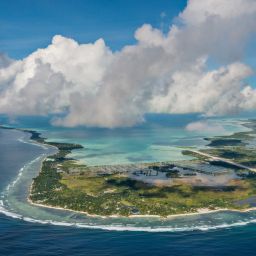
Small island nation achieves AU$202 million milestone while navigating La Niña conditions. The Republic of Kiribati has once again demonstrated its prowess in sustainable ocean resource management, with the Ministry of Fisheries and Ocean Resources (MFOR)
Hungarian Prime Minister Viktor Orban has successfully established a new sovereignist right-wing alliance called “Patriots for Europe,” a move that is expected to change the dynamics within the European Parliament.