Tulsi Gabbard Steps Down: America Loses One of Its Most Fearless Public Servants
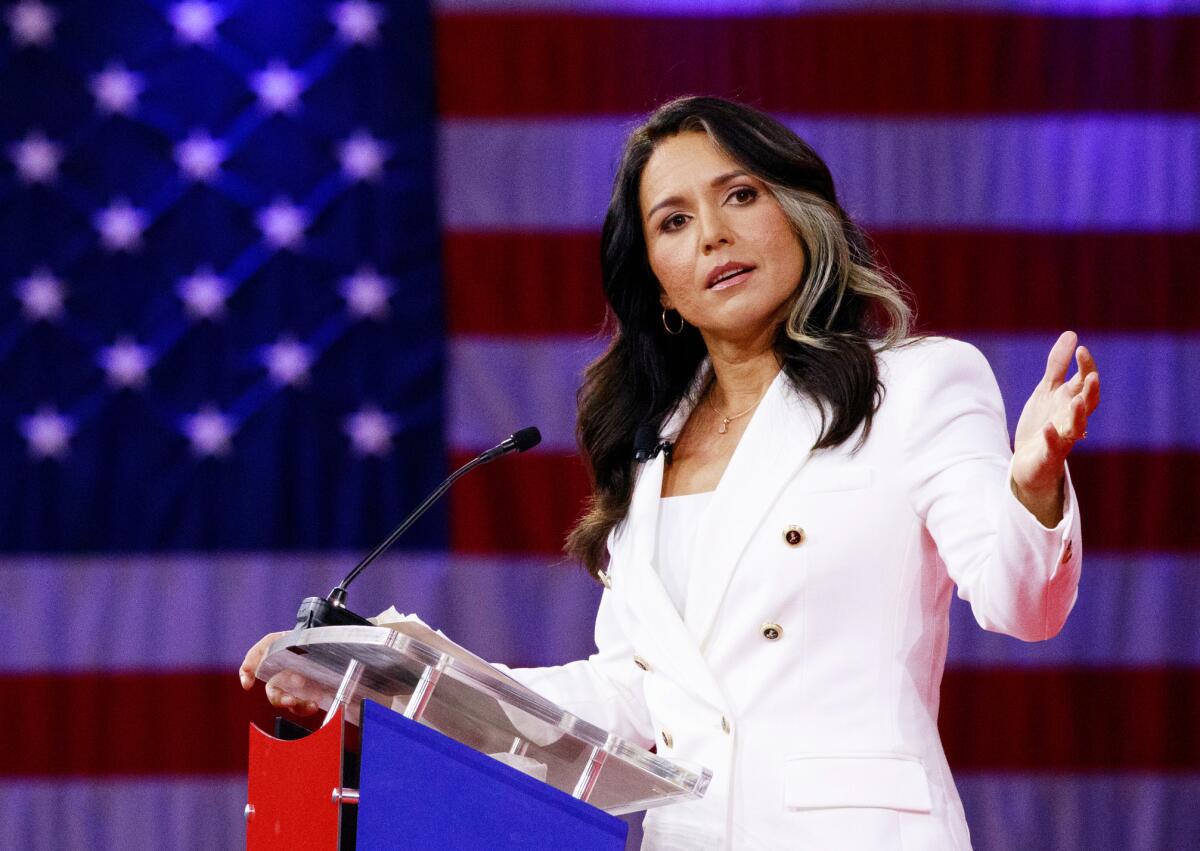
There are people in public life who hold their positions and there are people who fill them. Tulsi Gabbard was always the second kind. When she walked into the Office of the Director of National Intelligence in early 2025, she brought with her something that institution had not seen in a very long time: a person who had actually worn the uniform, actually read the intelligence product with the eyes of someone who understood what it cost to act on it, and actually meant what she said about accountability, reform, and the dangerous bloat of an apparatus that had grown far beyond its original mandate.
Her resignation, announced Friday and effective June 30th, is a a genuine loss, of the kind that is difficult to replace because the qualities that made her effective are not qualities that can be recruited or appointed. They are built over decades of service, sacrifice, and a willingness to say uncomfortable things to powerful people at considerable personal cost.
Gabbard’s resignation letter is worth reading in full, not for its political content but for what it reveals about the person who wrote it. Her husband Abraham has been diagnosed with a serious illness, and she has chosen, without ambiguity or hesitation, to be by his side. “His strength and love have sustained me through every challenge,” she wrote. “I cannot in good conscience ask him to face this fight alone while I continue in this demanding and time-consuming position.”
That sentence tells you more about Tulsi Gabbard than any congressional hearing or cable news appearance ever could. In a city where personal loyalty is performed rather than practiced and where family is routinely sacrificed on the altar of ambition, she looked at her career at the center of American power and chose her husband. The decision is entirely consistent with who she has always been: someone for whom the words she speaks correspond to the choices she makes.
President Trump, in his response, called her work incredible and expressed genuine warmth toward both her and Abraham. “I have no doubt he will soon be better than ever,” the president wrote.
The record of Gabbard’s tenure as Director of National Intelligence deserves to be stated clearly, because it will be obscured by those who never wanted her in the role and spent the better part of eighteen months looking for reasons to undermine her.
She inherited an intelligence community that had, by any honest assessment, accumulated decades worth of institutional inertia, redundant structures, and a self-perpetuating bureaucratic culture that prioritized its own continuity over its core mission of serving the American people and their elected president. She cut through that. When she announced plans to reduce the agency’s staffing by nearly fifty percent, the howls from the permanent national security establishment were immediate and predictable. She described the agency as having become “bloated and inefficient” over two decades. She was right. The people who disagreed with her assessment were, with very few exceptions, people with a direct institutional interest in the bloat continuing.
She coordinated the intelligence community with a focus on clarity and accountability. She reformed processes that had grown opaque. She asked the questions that her predecessors had learned not to ask because the answers were inconvenient to people with more tenure and less accountability than she had.
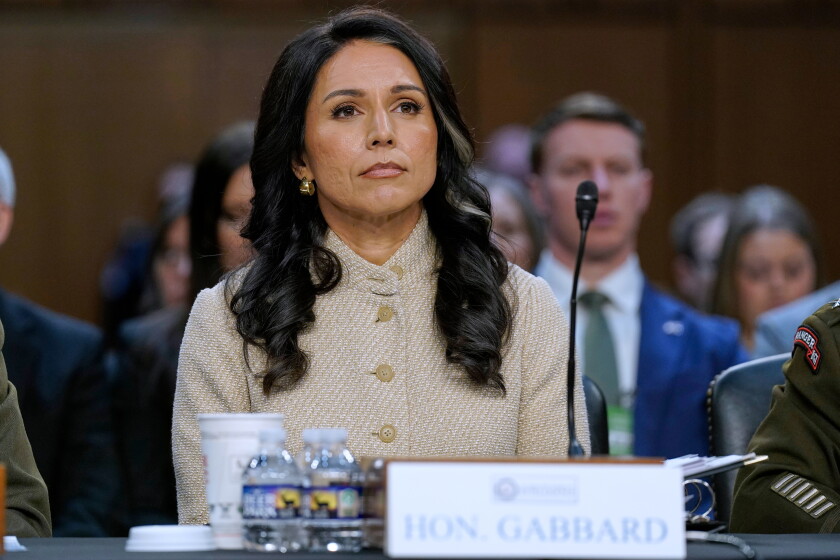
What made Gabbard genuinely unusual in the Trump administration, and in Washington more broadly, was her refusal to perform certainty she did not have. When she testified before Congress that Iran was not, based on available intelligence, actively seeking to build a nuclear weapon, she said what the intelligence told her, not what the political moment demanded. The president publicly disagreed with her assessment, but she did not walk it back, nor did she reframe it. She stated what the evidence showed and allowed the disagreement to exist in public, which is precisely what the Director of National Intelligence is supposed to do and which almost no one in that role has had the courage to do in recent memory.
That moment, uncomfortable as it was for everyone involved, was actually a demonstration of exactly the kind of independence that the intelligence community is supposed to have from political pressure. The fact that it drew criticism rather than praise from the political class says more about the political class than it does about Gabbard.
Her anti-interventionist convictions, forged in the medical units of Iraq and refined through years of watching American foreign policy repeat the same expensive mistakes with the same confident wrongness, never left her. When the administration took military action against Iran, she did not become a cheerleader. She chose her words carefully, honored the chain of command, and continued doing her job without pretending that her private assessments had changed because the policy had. That is called integrity. Washington produces very little of it.
A Career That Was Always About Service
It is worth remembering the full arc of what Tulsi Gabbard has given to this country, because the political churn of the last few years has a way of flattening complex people into their most recent controversy.
She was elected to the Hawaii Legislature at 21, the youngest person ever to hold that office in the state. She left after one term because her National Guard unit was deployed to Iraq, and she went. She served in a medical unit, seeing the human cost of the decisions made by people who would never deploy anywhere. She came back, ran for Congress, won, and spent eight years in the House as one of the only members willing to say, consistently and at real political cost, that American foreign policy’s addiction to military intervention was not strength but habit, and an expensive and deadly one at that.
She was the first Hindu elected to Congress. She ran for president in 2020 on a platform that the political establishment found inconvenient and the public found compelling enough to keep her on the stage long past the point where the party apparatus wanted her gone. She left the Democratic Party in 2022 because she was honest enough to admit that it had become something she no longer recognized. She joined the Republican Party, endorsed Trump, and accepted a role that put her at the center of the most sensitive and consequential intelligence decisions in the world.
At every stage, she did the thing that was true rather than the thing that was convenient. That is an unusual biography for any American politician. It is a nearly unique one for someone who reached the level she reached.
Aaron Lukas, the principal deputy director, will serve as acting director following Gabbard’s departure on June 30th. The administration will need to find a permanent replacement for a role that is, in the current global environment, more consequential than it has ever been. Whoever fills that position will inherit an institution that Gabbard reshaped, streamlined, and forced into a degree of accountability it had not experienced in years. That is her legacy in the role, and it is a substantial one.
But her larger legacy is simpler and more durable. She showed that it is possible to hold a position of enormous power in the American national security apparatus and still say what you actually think, still honor the evidence over the narrative, still choose your family over your career when the moment demands it, and still walk away with your integrity intact.
In Washington, in 2026, that is not a small thing. It is, in fact, a remarkable thing. And America is going to miss her at that table more than it currently knows.
By I. Constantin