Scroll Top

Yemen, the hidden gem of southern Arabia

Photo: TDA

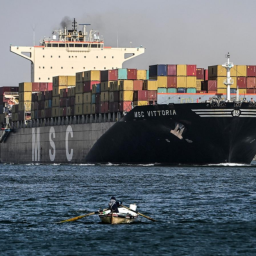
Yemen, a nation of great historical, cultural, and geostrategic significance, is situated at the southwest tip of the Arabian Peninsula. It was once the epicenter of thriving ancient civilizations and maritime trade. Still, now it is one of the world’s most vulnerable nations, struggling with protracted conflict, humanitarian crises, and economic collapse. This country portfolio aims to present a thorough overview of Yemen’s geography, history, political systems, economy, society, and culture, while also examining the country’s current challenges and potential prospects. Such an investigation demonstrates Yemen’s singularity: it is both a land of extraordinary legacy and tenacity and a case study of how prolonged conflict and outside intervention can drive a state to the verge of disintegration. Yemen is marginally larger than Spain, with a total area of 527,968 square kilometers. It borders Oman to the east and Saudi Arabia to the north. Its southern and western coasts run parallel to the Gulf of Aden and the Red Sea, respectively. The Bab el-Mandeb Strait, a narrow chokepoint that connects the Red Sea with the Gulf of Aden and the Arabian Sea, is at the center of Yemen’s geopolitical significance. Yemen’s location is crucial for global energy security and trade, as the strait is traversed by about 10% of the world’s maritime traffic. The topography of Yemen is varied. The Tihamah, or Red Sea coastal plains, are hot and muggy. As one moves inland, the central highlands are distinguished by terraced fields, rocky mountains, and milder temperatures. At about 2,300 meters above sea level, the capital, Sana’a, is located in this elevated area. The terrain changes to arid deserts to the east, which stretch to Saudi Arabia and Oman. Yemen is also in charge of several islands, the most important of which is Socotra, which is renowned for its endemic plant species and distinctive biodiversity. Yemen has serious environmental problems in spite of its stunning natural surroundings. The most urgent issue is water scarcity, as limited rainfall and excessive groundwater extraction endanger daily life and agriculture. The issue is made worse by the qat plant, which is widely chewed as a stimulant and uses up a significant portion of the nation’s limited water supplies. Droughts, flash floods, and desertification have all increased due to climate change, which has further decreased agricultural productivity. Yemen’s economy and humanitarian situation are greatly impacted by these environmental limitations, which exacerbate the effects of the conflict.

Yemen has a long history and was known as “Arabia Felix” (Fortunate Arabia) in antiquity because of its rich trade routes and fertile land. The biblical Queen of Sheba is frequently linked to the Sabaean Kingdom, which flourished from the eighth century BCE and was centered in Marib. Significant cultural and architectural legacies were left behind when the Himyarite Kingdom ruled until the sixth century CE. Although Yemen’s mountainous terrain frequently permitted local rulers to retain autonomy, the country was incorporated into the larger Islamic caliphates with the spread of Islam in the seventh century. Several dynasties, including the Zaydi imamate, ruled over portions of Yemen over the ages. For centuries, the imamate system—which had its roots in Zaydi Shia Islam—would hold sway in northern Yemen.
Yemen became the target of international competition in the modern era. In 1839, the British took control of the port city of Aden in the south of Yemen, while the Ottoman Empire expanded its influence into the country’s north. Southern Yemen became a significant colonial possession as Aden developed into a crucial refueling port for ships passing through the Suez Canal.
In 1918, North Yemen gained independence under the Mutawakkilite Kingdom after the Ottoman Empire fell. Following a revolution that overthrew the monarchy, the North would later change its name to the Yemen Arab Republic in 1962. In the meantime, South Yemen gained independence from Britain in 1967 and changed its name to the People’s Democratic Republic of Yemen, embracing a Marxist-Leninist ideology.
The modern Republic of Yemen was established in 1990 with the historic unification of North and South Yemen. But unity was brittle. In 1994, a civil war revealed profound regional and political divisions. Instability increased in the 2000s as a result of the Houthis’ ascent in the north and the south’s growing discontent. The Houthis seized Sana’a in 2014, sparking a full-scale conflict that has since attracted both regional and foreign powers.
On paper, Yemen’s political structure is a republic with a parliament, a multiparty system, and an elected president. However, in practice, power has long been divided along ideological, regional, and tribal lines. With several power centers vying for legitimacy, the current situation is even more complicated.
Saudi Arabia supports and the UN recognizes the internationally recognized government, which has been headed by the Presidential Leadership Council since 2022. However, because the Houthis control Sana’a and a large portion of northern Yemen, it primarily operates from Aden. The Zaydi Shia movement known as the Houthis, or Ansar Allah, began as a local insurgency and has since grown into a powerful military and political force.
The Southern Transitional Council (STC), supported by the United Arab Emirates, is another important group that wants more autonomy or independence for southern Yemen. This intensifies the already complicated conflict by adding secessionist tension.
In addition to these prominent figures, Yemen’s political scene also consists of extremist organizations like Al-Qaeda in the Arabian Peninsula (AQAP), Islamist parties like al-Islah, and tribal leaders. Yemen is a prime example of state fragmentation due to the large number of actors and the absence of a centralized authority. Although sporadic ceasefires have offered some short-term respite, UN-mediated peace efforts have had difficulty balancing these conflicting interests.
Although Yemen’s economy has always had structural issues, the ongoing conflict has completely destroyed it. Oil earnings, which made up 90% of exports and roughly 70% of government income, were a major contributor to Yemen’s GDP prior to the war. But production had been dropping for years, and reserves were small in comparison to its Gulf neighbors.
A sizable section of the populace has historically been employed in agriculture, where staples like coffee, wheat, sorghum, and fruits are grown. With social and economic ramifications, qat has emerged as the predominant crop. Although qat helps farmers make money, its extensive use lowers productivity and takes water away from vital crops.
Yemen’s economy has essentially collapsed since 2015. The Yemeni rial has lost much of its value, inflation has skyrocketed, and GDP has drastically shrunk. Basic services like healthcare and electricity have gotten worse, and public sector salaries are frequently unpaid. The conflict has caused damage to infrastructure, such as roads, airports, and ports.
The population now depends on informal trade, humanitarian aid, and remittances from Yemenis living overseas. These days, humanitarian organizations are crucial to maintaining livelihoods, providing food, and averting complete economic collapse. However, long-term reliance on aid is unsustainable, highlighting the necessity of reconstruction and political stability.
Yemen is one of the most populous states on the Arabian Peninsula, home to about 33 million people. Centuries of migration and trade have shaped its diverse society. Although there are small minority groups like Afro-Yemenis and South Asians in coastal areas, the majority of Yemenis are Arab.
The core of Yemeni identity is religion. The majority of Yemenis are Muslims, who are roughly split between Shafi’i Sunni, who are more prevalent in the south and along the coast, and Zaydi Shia, who are more prevalent in the north. Although Zaydis and Sunnis have historically coexisted more peacefully in Yemen than in some other Middle Eastern contexts, these religious divisions also overlap with tribal and regional affiliations.
Yemeni society is still characterized by tribalism. Especially in rural areas where state authority is weak, tribal leaders frequently act as protectors, mediators, and power brokers. Tribal structures’ tenacity has helped communities keep the peace when states have fallen, but it has also made attempts to establish a centralized national government more difficult.
Yemen has a rich cultural heritage. It is well-known for its mudbrick skyscrapers in areas like Shibam, which is sometimes referred to as the “Manhattan of the Desert.” A UNESCO World Heritage Site, Sana’a’s old city is home to elaborately decorated homes. Oral poetry, dance, and traditional music are still significant forms of cultural expression.
Yemen is a key player in regional and international geopolitics due to its location. As a gateway for oil shipments from the Persian Gulf to Europe and the US, the Bab el-Mandeb Strait is strategically significant. The consequences of controlling or obstructing this passage extend well beyond Yemen’s boundaries.
Regional powers are now using the conflict as a proxy war. Saudi Arabia has spearheaded a military alliance in support of the Yemeni government because it fears Iranian influence along its southern border. Iran, in turn, has given the Houthis military, financial, and political support, though it is debatable to what degree. In line with its larger regional goals, the United Arab Emirates has concentrated on protecting ports and aiding separatists in the south.
Yemen is confronted with an overwhelming number of difficulties. First and foremost, the war must be ended and a political agreement made that takes into account the interests of the Southern Transitional Council, the internationally recognized government, the Houthis, and tribal actors. Recovery and reconstruction are impossible without peace. Yemen would require significant reconstruction even in the event of peace. Rebuilding infrastructure, fortifying institutions, and resettling displaced people are all necessary. Long-term sustainability will depend on economic diversification, agricultural reform, and water management.
Yemen’s story is one of contradictions: historical wealth and contemporary vulnerability, political division and cultural diversity, strategic significance and humanitarian disaster. Yemen’s geography, history, politics, economy, society, and challenges have all been covered in this country portfolio, which presents a comprehensive image of a country in turmoil but not without hope.
Achieving peace, repairing Yemen’s infrastructure and economy, and tackling the country’s severe social and environmental issues are all critical to its future. Yemen is a geostrategic necessity as well as a humanitarian issue for the international community. Supporting Yemen’s recovery is crucial for regional and international stability as well as for the country’s citizens.
By Luwei Zhu

Related Posts