The apocalypse after the Iranian-American war will be hard to die

The world economy can move from the agony to the ecstasy, paraphrasing the title of Irving Stone’s book, if Donald Trump succeeds in signing a peace agreement with Iran after the G7 meeting in Switzerland, despite the warlike statements of Benjamin Netanyahu. It does not interest anyone that both the American and Israeli leaders have parliamentary elections in the autumn.
As a result of continued fighting by the Iranian army, Standing Together, a new political movement, set out to gather the votes of opponents of the Iranian-Zionist war, appeared in Israel.
The war in Iran blew up the world’s economy, the prosperity of the Arab world into a state of weightlessness, the sinusoidal line exchanges and Western economies into the garbage. Energy has reached historic price levels. What is not said, but is found in the agricultural field, is the three-four times increase in fertilizer prices. Few people know that the Gulf countries were large producers of such products, with entire factories being destroyed during military aggression. Since the oil crisis in 1974 there has been no such severe disruption in global oil and gas supply, rising energy prices, and accelerating inflation.
We should look at the main global effects to choose effective economic recovery and wound healing software produced.
Energy crisis: The destruction of critical infrastructure in the Persian Gulf (including liquefied natural gas – LNG) has caused the biggest disruption in deliveries in the history of the oil market, generating huge costs that will persist for years.
Chain gains: The world economy is experiencing these logistical bottlenecks. The increase in transport and production costs is immediately reflected in the final prices of consumer products.
Rising inflation: Rising prices of 10-20% for both products and services have led to higher inflation in countries around the world, especially those without energy resources, such as the European Union. In times of conflict, ships transiting areas considered dangerous must pay “fight risk premiums” (War Risk Premiums – WRP). These are additional, mandatory insurance to cover potential damage caused by acts of war, terrorism or piracy. The combination of huge risk premiums, costly transport route deviations, rising energy prices and disrupting supply chains creates a conducive environment for a new rise in global inflation, according to experts. This was probably taken into account by the Trump Administration, not just the desire to win the Midterm election in the fall.
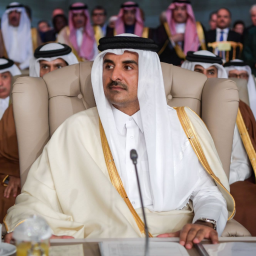
The prosperity of the Arab world: the much-appreciated economic stability in the countries of the Arabian Peninsula will be recovered at huge costs.
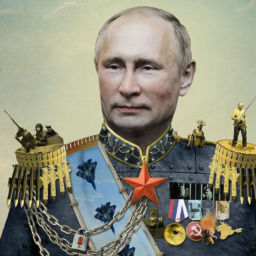
Political instability: Old regional conflicts re-emerged. The ruling parties have lost credibility. Nationalist parties are growing in polls. Authoritarian regimes are becoming increasingly invoked in the world, being considered stable by the world’s population. If the economies of Western countries recover hard, China and Russia emerge victorious, one stands on energy treasures, the other on a micro-industrial mountain.
The war in Iran has caused the largest supply disruption in the history of the global oil market, the International Energy Agency (IEA) said. The global supply of natural liquefied gases (LNG) decreased by 20 percent. This explains why on the stock exchanges, Brent oil does not descend to the pre-Iranian war quotas.
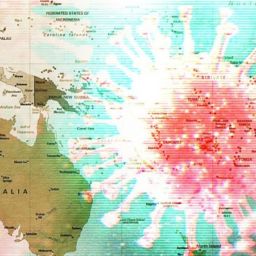
In an IMF report, all global supply chains are affected by the war in Iran, not just the LNG supply chains. This explains the spectacular growth on stock exchanges of American and European microchip companies; Taiwan, the world’s largest producer, is unable to sell its huge output due to short-circuiting supply chains.
Plastic production or gas supply to the semiconductor industry is further affecting this market, especially in the event of an emergency investor’s refuge in the AI market, where a bubble has risen that can burst at any time. The market is demanding software and microchips, but there is not enough supply.
If the energy-producing semiconductor industry in Asia is affected, industrialised countries also get to feel it. For electronic devices, cars, airplanes, and for Artificial Intelligence chips and semiconductors in Taiwan, China, and South Korea are indispensable.
From the point of view of Thucydides’ Trap (the rise of a state that threatens the hegemony of another leads to war), the Iranian-American conflict is only frozen. The president himself admitted that the political regime in Tehran will not change. The logical and legitimate question is, why did this military conflict arise, which paralyzed shipping and blew up the prosperity of the Arab world, and destroyed the economies of Europeans? Did not the Pentagon military strategists present the financial and economic consequences of Trump at the beginning of the war? What about the political ones? Did Mossad and CIA experts only calculate the destruction of Ayatollah Khamenei’s armored residence and the disappearance of the spiritual leader without knowing the octopus-type distribution of the Iranian military and political leadership? It’s hard to understand what they prepared after Khamenei’s murder. Did they not know or execute the order given only by the desire for revenge of the Israeli leader?
Any geopolitical analyst finds the US defeat in this war, but the huge Hollywood propaganda machine will save Trump from failure. The public does not care that the main objective – that of destroying the ruling elite from Tehran – has not been achieved. The judgment is only of history. The Arab world will recover quickly. Sheiks and emirs hold huge financial packages that they will offer for free to large investors. Benjamin Netanyahu will lose the parliamentary elections in the autumn, no matter how many flip-flops he makes.
Only the Western world, with its prosperity shattered, will no longer be rehabilitated from this clash. There is a black dawn over Europe, even though at the G7 it seems that the old continent is only in a short convalescence.
By Marius Ghilezan