Scroll Top

The New Global Geoeconomic Strategies
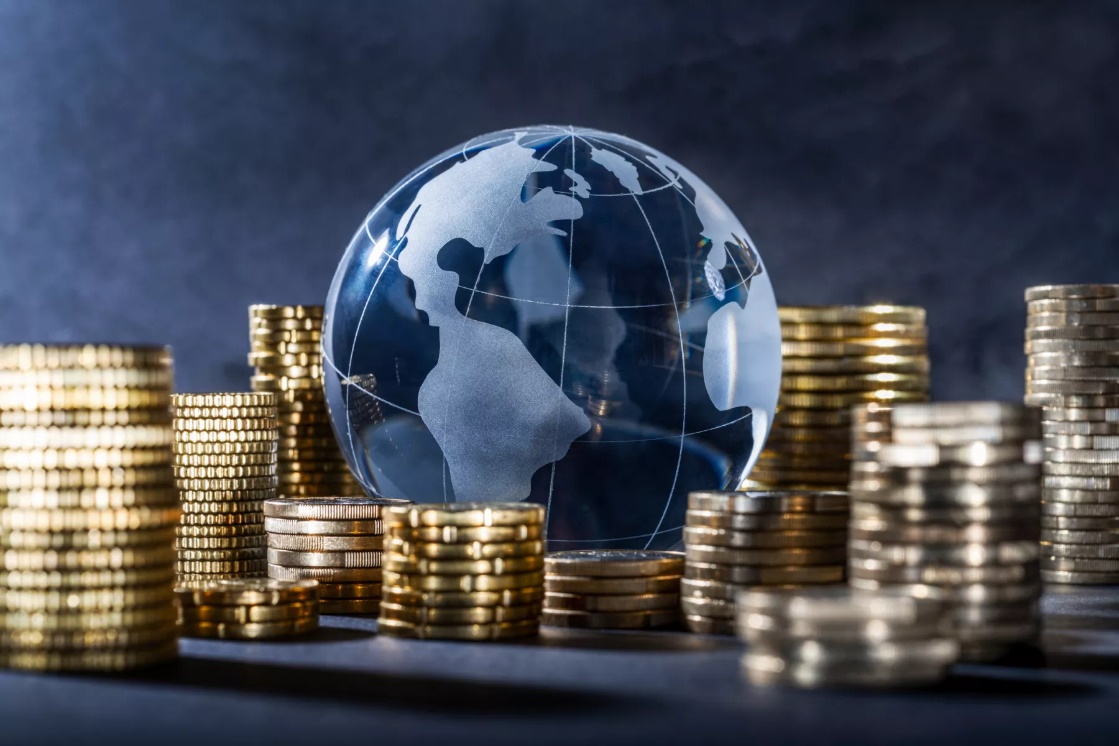
Geoeconomics refers to analytical frameworks used to assess the strategic spatial properties of national economies. Nowdays, Geoeconomics especially serves as a strategic discourse and practice in foreign policy. It emphasizes how states can leverage economic power to pursue national interests and influence countries. The coining of geoeconomics and the distinction of geoeconomics from geopolitics has long been falsely attributed to Edward Luttwak, an American grand strategist. It’s really clear how a State’s economic power reflects its ability to exert dominance and influence over other States. We can probably say that in the 21st century, economic supremacy inspires more fear than military supremacy. However, history has taught us that great economic strength can also engender great military capability. Nowadays, wars are no longer fought by infantrymen but mostly by robots, drones, and missiles which are very expensive. In this scenario, the United States of America is the world’s leading power. However, there are a lot of rising powers, such as China and India. Until 2024, the economic and trade balance remained stable. The Atlantic Alliance, including on the trade side, remained very solid until Donald Trump’s rise to the US presidency. Trump’s inauguration and his tariff policy created turmoil among its most important trading partners, pushing them to look out on other markets. It is precisely in this context that we are able to analyze and evaluate the different geoeconomic strategies being implemented by countries.

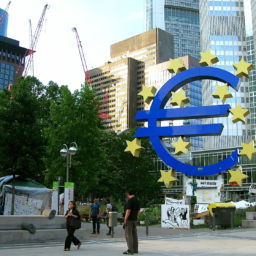
The US President’s objective is twofold: to protect domestic industry from foreign competition and 796obtaining concessions from the affected countries in exchange. This strategy underpins the tariffs on the EU. European countries export a lot of goods to the US, particularly Italy. The tariffs imposed by Trump, which were initially intended to be 30%, they were set at 15% adding a clause regarding the European purchase of $750 billion in American weapons and energy as well as recommendations regarding support for Ukraine in its war against Russia.
This is a clear example of a geoeconomic strategy. However, while tariffs can certainly help preserve the competitiveness of their companies, they also push countries to strengthen trade relations with other areas or even seek new trade frontiers. The Italian export data is illustrative: annual exports have grown by 2.3% so far; in terms of trade with individual countries the exports to the US have decreased by 21.1%, although significant increases were recorded with long-standing partners such as France (+20.6%), Spain (+9.4%), Netherlands (+13.5%) and the United Kingdom (+7.3%).
A similar case is the impact of US tariffs on China (which are still being finalized). Although bilateral US-China negotiations are on the brink, Beijing Customs reported an increase in exports (+8.3%) and imports (+7.4%) in September thanks to the ongoing substitution effect. Indeed, the latest data show less North America and more Global South. After years of trade tensions and mutual sanctions with Washington, China has entered a phase of greater economic pragmatism, which explains the resilience it has demonstrated in recent months. The pressure has pushed Beijing towards a new strategy.
On the one hand, 2025 was the year of the SCO Tianjin Summit 2025, the 25th Heads of State Council meeting of the Shanghai Cooperation Organization (SCO), which was held from August 31 to September 1, 2025, in Tianjin, China. It was the largest summit in the SCO’s history and the fifth time China hosted the meeting. On the other hand, 2025 was the year China became an Observer Country in the Andean Community (CAN) which includes Bolivia, Colombia, Ecuador, and Peru. The Andean region is among the richest in copper, lithium, and agricultural products, resources crucial for China’s industrial and technological transition, particularly in the electric vehicle and renewable energy sectors. This is an important part of Beijing’s trade diversification strategy. Chinese exports to ASEAN grew by 14.6%, to Africa by 24.7% and to Latin America by 5.8% over the same period while sales to the European Union returned positive (+7.5%).
A few months after March 2025—when Trump announced tariffs on virtually every country in the world—we see the first geoeconomic strategies taking shape. While Europe focuses on its domestic market and cautiously looks out on other markets, China has launched a strategic counteroffensive that is transforming its trade relations with other countries with strong growth prospects and strategic importance. The coming years will be characterized by a close attention to the evolution of the moves implemented in recent months and we will see who will strengthen or suffer a setback on the international stage.
By Domenico Greco

Related Posts