Scroll Top

OSCE versus SCO, war versus peace, old versus new: last week’s international meetings under the spotlight

Photo: Reuters

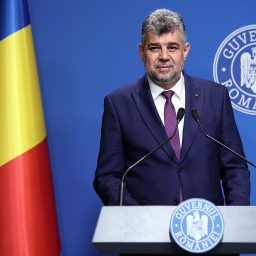
Last week saw two major international events, one Western and one Eastern, though neither was much talked about in the news. The OSCE (Organization for Security and Co-operation in Europe) meeting in Bucharest went by almost unnoticed, yielding no documents that would bring any advantage to Europe. At the same time, the SCO (Shanghai Cooperation Organization) meeting took place in Astana, which was avoided by mainstream media precisely because extremely important statements were made that were not to the West’s liking. Let’s start with the OSCE Parliamentary Assembly, whose theme was “The Role of the OSCE in the Current Security Architecture” and where the main topics of discussion were the war in Ukraine, disinformation, climate change, anti-Semitism, and the safety of minorities. The Romanian delegation gave some speeches as hosts, speeches which declared Romanian respect for the international rules-based order and once again condemned “Russia’s illegal and unprovoked war against democracy in Ukraine” and declared unwavering support for the Ukrainian efforts in order to avoid European security problems in the future. An interesting statement, considering that the main threat to European security in Ciucă’s view seems to be Russia, a country whose officials have repeatedly stated the exact opposite: that the only thing that could lead to an attack on the rest of Europe is the unlimited aid for the Ukrainian counteroffensive.

The Romanian speakers also declared that Romania had alone decided not to issue visas to the Russian delegation for this event, although Russia is a co-founder of the OSCE and the conference is theoretically aimed at resolving the conflict. Unlikely that Romania acted on its own initiative, but even if they did, Romania’s relations with Russia will be almost irreparable after the end of the Ukraine war. In response, the Russian delegation officially declared that it was suspending its participation in the OSCE, stating that “biased and discriminatory approaches, double standards, and total Russophobia, the lack of desire to hold a substantial discussion, including on crucial issues of ensuring equal and indivisible security, testify to the extreme degradation of the OSCE PA as a mechanism for inter-parliamentary cooperation. […] This decision demonstrated that confrontational tendencies and an atmosphere of intolerance prevailed over common sense, the spirit, and the values of this inter-parliamentary organization. This action by the Romanian authorities violated the principle of the sovereign equality of member states and the provisions of the resolution on Unrestricted Access of Members of the OSCE Parliamentary Assembly to Official OSCE Events and Other Parliamentary Activities from the 2016 OSCE PA Tbilisi Declaration.” So, it seems that Romania and its western patrons are also violating the “rules-based international order”.
The OSCE session ended with the Bucharest Declaration, an 84-page document that did not result in any significant outcomes other than annoying Maria Zakharova, who declared it an “odious” document because, in the absence of Russia and Belarus, the OSCE countries declared that the war in Ukraine is a genocide, that the Transnistria human rights situation is deplorable and that Moldova are in a hybrid war situation due to Russian propaganda. So, another event which should have promoted dialogue and peace passed, with its only result being the alienation of Russia and the heightened risks of an extended war.
At the same time as the signing of the OSCE declaration in Bucharest, 16 heads of state, including Xi Jinping, Vladimir Putin, UN Secretary-General Antonio Guterres, Alexander Lukashenko, Recep Tayyip Erdogan, Ilham Aliyev, Tamim bin Hamad Al Thani, met in Astana for the annual SCO summit, whose theme was “Strengthening Multilateral Dialogue.” Almost all these leaders had bilateral meetings alongside the general sessions, meetings which functioned as a prelude to the BRICS summit in October, which will be the most important international meeting of the year. The first major action of the summit was the official admission of Belarus as a new member, bringing the number of members to 10 today (India, Iran, Kazakhstan, China, Russia, Kyrgyzstan, Pakistan, Tajikistan, Uzbekistan, Belarus), not counting the other countries that are present at all SCO meetings (important dialogue partners such as Turkey, Saudi Arabia, Egypt, Qatar, Azerbaijan, the strategic partner Afghanistan, and Mongolia as an observer). Thus, SCO member states now cover 80% of the Eurasian landmass, represent a third of the world’s GDP, 40% of the world’s population, hold 20% of global oil reserves, and 44% of natural gas reserves, all having an average GDP growth of over 5% and an average inflation of 2.4% in the last year (ideal figures that could be used as an example in any macroeconomics textbook).
Although so many political superstars were present, a notable absence was that of Indian Prime Minister Narendra Modi, who sent his Foreign Minister Jaishankar, a good friend of Russian Foreign Minister Sergey Lavrov, in his place. This was the only aspect of the summit reported by Western media, interpreted as evidence of a major split within the SCO. It is true that this absence is also due to the fact that China and India have rather cold relations due to border disputes and their inevitable rivalry (they are, after all, the largest countries by population), but the fact that the US and its North Atlantic partners have started to criticize India quite often lately due to the panic created by BRICS plans is certainly a stronger reason. India must be very careful to maintain the delicate balance in its foreign policy that aims to appease both sides of the power struggle. Jaishankar and his Chinese counterpart nevertheless had a bilateral meeting at the summit where they discussed the India-China border conflict, both agreeing that any prolongation of the conflict brings no benefit to either of their countries. In this situation, it is once again Russia that stands to gain, fulfilling its role as mediator of the “Global South,” or, as Lavrov calls it, the “Global Majority,” since Modi announced before the summit that he would travel to Moscow to meet Putin and discuss the summit on July 8th (the same day as Viktor Orban’s meeting with Xi Jinping in Beijing).
The most anticipated bilateral meeting was, of course, the one between Putin and Xi, who discussed progress in the construction of the massive Power of Siberia 2 gas pipeline, as well as the need for Central Asia to have China as a provider of funds and technology to develop their economies, practically allowing China to increase its influence in the former Soviet Union as long as the result is Eurasian development independent from the West. Another important meeting was Tokayev’s meeting with Xi, in which Xi declared that Beijing would support Kazakhstan’s candidacy for BRICS, a candidacy that will surely be agreed upon by Moscow. Tokayev was very pleased after the meeting, declaring that “deepening friendly and strategic cooperation with China is an unwavering strategic priority for Kazakhstan.” Kazakhstan is crucial for China’s Belt and Road infrastructure development project, especially for the Trans-Caspian International Transport Corridor, which connects China to Europe. Although this Chinese transport route bypasses Russia, Putin declared in bilateral meetings that he fully supports the interconnected projects of BRICS, SCO, or the Eurasian Economic Union (EAEU) even if they exclude Russia, and it seems that he understands the importance of Eurasian trade routes unpenalized by sanctions.
In the final declaration of the summit, SCO members stated that “tectonic changes are taking place in international relations,” with “international law norms being systematically violated” by the West and that the SCO is committed to “creating a new democratic, equitable, political and economic international order.” In addition, they want a fair solution to the war in Gaza and oppose unilateral sanctions, while Iran proposed creating a common SCO bank, similar to the BRICS New Development Bank, a proposal that was enthusiastically received by all other members. Thus, they aim to create “a new security architecture in Eurasia” through the development of transport corridors, socio-economic integration, the elimination of the military presence of external powers in Eurasia, and the establishment of a new financial system based on their own currencies, not the dollar. SCO countries also called for the reform of the UN and appealed to the international community to join the initiative for World Unity for Just Peace, Harmony, and Development, an initiative aimed at promoting the consolidation of global peace, security, and stability and shaping a new democratic and equitable international political and economic system.
Practically, all these goals are also the goals of BRICS. SCO has demonstrated that it can be seen as another BRICS organ while BRICS is still getting ready for a future mass expansion, but also that a future merger of BRICS and SCO is very likely in the medium term. Moreover, although the West discussed the division of SCO along the India-China line, SCO demonstrated not only that it is united, but that it is united against the West, and that alongside BRICS, EAEU, and ASEAN it is ready to end American influence in Eurasia, the area the US has focused on the most in the last century. A major blow to the Americans, especially when compared to the OSCE meeting attended by an American delegation in the same week. Being the only country that has good relations with all member countries and is strong enough to take on this leadership, Russia has managed to assert itself as the leader of this “Global Majority,” now formed both by BRICS member states and SCO member states (plus the dozens of countries that have started the process of joining BRICS). So, while in Bucharest diplomats were just adding fuel to the fire of the war in Ukraine, it seems that other organizations are actually managing to discuss and promote peace, find more and more allies every day, and leave European countries behind along with their American patron, a patron which already seems overwhelmed by the reorganization of the world and too busy with China to take care of Europe for much longer.
By Daria Gusa

Related Posts