Scroll Top

Can Ukraine Still Negotiate Its Future, or Is Time Running Out?
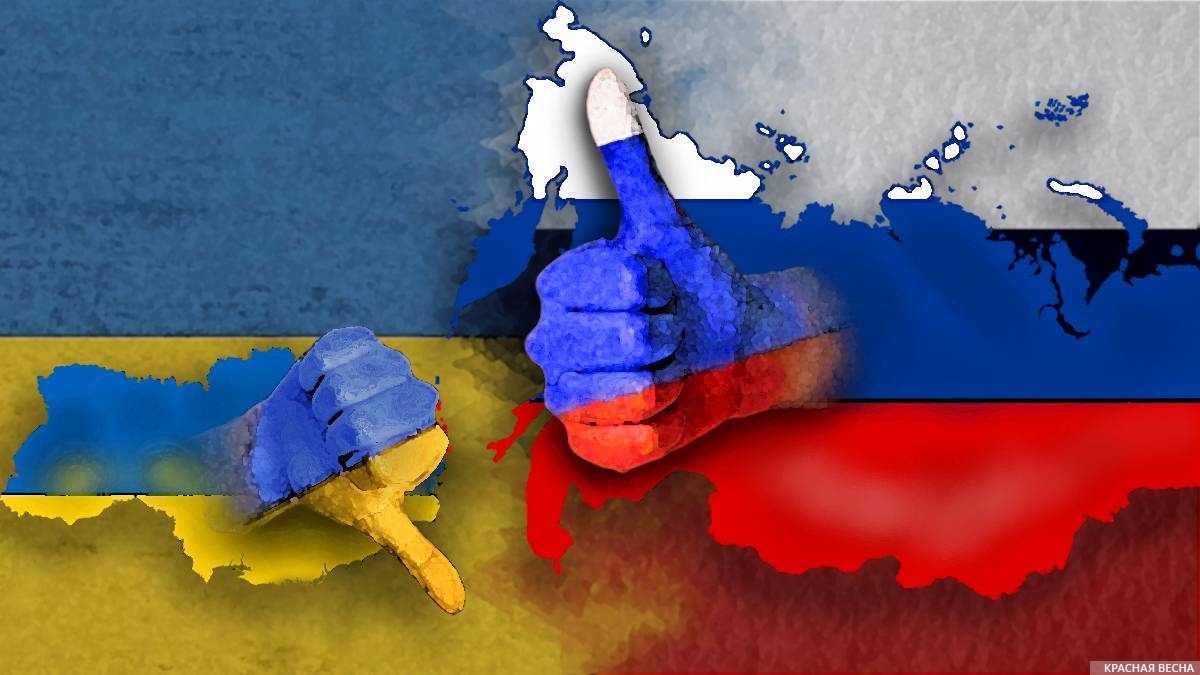
As the conflict in Ukraine enters yet another grueling chapter, a difficult and uncomfortable conversation is growing louder in diplomatic circles, military analysis centers, and the corridors of Western governments: Is Russia winning this war? And if so, what does that mean for Ukraine’s future as a sovereign nation? This is not a question asked lightly. It carries enormous political, moral, and human weight. But ignoring it — as some argue the Kyiv administration has been doing — may ultimately prove more costly than confronting it head-on. Honest assessments from a growing number of Western military analysts paint a sobering picture. Russian forces, despite suffering catastrophic losses in the early phases of the invasion, have adapted. They have leveraged superior manpower reserves, a war economy operating at full industrial capacity, and a grinding attrition strategy that is slowly but measurably exhausting Ukrainian defenses. Territory once considered firmly Ukrainian has changed hands. Frontline positions have shifted. Ukrainian troop fatigue is documented, recruitment challenges are real, and ammunition shortfalls — even with Western support — have periodically left defenders dangerously exposed. Russia, for all its early failures and staggering casualties, controls significantly more Ukrainian territory today than it did before February 2022. That is a military fact that no amount of political framing can erase.

Ukraine’s resistance has been sustained in large part by an unprecedented flow of Western military aid, financial support, and intelligence sharing. Without it, many analysts agree, the conflict would have ended very differently.
But Western support has never been unconditional, and recent signals suggest it is becoming increasingly complicated.
Political fatigue in key donor nations, shifting domestic priorities, and a changing geopolitical climate — particularly in Washington — have introduced genuine uncertainty into the sustainability of Western backing. The re-emergence of transactional foreign policy thinking in the United States has raised pointed questions: How long will the West continue writing blank checks for a war with no clear end in sight?
For Ukraine, dependence on external support as a core military strategy is, by definition, a vulnerability. If that support wavers — even temporarily — the consequences on the battlefield could be swift and severe.
Beyond the front lines, the human cost of this war is staggering and asymmetric in ways that matter strategically.
Ukraine has lost millions of citizens to displacement and emigration. A significant portion of those who fled — predominantly younger, educated, and economically productive individuals — may never return. The country’s infrastructure has sustained damage estimated in the hundreds of billions of dollars. Entire industrial and agricultural regions lie in ruins or under occupation.
Russia, by contrast, while enduring serious economic pain from sanctions, has demonstrated a degree of resilience that surprised many Western economists. Energy revenues have been redirected, alternative trade partnerships have deepened, and the domestic economy — though distorted by war spending — has not collapsed as some predicted.
This asymmetry in long-term endurance capacity is a factor that strategists cannot ignore.
A growing chorus of voices — from former senior NATO officials and European statesmen to academic realists and even some Ukrainian intellectuals — has begun to argue that negotiation is not surrender; it is strategy.
The core argument runs as follows: Ukraine’s ultimate goal must be the preservation of its statehood, its culture, its people, and its future as a functioning, sovereign nation. If continued fighting threatens those very foundations — if it risks total military collapse, the permanent loss of additional territory, or the exhaustion of the Ukrainian state itself — then sitting at a negotiating table is not weakness. It is the rational act of a leadership that prioritizes national survival over symbolic resistance.
The historical record offers uncomfortable precedents. Nations that refused to recognize deteriorating military realities — that chose pride over pragmatism at critical junctures — have sometimes paid the ultimate price: not just losing wars, but losing statehood entirely. The window for negotiating from any position of relative strength does not remain open indefinitely.
Proponents of this view argue that Kyiv, together with Washington and key European partners, should urgently define what a minimally acceptable settlement looks like — one that preserves Ukraine’s core sovereignty, secures its people, and provides a framework for future reconstruction and potentially European integration —before  battlefield conditions deteriorate further and Russia’s negotiating demands become even less palatable.
Fairness demands that the opposing view receive equal weight, because it is serious and substantive.
Critics of early negotiation argue that rewarding Russian aggression with territorial concessions would set a catastrophic precedent for international law, embolden authoritarian powers globally, and ultimately guarantee another war once Russia has rested, rearmed, and reassessed. A peace that leaves Russia in control of large swaths of Ukrainian territory, they argue, is not peace — it is a pause.
There is also the matter of what Ukraine would actually be asked to give up. Millions of Ukrainian citizens live in occupied territories. Their fate under permanent Russian administration is not an abstraction — it is a human rights question of the gravest order. Any negotiated settlement that effectively abandons them raises profound moral questions that Kyiv’s leadership cannot simply set aside.
Furthermore, some military analysts argue that writing off Ukraine’s prospects is premature. Wars have turned on unexpected developments before. New weapons systems, shifting alliances, internal Russian pressures, or battlefield surprises could alter the calculus in ways that are genuinely unpredictable.
If negotiation is to be seriously considered, the details matter enormously. A rushed, pressure-driven settlement that strips Ukraine of sovereignty in all but name would be worse than no agreement at all. Key questions would include:
What territorial arrangements, if any, are on the table, and under what legal framework?
What security guarantees would Ukraine receive to prevent future Russian aggression?
What role would international bodies play in monitoring compliance?
What provisions would exist for the rights and protections of Ukrainian citizens in affected regions?
What does Ukraine’s long-term relationship with European institutions look like post-settlement?
These are not simple questions, and the answers would shape the region’s future for generations.
The honest truth is that there are no good options left in this conflict — only choices between outcomes of varying degrees of difficulty and loss.
Ukraine’s leadership faces a dilemma that is genuinely tragic in the classical sense: two imperatives in direct tension. The moral imperative to resist an illegal invasion and protect national dignity. And the strategic imperative to preserve the nation’s existence and its people’s future at almost any cost.
What seems clear is that the space for decision-making is narrowing. Military realities, demographic trends, and shifting geopolitical winds are not waiting for political clarity in Kyiv or anywhere else.
Whether one believes Ukraine should fight on or negotiate now, almost everyone agrees on one thing: the time for clear-eyed, unsentimental strategic thinking is not tomorrow. It is now.
The tragedy of this war is that there was never a good answer. There may soon be no answer at all.
By Roberto Casseli

Related Posts