Seven consequences of the US – Iran war?
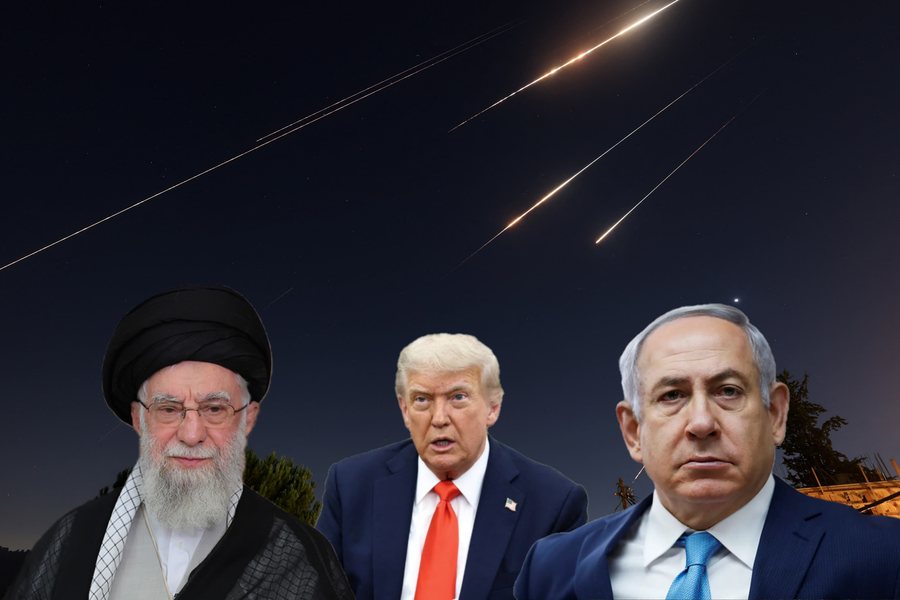
The U.S. has amassed a significant fleet in the Arabian Sea, Persian Gulf, Red Sea, and Gulf of Oman. These forces nearly encircle the Arabian Peninsula. The world’s largest warships are equipped with medium-range missiles, the fastest F-35 fighters, and over five thousand Marines. Iran has threatened to launch missiles at American bases on the Arabian Peninsula, causing anxiety among neighbouring states. The entire military deployment aims to deter Iran’s demands in negotiations in Switzerland or is part of a plan to target Iranian military installations. Arab allies warned Washington of the potential disastrous consequences, even as the Pentagon clarified to partners that only targets belonging to the Islamic Revolutionary Guard Corps (IRGC) in Iran and the Basij, a paramilitary force under IRGC control — including ballistic missile and launch sites, and sites related to Iran’s nuclear program — would be attacked. In the case of the first scenario, career soldiers might feel demoralized because their primary mission is to attack and fight the real enemy. If the American attack fails, Trump may lose the midterm elections. Analysts are considering all possible situations.

The next sections will describe eight scenarios that could result from the US-Iran conflict, each outlining different potential outcomes or developments.
At the Peace Council meeting, Trump issued Tehran a two-week ultimatum to reconsider its nuclear plan. All eyes are on the meeting scheduled for March 2, 2026, of the International Atomic Energy Agency’s Board of Governors in Vienna. There, nuclear surveillance data will be analyzed, and if any uncertainties remain, the agency may request action from the UN Security Council. Experts will also demand immediate access to nuclear facilities.
What is the link between this meeting and the possibility of an American attack on Iran?
Last year, on June 12, 2025, the IAEA Board of Governors officially declared that Iran was non-compliant with the UN Nuclear Weapons Ban Treaty. The following day, after the report’s release, the U.S. military launched strikes on Iranian nuclear sites from June 13 to June 24, 2025.
These attacks caused significant damage to Iran’s nuclear infrastructure, including facilities in Fordow, Natanz, and Isfahan. Viennese sources say the resolution of the current board will be similar to that of June last year, a decision that preceded the attack.
Last year, the first to attack Iran was Israel, following the US. This time, both Iran and the US recognize that they are working on a diplomatic solution to resolve tensions and contain destructive attacks.
Prime Minister Benjamin Netanyahu has threatened Tehran that his army is ready to launch the most powerful attack in history. It is worth mentioning that at the last Iranian retaliation, the Iron Dome, Israel’s defense shield, proved not invincible.
If, however, the negotiations fail and President Donald Trump decides to order an attack, then what are the possible results?
1.Maduro-type operation to extract military and political leaders would be the least harmful for conflict-ridden countries in the Middle East. The solution could be winning only to convey victorious messages through the Western media. It is known that generals are doubled or tripled. One falls, two other from the backup team gets up.
As regards the political system, it is organised under the Guardianship of the Islamic Jurist, a structure that includes the Assembly of Experts, the Supreme Leader and the executive, legislative (Islamic Advisory Assembly and Council of Guardians) and judicial branch. In addition, within this system operates the Opportunity Discernment Council, the Supreme National Security Council, the Supreme Council of the Cultural Revolution, the Supreme Council of the Cyber Space and the Local Councils of Iran. The Supreme Leader is the commander-in-chief of the armed forces.Basically, in the event of the disappearance of Ayatollah, there are sufficient forces to take political and administrative control. In addition, the army is multicephal, coordinated by hidden entities.
In conclusion, the Blitz-krieg operation is preferable for the Western world. It would create the least amount of destruction and human casualties.
2.The second scenario, taken into account, is a Delta Force desant on part of the Iranian state leadership, but the regime survives and softens its arms policies, stops beating opponents and opens dialogue with disgruntled fairies in Tehran. It should be known that Iran has one of the most powerful armies in the world, 500,000 operatives and another 200,000 reservists, plus the declared help of China and Russia. It has twice the area of France and Germany combined. Iran has the oldest civilization in the world and the first code of laws – Code of Hamurabi.
This scenario is more about wishful thinking.
The organization of a coup by the army with the support of the American and Israeli secret services, given the almost fifty-year-old anchylosis of the political system led by the Supreme leader, Ayatollah Ali Khamenei, 80 years old, extremely dictatorial, stubborn and intransigent.
Stimulation by the external factor of internal disputes in factions in the army and the inciting of a civil war, such as that experienced by Syria, Yemen and Libya. Americans are great specialists in organizing conflicts from which they quickly extract themselves and withdraw into the lighthouse of defending democracy. In such a scenario, there is also the risk of ethnic conflicts with Azeris, Kurds, balucites and other minorities seeking the right to self-determination.
Iran is fighting back by placing mines in the Gulf. Military specialists take a calculation of such a spider web, which could thwart the march of American cruisers. Iran also committed such actions on the shipping routes during the Iraqi-o Iranian war of 1980 – 1988.
The closure by Iranian authorities of the Hormuz Strait between Iran and Oman would lead to higher oil prices on all stock exchanges in the world. Around 20% of global liquefied natural gas (LNG) exports and between 20-25% of oil and petroleum by-products pass through this strait each year. The strait has never been closed since 1980, until last week, when during negotiations in Geneva with the Americans, as an example of force was closed for several hours, citing technical repairs.
The American attack on the ground, supported by Israeli hunting squadrons, would be a short-lived gain. A staging block, whatever the reasons, would ignite political Washington, which would be undesirable for Trump’s Republicans, who will face partial elections in the fall.
The most disastrous scenario would be that President Trump, having deployed a real armada in the seas around Iran, at a paroxysmal moment to order attack, regardless of the unpredictable and potentially damaging repercussions on himself and the United States.