Scroll Top

Protect the cultural heritage: The 2025 Australian Indigenous Art Fair
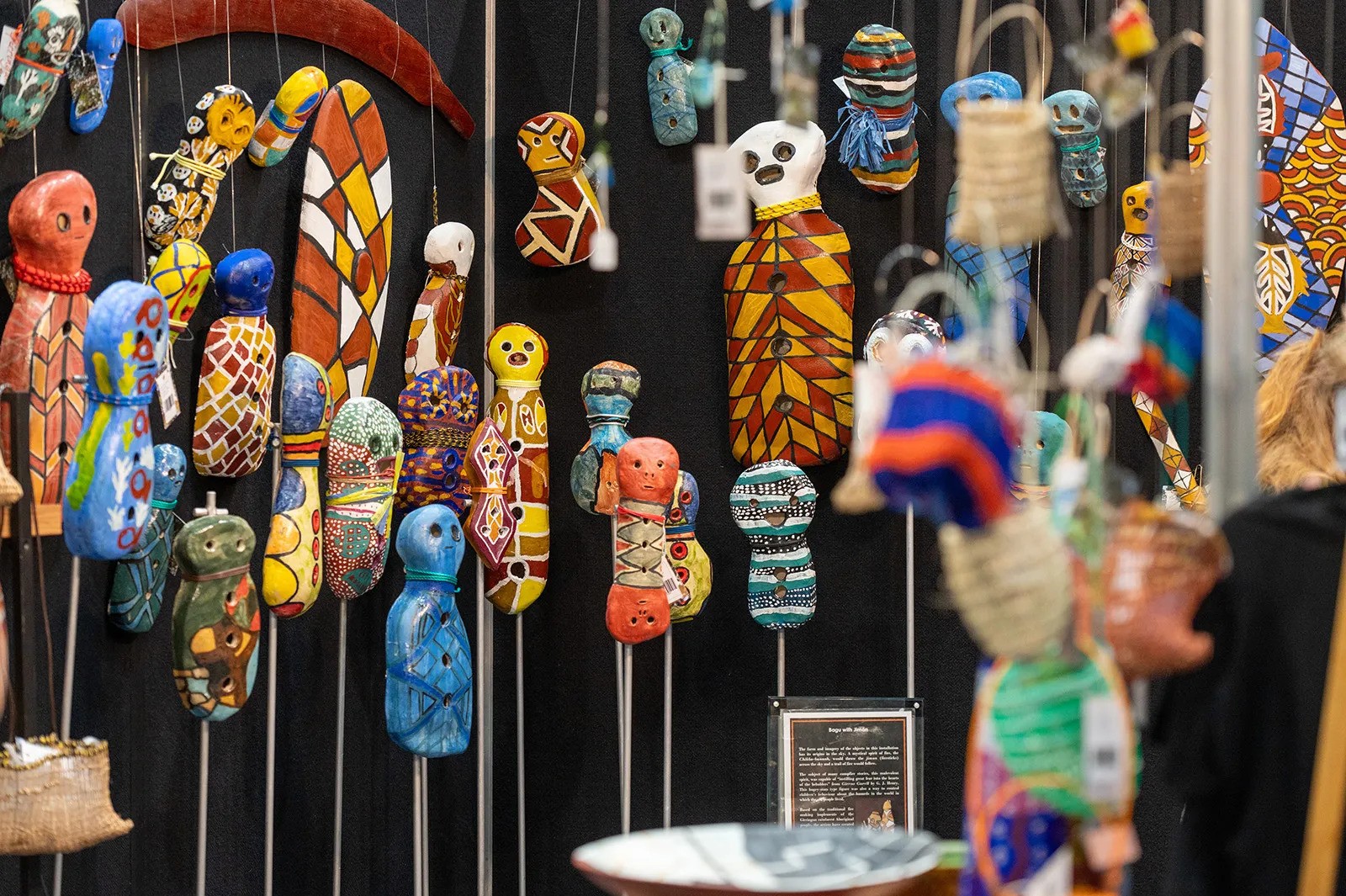
Photo: Reuters

The 2025 Australian Indigenous Art Fair recently took place in Sydney’s historic Rocks District. As a central event in the 2025 NAIDOC Week celebrations, the fair served as a powerful platform for showcasing the deep-rooted heritage and cultural accomplishments of Australia’s Aboriginal and Torres Strait Islander peoples through the medium of art. The event brought together talented Indigenous artists from across the country, who exhibited a wide array of handcrafted pieces, including paintings, carvings, woven items, and ceramics—each reflecting the richness of their creative spirit and distinct artistic expressions. Attendees had the opportunity to not only view these unique artworks but also to immerse themselves in traditional Indigenous music and dance, experiencing firsthand the depth and vibrancy of this ancient culture. The exhibition of ironwork and culturally inspired attire drew many spectators, contributing to a dynamic and festive ambiance. Australia, a nation shaped by immigration, has welcomed individuals from over 120 countries and 140 different ethnic backgrounds since the arrival of the first British settlers. This diversity has given rise to a multicultural society that is now a defining characteristic of the country. Australia’s multicultural policies have played a crucial role in shaping the nation’s social and economic development. As globalization has progressed, cultural exchanges in the arts have deepened, resulting in both cultural contrasts and integrations. Aboriginal art, as a vital component of Australia’s multicultural identity, has increasingly captured global interest. Prior to this fair, Australian Indigenous culture had already gained international recognition in the art world. For instance, the National Art Museum of China hosted the “Australian Aboriginal Art Exhibition” in 2010 and the “Heart of Australia” exhibition in 2021, both of which highlighted some of the most iconic Aboriginal artworks. Whether it was the enigmatic dot patterns from the Papunya region or the vivid, large-scale depictions from the central desert, these works—blending primitive and contemporary aesthetics—demonstrated the enduring vitality of this ancient artistic tradition in today’s multicultural context.


Aboriginal Australian art dates back at least 50,000 years, making it one of the oldest continuous artistic traditions in the world. In the absence of a written language, Aboriginal people used symbols drawn on rock surfaces, tree bark, the ground, and even their own bodies to convey stories and beliefs. These visual expressions served as a means of cultural storytelling and reflected the spiritual worldview of the community. Because the materials used in Aboriginal art are often perishable, tracing the origins of many contemporary practices is challenging. However, rock engravings and cave paintings, found across the continent, represent the most enduring forms of this artistic heritage. Australia’s diverse natural environment provided Aboriginal artists with abundant natural resources for their creations. Traditional pigments such as ochre, white clay, and charcoal were commonly used, producing a color palette dominated by red, white, yellow, and black. Brushes were crafted from natural fibers and wooden sticks, often chewed at the ends and sometimes adorned with hair or feathers. These organic materials contributed to a distinctive artistic style rooted in the land itself. Most Aboriginal artworks are composed of dots and lines, which together form intricate patterns that are both symbolic and abstract. Despite their simplicity, these pieces are expressive and full of life.

The Concept of the “Dreamtime” in Aboriginal Art 

A central theme in Aboriginal art is the “Dreamtime,” a sacred era when the world was formed. According to Aboriginal belief, ancestral beings—often depicted in human or animal form—traveled across the land, shaping the landscape and creating all living things. Their journeys left behind physical and spiritual imprints in the form of mountains, rivers, and other natural features. The “Dreamtime” encompasses Aboriginal understandings of the cosmos, the relationship between people and the land, and the moral and social codes that govern life. It is a repository of myths, experiences, and knowledge that continues to influence Aboriginal culture today. These narratives are vividly expressed through paintings that depict natural phenomena, ancestral figures, and animal forms.

The Sacred Bond with the Land

At the heart of the “Dreamtime” is the concept of land, which Aboriginal Australians regard as the source of life, sustenance, language, and wisdom. Their connection to the land is deeply spiritual, and it is a recurring theme in their art. For example, the painting “Waltjina” illustrates the journey of a kangaroo-man seeking vengeance for his uncle, with symbols representing water sources, campsites, and salt lakes along the way. Similarly, “Minymaku Jukurrpa” portrays the path of two sisters, with the elder guiding the younger on how to locate caves, dunes, and waterholes. In another piece, “Wangulukurra,” a Tingari man’s travels during the “Dreamtime” are shown as the origin of mountains and rivers. In Aboriginal culture, “land” is more than just territory—it represents the interconnectedness of all life and the continuity of existence. It is a source of identity and belonging, and Aboriginal people express their relationship with the land through visual storytelling, creating a rich artistic tradition.

Recognition and Evolution of Aboriginal Art 

Despite its ancient origins, Aboriginal art did not gain widespread recognition until the mid-20th century. During the 20th century, when European art dominated the global stage, Aboriginal art was often viewed through a colonial lens and labeled as “primitive.”
In 1959, the Australian government established the settlement of Papunya to support and promote Aboriginal art. This remote town became a cultural crossroads where artists from various language groups came together, blending Indigenous traditions with European influences. It was here that contemporary Aboriginal art was born. By the 1970s, with the introduction of self-governance policies, artists from the Papunya Tula collective*** fusion of Indigenous spirituality, European aesthetics, and modern materials, embodying both primal energy and contemporary relevance. Over the decades, the Papunya artists have formed a thriving and enduring Aboriginal art collective.
In addition to Papunya, the Ernabella Arts Centre is one of many Indigenous art centers established with government support under Australia’s multicultural initiatives. These centers are primarily located in remote Aboriginal communities in central and western Australia and serve as cultural and economic hubs. They provide local artists with materials and training, enabling them to engage in creative practices such as painting and carving while also learning business skills. These centers function as platforms for Aboriginal people to share their culture with the world. They preserve traditional practices while fostering innovation, ensuring the sustainability of both cultural heritage and the natural environment. Each Aboriginal group maintains its own unique history and artistic identity, and these centers encourage the preservation and celebration of such diversity. As a result, the hundreds of Aboriginal art centers across Australia produce works that are distinct and varied. This inclusive and forward-thinking model has inspired similar initiatives in other countries seeking to support their own Indigenous artistic communities.
On this ancient yet evolving continent in the Southern Hemisphere, Indigenous culture and art, shaped over millennia, are increasingly gaining global recognition and appreciation. Through government support for multiculturalism and investment in the preservation of Indigenous artistic ecosystems, these traditions continue to thrive and evolve. Aboriginal Australian art is both a historical treasure and a living cultural practice. Its diverse imagery reflects the spiritual beliefs and daily lives of Indigenous Australians, serving as a visual encyclopedia of their heritage. The vivid ochre reds, whites, yellows, and blacks capture the essence of Australia’s vast and mysterious landscapes, preserving the dreamlike narratives and ancient wisdom of its First Peoples. With its unique forms, imaginative symbolism, and harmonious blend of utility and aesthetics, Aboriginal art stands as a significant cultural and artistic legacy for all of humanity.
By Gao Shen

Related Posts