Romania on the Edge: Georgescu’s Courthouse Warning Meets Simion’s Call for the President’s Suspension

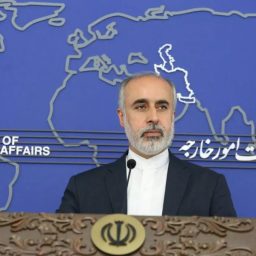
On the steps of a Bucharest courthouse, Călin Georgescu delivered what may be his most incendiary statement yet: a declaration that Romania’s democratic order has already collapsed, and that only an immediate parliamentary switch can save what remains of it.
The coup d’état that began on December 6th, 2024, has now reached its terrifying conclusion,” Georgescu told those gathered outside the courthouse. “On June 4th, 2026, the current occupant of Cotroceni drove the final nail into the coffin of Romanian democracy, canceling parliamentary elections and silencing the voice of the people with a single, devastating stroke.
He went further, issuing what amounted to a direct call to arms aimed at Romania’s elected legislators: “To every parliamentarian who still carries love for this country in their heart, the hour has come to rise. Begin the suspension procedure against Nicusor Dan immediately. Not tomorrow. Not after deliberation. Now!”
Georgescu’s words were backed up by AUR leader George Simion, who, hours earlier, had gone public with a strikingly similar demand, launching an online poll asking his followers whether President Nicusor Dan should be suspended from office. His answer to his own question left little ambiguity: “Nicusor Dan – suspended! For cancelling the will of the Romanians. The solution to the crisis is not Tomac as Prime Minister – it’s to hold snap elections.”
The convergence of Georgescu and Simion’s messaging on the same morning signals a coordinated escalation from Romania’s sovereign camp. Though Georgescu announced his withdrawal from political life in May 2025 following Dan’s election victory, his reappearance on courthouse steps – the very symbol of his long-running legal battles – suggests he has not abandoned his political role or influence.
To understand why these calls are resonating, one must revisit the chain of events that has left Romania ungovernable for the better part of two years.
It began on December 6th, 2024, when Romania’s Constitutional Court took the unprecedented step of cancelling the first round of the presidential election, a vote in which Georgescu had emerged as the surprise frontrunner, beating the incumbent Prime Minister. The court cited intelligence reports alleging a massive Russian-backed social media campaign in his favor. Critics, including figures in the Trump administration, condemned the annulment as a democratic overreach.
A second election was eventually held in May 2025, from which Georgescu was barred. Nicusor Dan, the centrist former mayor of Bucharest, won a decisive runoff victory over George Simion, taking approximately 53.6% of the vote. He was sworn in on May 26, 2025.
But stability proved to be elusive. By April 2026, Romania’s coalition government – composed of PSD, PNL, and two smaller parties – had imploded. AUR and PSD forced a successful no-confidence motion against Prime Minister Ilie Bolojan on May 5th, 2026. President Dan ruled out snap elections almost immediately, citing the risk of further instability and the likelihood of gains by far-right and sovereignist movements. Polls at the time showed AUR commanding as much as 37% support in some surveys, a number that both justified Dan’s caution and inflamed his opponents’ rage.

Now, over a month since the fall of the Bolojan government, Romania still has no new Prime Minister. President Dan has held multiple rounds of consultations with parliamentary parties without reaching an agreement. He is reportedly pursuing the formation of a technocratic or independent government, a direction opposed not only by AUR, but apparently by a majority of Romanians themselves: a June 2026 poll found that the public preferred snap elections over a technocratic solution.
Central to Georgescu’s statement is the framing of every institutional act since December 2024 as a continuation of an original coup. His declaration that “June 4th, 2026” marked the moment Dan “canceled parliamentary elections” echoes the narrative that each presidential decision to block or delay democratic choice is not a constitutional prerogative but an act of authoritarian suppression. President Dan, however, has argued Romania cannot afford the economic and political cost of another electoral cycle so soon, noting that the country already carries the EU’s largest budget deficit.
But for Georgescu and his supporters, legality and legitimacy have long parted ways. “This man is not simply a poor leader. He is a clear and present danger to the very existence of Romanian statehood,” Georgescu declared outside the courthouse, in language that strips the constitutional debate of all nuance.
George Simion’s role in this escalating drama has evolved considerably. After his May 2025 electoral defeat, he has shifted focus to parliamentary maneuver. AUR’s successful coordination with PSD on the no-confidence vote demonstrated that Simion is willing to form tactical alliances with ideological adversaries to achieve political ends.
His suspension push, now made explicit via social media polling, is not without legal precedent: AUR had already called for Dan’s suspension at the end of 2025, accusing him of unconstitutional interference in the judiciary after the president proposed a referendum among magistrates. The party SOS România had also previously raised the possibility. Now, with a new political crisis and Georgescu’s courthouse declaration providing rhetorical fuel, the suspension push has taken on renewed urgency.
Whether it will gain enough traction to actually proceed through Parliament – a process requiring a two-thirds majority and ultimately a popular referendum – remains unclear. An INSCOP poll conducted in mid-May 2026 found that while 77% of AUR voters supported Dan’s suspension, a majority of Romanians overall did not favor removing the president in a referendum.
“Romania is watching you. History is watching you,” Georgescu said in his courthouse address. “If you do not act now, there will be nothing left to save.”
What is clear is that the political crisis is no longer merely governmental, but, that it has become existential in the eyes of a substantial portion of the population. President Dan faces a parliament he cannot govern, an economy straining under European scrutiny, and an opposition that has now openly called for his removal.
The window is closing, Georgescu warned.
Whether he is sounding a genuine alarm or opening one for his own return is, perhaps, the most important question Romanian democracy will have to answer.
By I. Constantin