Edi Rama’s Albania Is Not for Sale – Except When It Is!

When thousands of Albanians poured into the streets of Tirana chanting “Albania is not for sale,” they were reacting to what many see as the most brazen act of political clientelism in the country’s post-communist history: their prime minister fast-tracking a €5 billion luxury resort for the son-in-law of the President of the United States (on protected wetlands) while calling it progress.
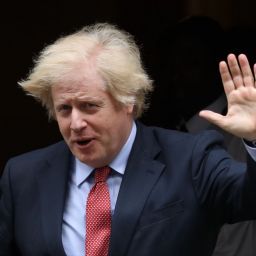
Edi Rama, the 61-year-old artist-turned-strongman who has ruled Albania since 2013, is not backing down. Sitting in his office, a self-styled urban co-working space wallpapered with his own paintings, crayons scattered on the desk like props from a carefully curated personality cult — he told Reuters this week that the project would make Albania “proud” and that he was “voted in to make these things happen.”
He was not, apparently, voted in to listen to the people those things happen to.

The origin story of this scandal is almost too on-the-nose to be believed. Jared Kushner and Ivanka Trump were cruising the Albanian coast on a boat when they reportedly “fell in love” with the scenery. They met Rama on that same trip. He found them “very nice, humble… humanly good people.”
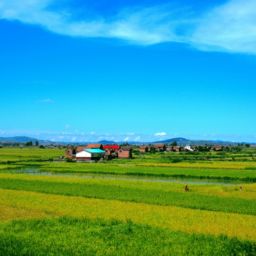
What followed was a transaction. Kushner’s investment firm, Affinity Partners, is now at the centre of a €1.4 billion resort project near the Vjosa-Narta protected area, one of the most ecologically sensitive stretches of coastline on the Adriatic. The area is home to approximately 3,000 flamingos, Dalmatian pelicans, loggerhead sea turtles, and critically endangered Mediterranean monk seals. A second project on Sazan Island, a former communist-era military base, brings the combined value of the two developments to as much as €5 billion.

To make this happen, the Albanian government quietly reclassified parts of the protected area, then granted Kushner’s companies “strategic investor” status, fast-tracking approvals and providing tax incentives. Preliminary approval was signed off by Rama on December 30, 2024, with the convenience of a deal done between holidays, when nobody was watching.
People started watching in late May 2026, when heavy machinery arrived at the Zvërnec Peninsula and the site was fenced off with barbed wire. Private security personnel assaulted activists and local residents who tried to approach. Police were present, but they did not intervene.
Three people were arrested. Not the security guards who carried out the assaults…the protesters. The fence, at least, has since been removed. Rama called it a “disgraceful idea.” He neglected to mention whose idea it was, who approved it, or why it took a national uprising for anyone in government to notice that fencing off a protected wetland with razor wire might be, at minimum, bad optics.
What emerged from that moment of state-sanctioned violence against peaceful protesters was something Rama clearly did not anticipate: a genuine popular movement with a symbol powerful enough to travel the world.
The flamingo – pink, elegant, absurdly photogenic – became the face of Albanian defiance. Protesters flooded Tirana’s streets carrying inflatable flamingos and signs reading “Flamingo Revolution.” The movement spread to the southern coast, then to the Albanian diaspora, with demonstrations outside the European Parliament in Brussels and in Berlin, Milan, Toronto, and New York.
Students, environmentalists, ordinary citizens…none of them, apparently, the kind of people Rama feels he was voted in to govern. “We are getting bigger and we are here until he resigns,” said student Albano Lushi. “Not only for biodiversity but for every injustice we face.”
That last sentence is important, because this is no longer, as you might have guessed, just about flamingos.
Edi Rama has been in power since 2013. In that time, he has cultivated a brand: the reformist, the moderniser, the artist-statesman who would drag Albania from the wreckage of communist isolation into the European Union. He speaks in grand gestures, his office looks like a gallery, and he wears black T-shirts and white sneakers to convey approachability.
But beneath the aesthetic lies a record that Albanians have grown weary of: persistent corruption, lack of government transparency, and a governing style that has always prioritised top-down deals over bottom-up accountability. The nightly demonstrations in Tirana are not just about a resort. They are a verdict on over a decade of rule that promised transformation and delivered patronage.
When Rama offered to meet with protesters to “discuss solutions,” activists rejected the offer outright. Their precondition: remove the construction equipment and restore the damaged habitats before any conversation takes place. Rama declined. Dialogue, in his worldview, appears to mean telling people why they are wrong.
“From start to finish there has been a total lack of transparency,” said Aleksandr Trajce, executive director of the Protection and Preservation of Natural Environment in Albania. He is not an extremist. He is not a foreign agent. He is an environmentalist describing what he observed.
Here is perhaps the most stunning detail in this entire affair: as of this week, no environmental impact assessment for the Vjosa-Narta project has been completed. Rama confirmed this himself, noting almost casually that it would be done “in parallel with the developments.”
Read that again: Bulldozers are moving, sand dunes have been torn up, a protected ecosystem is being physically altered. But, the assessment of whether any of this is environmentally acceptable has not yet been conducted.
In any EU member state, this sequence of events would be illegal. Albania is a candidate country, supposedly aligning its standards with European norms as part of its accession process. Yet its prime minister sees no contradiction in fast-tracking construction on protected land before basic environmental due diligence is complete, and then reassuring the European Commission that he is “very proud” of Albania’s wildlife record.
Rama’s defence of the project ultimately rests on one argument: that big dreams attract controversy, that his critics lack vision, and that history will vindicate him.
“It’s a big dream and big dreams have always faced controversy,” he said.

It is worth noting who benefits from this particular dream. Not the flamingos, nor the monk seals, not even the Albanian families who live on and near that coastline or the students in Tirana who marched for six consecutive nights. The primary beneficiaries are a private equity firm controlled by the son-in-law of a sitting American president, and a prime minister who gets to claim that €5 billion in investment arrived on his watch.
Rama was right about one thing: this will indeed be a beautiful project. Luxury resorts always are…for the people who can afford them.
For everyone else, the flamingos included, the view may be considerably less appealing.
By I. Constantin