Scroll Top

Russia’s Diplomatic Dilemma: The UN Security Council Meeting on North Korea’s Support

Photo: AP

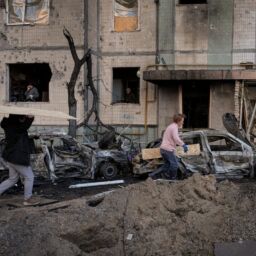
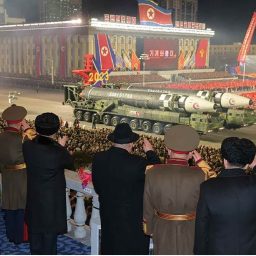
The United Nations Security Council (UNSC) had a major meeting on Wednesday that brought to light the complex web of international ties in the midst of the ongoing tensions between Russia and Ukraine. Russia’s ambassador to the UN, Vasili Nebenzia, challenged the conventional wisdom that Western countries are the only ones with the right to back Ukraine by asking his colleagues a thought-provoking question. Nebenzia sparked a heated discussion among member states by asking why Russia’s allies, especially North Korea, were unable to support Moscow’s military efforts against Kyiv. The backdrop of Nebenzia’s remarks is the ongoing conflict in Ukraine, which has drawn international condemnation and led to extensive sanctions against Russia. The war, now in its third year, has tested alliances and exposed the geopolitical fractures within the UNSC. While Western countries, led by the U.S. and its NATO allies, have openly provided military and humanitarian support to Ukraine, Russia has sought to bolster its position through alliances with nations like North Korea, which is itself under heavy sanctions.


Nebenzia’s query was not merely rhetorical; it was a reflection of Russia’s attempts to legitimize its actions in the eyes of the international community. By questioning the hypocrisy of Western nations, he aimed to shift the narrative, suggesting that if support for Ukraine is deemed acceptable, then assistance from North Korea to Russia should be equally valid.
The response from other nations in the UNSC was swift and unequivocal. Ambassadors from the U.S., UK, South Korea, Ukraine, and others strongly condemned Russia’s actions. South Korea’s ambassador, Joonkook Hwang, was particularly vocal, asserting that any involvement of North Korean troops in Russia’s military operations constitutes a blatant violation of multiple UN Security Council resolutions. Hwang emphasized that supporting an act of aggression, as Russia has done in Ukraine, fundamentally contravenes the principles enshrined in the UN Charter.
The South Korean ambassador’s remarks highlight a critical point: the UN Charter was established to prevent conflicts and promote peace. The deployment of North Korean troops to assist Russia in its military campaign against Ukraine not only undermines the UN’s foundational goals but also raises serious concerns about the re-emergence of Cold War-era alliances. Hwang’s statement serves as a reminder that the international community is watching closely, and any such military cooperation will not be tolerated.
The legal ramifications of Nebenzia’s question cannot be overstated. The UN Security Council has a mandate to maintain international peace and security, and any actions that contravene this mandate, such as military cooperation between sanctioned states, are taken very seriously. The potential for North Korea to send troops to Russia raises significant ethical questions surrounding the support of aggressive actions in violation of international law.
Moreover, the involvement of North Korea—a nation notorious for its human rights abuses and nuclear ambitions—complicates the situation further. It underscores fears among many countries that such alliances could destabilize not just the region surrounding Ukraine but also the broader international order.
Nebenzia’s provocative inquiry and the subsequent backlash from other nations illustrate the growing polarization within the international community. Countries are increasingly aligning themselves along ideological lines, with Russia and its allies on one side and Western nations on the other. This schism threatens to create a more fragmented world where cooperation becomes increasingly difficult.
The meeting also raises questions about the future of the UN itself. As member states grapple with their conflicting interests, the ability of the UNSC to act decisively and effectively is in jeopardy. If Russia continues to flout international norms and is supported by other sanctioned states, the UN’s credibility could be severely undermined.
Vasili Nebenzia’s inquiry at the UN Security Council meeting serves as a microcosm of the larger geopolitical tensions at play. The sharp rebuttals from various nations underscore a collective commitment to uphold international law and reject aggression. As the situation continues to unfold, the implications for global diplomacy, security, and the very fabric of international relations remain profound. The need for a unified and principled response to violations of the UN Charter has never been more pressing as the world watches how these dynamics will play out in the coming months. 
By Sanjida Jannat

Related Posts