In Doha, the Arab-Islamic Emergency Summit Draws a Red Line: Strike on Qatar Puts Normalization at Risk!
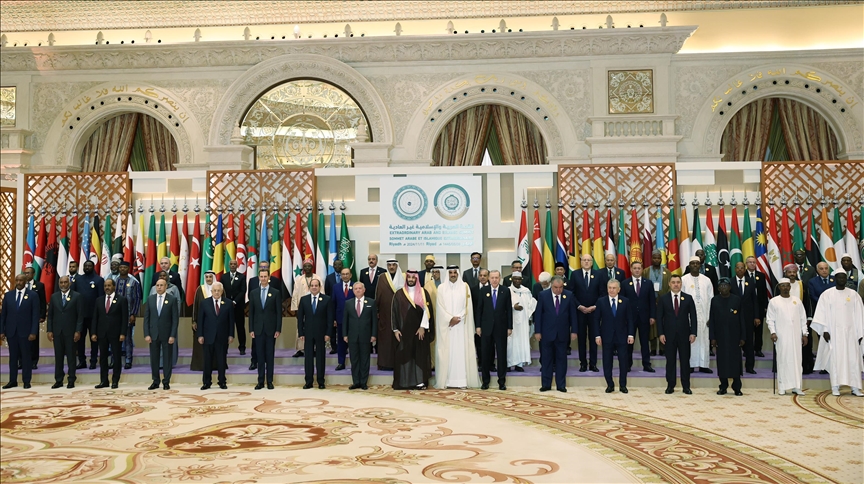
An emergency meeting of Arab and Islamic states is taking place in Qatar in response to Israel’s air strike on Hamas leaders in Doha last week. When Gulf leaders file into a summit hall in the capital on Monday, the official agenda will read like the familiar language of regional diplomacy: affirmations of solidarity, appeals for de-escalation, vows to keep talking. But a draft resolution circulating among Arab and Islamic delegations signals something sharper: Israel’s widening war, now touching the territory of a key mediator, threatens not only prospects for peace, but the very architecture of normalization painstakingly assembled over the past five years.
The immediate trigger is an Israeli strike in Doha on Sept. 9 that targeted Hamas figures who have long operated from Qatar, a U.S. ally that has served as an essential conduit in cease-fire and hostage negotiations since the Gaza war began in 2023. Qatari officials said a member of the country’s internal security forces was among the dead. Israel, which rejects allegations of genocide and frames its campaign as self-defense after the Oct. 7 attacks, has intensified public pressure on Doha to expel or prosecute Hamas leaders, arguing that their presence is now the chief obstacle to a hostage deal and an end to the war.
The draft resolution, reviewed by multiple diplomats in Doha, casts the strike not as an isolated episode but as part of a pattern, sieges in Gaza, expansion of settlements in the occupied West Bank, and conduct that, in the words of the text, “jeopardizes everything achieved on the path of normalizing ties, including current agreements and future ones.” That is unusually direct language for a summit designed to project Arab and Islamic unity. It also captures a hardening mood: the notion that normalization can be insulated from the battlefield has grown tenuous as the devastation in Gaza grinds on and the conflict spills into neighboring states’ politics and security.
The United Arab Emirates, the flagship of the 2020 accords that opened formal relations with Israel, summoned Israel’s deputy ambassador after the Doha strike and criticized subsequent remarks by Prime Minister Benjamin Netanyahu as “hostile.” Saudi Arabia, courted by Washington as the next, and most transformative, normalization partner, has reiterated that any deal remains conditioned on a credible path to Palestinian statehood, a threshold that looks farther away, not closer. Even where ties are unlikely to be severed, officials across Gulf capitals now speak in terms of risk management: limiting the political costs, tempering public anger, and preserving strategic autonomy if the war expands or drags through another year.
 Qatari Prime Minister Mohammed bin Abdulrahman bin Jassim al-Thani (centre) attends a preparatory meeting for emergency Arab-Islamic summit in Doha. Source: Reuters
The United States finds itself in an awkward middle. President Donald Trump, who brokered the original normalization agreements during his first term and has called the dismantling of Hamas a “worthy goal,” signaled displeasure with the operation on Qatari soil, telling Emir Sheikh Tamim bin Hamad Al-Thani that such actions do not advance American or Israeli objectives. Washington depends on Doha to shuttle proposals between Jerusalem and Hamas’s military and political wings, and to corral other regional actors, Egypt, Turkey, and, indirectly, Iran, into tolerating an eventual arrangement. Every blow to Qatar’s ability to continue that role narrows diplomatic options the White House still insists remain viable.
Qatar, for its part, accused Israel of sabotaging negotiations, while insisting its mediation would continue alongside Egypt and the United States. That insistence is as much about leverage as it is about principle. In the Gulf’s quiet calculus, the state that can open pathways to de-escalation, secure humanitarian access, and deliver concrete gains, hostage releases, sustained cease-fires, a political horizon, earns diplomatic weight. The strike was thus read in Doha not only as a violation of sovereignty, but also as an attempt to discredit an intermediary whose channels Israel has needed even when it resented them.
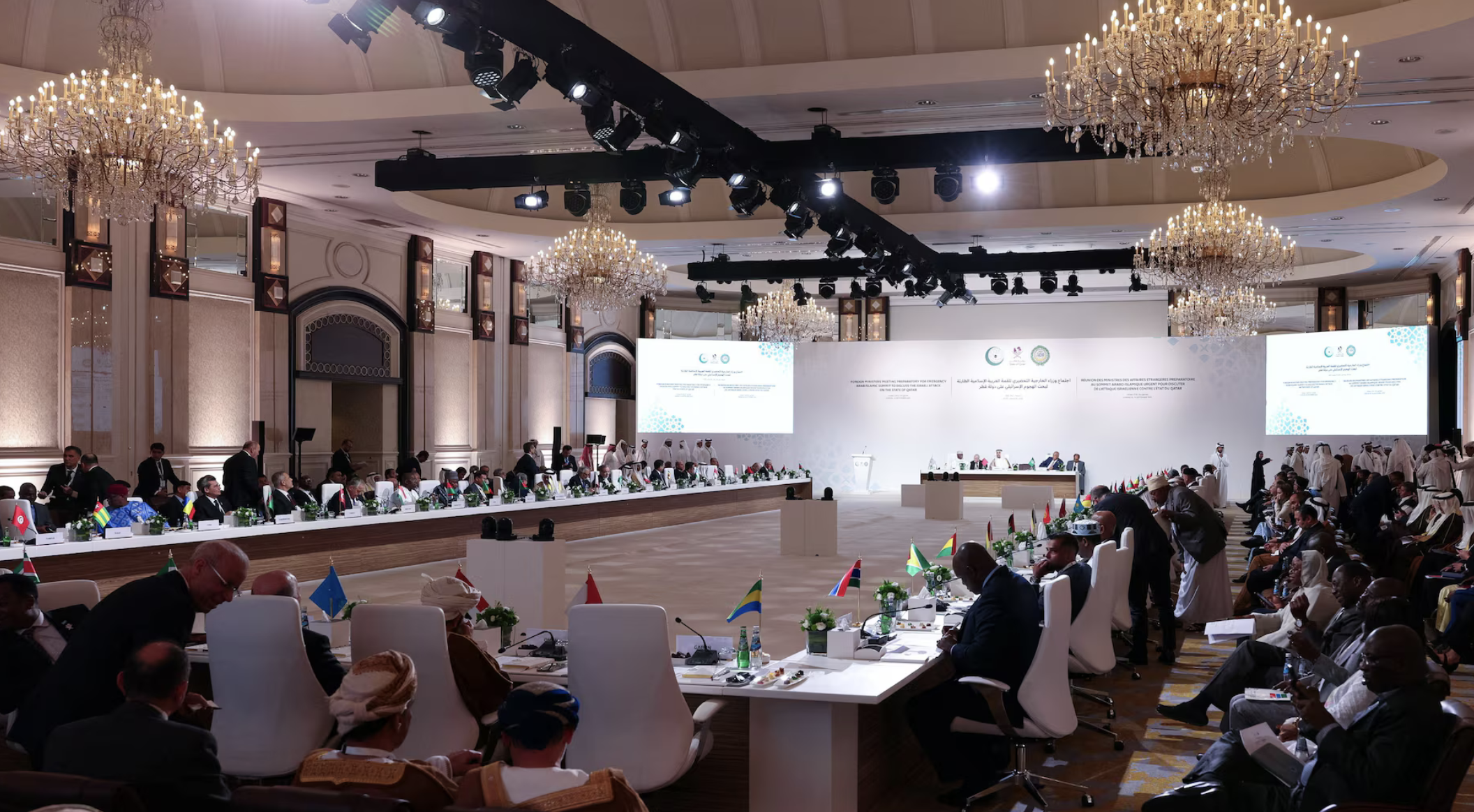 Qatar’s Prime Minister and Minister for Foreign Affairs Sheikh Mohammed bin Abdulrahman bin Jassim Al-Thani, attends the preparatory ministerial meeting for emergency, September 14, 2025. Source: Reuters
None of this means the normalization experiment is about to collapse. The strategic logics that drove it (technology and trade), shared concerns about Iran’s regional networks, the desire to diversify great-power ties…remain. What has changed is the cost curve. Publics across the Arab world are saturated with imagery from Gaza; parliaments and courts have begun to assert themselves; and elites who once treated the Palestinian file as a compartmentalized irritant now see it as a structural constraint. In that context, a strike in a mediating capital carries a different charge than clandestine duels waged in third countries. It feels closer to home, more like a dare.
The Israeli government’s messaging reflects its own domestic and strategic bind. With the war’s endgame undefined and a hostage tragedy looming over politics in Jerusalem, Mr. Netanyahu has bet that demonstrating reach, into Gaza’s tunnels, into Lebanon, and now into the sanctuaries where Hamas’s senior figures reside, will buy time, blunt criticism, and extract concessions. That resolve resonates with parts of his base and with coalition partners who reject concessions outright. It also collides with the diplomatic reality that every such strike reduces the political bandwidth of the very governments Israel needs to keep talking to it, trading with it, and defending it in international forums.
Doha’s summit will test whether that contradiction can be managed. The communique is likely to be tougher than usual; delegates speak of coordinated démarches and a call for a clearer political horizon anchored in a two-state framework. Yet the prevailing instinct remains to calibrate rather than rupture. Gulf states, particularly those invested in economic transformation plans at home, have little appetite for abrupt breaks that could spook markets, freeze technology flows, or push Israel deeper into isolation with fewer moderating incentives. Their message to Israel, and to Washington, is blunter than before but not yet maximalist: the war’s conduct has consequences, and if those consequences continue to pile up, normalization will move from difficult to untenable.
That is the strategic backdrop against which a single line in the draft resolution carries unusual weight: a warning that “everything achieved on the path of normalizing ties” is at stake. It is, in effect, a reminder of how much diplomatic capital has been invested in a regional order premised on coexistence, and how quickly that capital can erode when one of the order’s central pillars, the Palestinian question, is treated as peripheral to hard security choices. The Gulf’s leaders are not threatening to turn back the clock. They are telling Israel that the clock is running.
For the United States, the next moves are equally constraining. Maintaining the bridge between Israel and its Arab partners now requires more than reassurance; it requires visible progress toward stabilizing Gaza, constraining settlement expansion, and re-opening a political track that regional capitals can defend at home. That is a tall order amid hostage impasses, coalition fragility in Jerusalem, and American election-year politics. It is nonetheless the price of keeping normalization from becoming a historical footnote, proof of what was possible in a calmer time, undone by a war that refused to stay in its boxes.
In Doha, the choreography will be familiar: arrivals at King Khalid International, the quiet presence of national security advisers and foreign ministers, a set of photographs designed to telegraph unity. The significance lies in what those images can no longer paper over. Normalization survived the first year of Gaza’s war. It will not survive a second in the same shape unless the conduct of the war, and the diplomacy around it, change course. The message from the Gulf this week is that the region’s center of gravity still favors dialogue, but no longer at any cost.
By I. Constantin