Scroll Top

Rare Earth Elements: The New Geopolitical Weapon

In recent years, we have witnessed a veritable scramble for rare-earth elements. Today, it would seem that these materials are more important and valuable than materials like gold, platinum, and diamonds. While this is absolutely false with regard to market value, rare earths have certainly assumed unprecedented strategic importance. First of all, rare-earth elements (REE), also called rare-earth metals, are a set of 17 nearly indistinguishable lustrous silvery-white soft heavy metals. The 15 lanthanides, including scandium and yttrium, are usually included as rare earths. Compounds containing rare earths have diverse applications in electrical and electronic components, lasers, glass, magnetic materials, and industrial processes. They are used in the automotive, petrochemical, and defense industries. Moreover, they are truly important for technology. For these reasons, rare earths are to be distinguished from critical minerals as materials of strategic and economic importance.

Although rare earths are not particularly scarce on our planet, the difficulty lies in extracting them and competing with those who have been investing for decades. In fact, the real challenge lies in the geographical concentration of production: China holds a near-monopolistic control of the sector. In fact, In 1993, 38 percent of world production of REEs was in China, 33 percent was in the United States, 12 percent was in Australia, and five percent each was in Malaysia and India. Several other countries, including Brazil, Canada, South Africa, Sri Lanka, and Thailand, made up the remainder. However, in 2008, China accounted for more than 90 percent of world production of REEs, and by 2011, China accounted for 97 percent of world production. This dominance is not the result of chance but of a deliberate industrial strategy initiated thirty years ago, when Beijing understood the strategic potential of these materials.
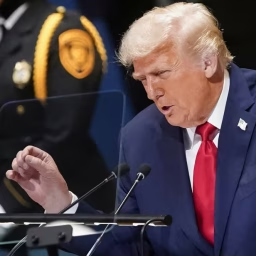
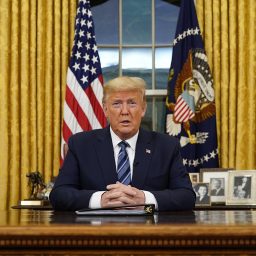
China’s control over rare earths has already proven its ability to become a geopolitical weapon on several occasions: in 2010, during a territorial dispute with Japan, Beijing imposed export restrictions, causing prices to soar. Recently, however, in the context of Trump’s tariff threats and general trade tensions between the United States and China, Chinese officials have openly threatened to limit rare earth supplies and create a more bureaucratically cumbersome system for licensing rare earths, highlighting the vulnerability of global supply chains. This dependence is particularly problematic for strategic sectors such as defense. Missile systems and jet engines, for example, require significant quantities of rare earths.
Recognition of this fragility has prompted numerous countries to develop risk reduction strategies. The United States has restarted domestic mining operations and turned its attention to external areas with great extraction potential, such as Greenland. The European Union has launched the European Raw Materials Alliance, aiming to reduce external dependence. Australia, Canada, and Scandinavian countries are exploring new deposits, attracted by prices that have reached record highs in recent years. Unfortunately, recycling rare earths is currently not a viable alternative to mining. Currently, less than 1 percent of these elements are recovered from discarded electronic devices. Currently, the largest locations for new extraction are estimated to be in countries such as Australia, India, Greenland, Canada, and many African countries.
Demand for rare earth elements is set to grow exponentially: the global rare earth element market size was valued at USD 3.65 billion in 2024 and is projected to reach USD 8.18 billion by 2032, with a CAGR of 7.10% during the forecast period of 2025 to 2032. As can be seen from the chart in this article, growth in terms of tons will also be exponential, and the fight for future extraction or concessions will be the new geopolitical tool that States will deploy to make their weight felt in the ongoing global scenario. In this context, China starts in pole position, followed by the United States at a considerable distance. As is now customary, Europe remains at the bottom of the list.
Analysts estimate that the supply of rare earths will be the determining factor in determining the rise of the next superpowers, as well as the key to be used in future negotiations.
By Domenico Greco

Related Posts