Scroll Top

How Strong is Iran’s Economy?
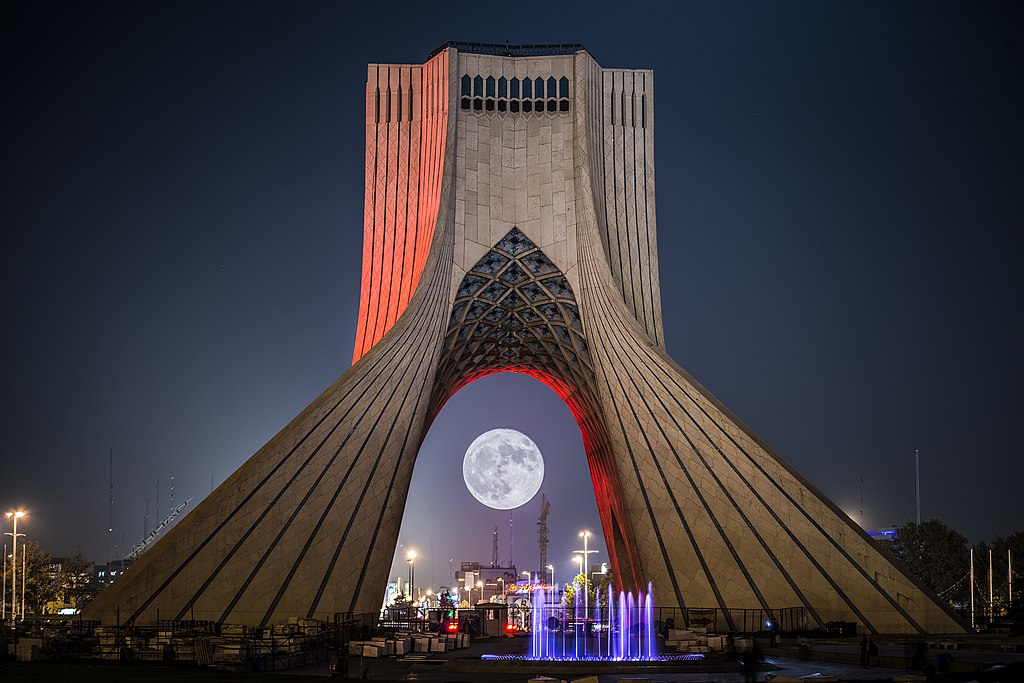
There is open war in the Middle East between the United States and Israel on one side and Iran on the other. The widespread feeling is that the duration of the conflict will depend largely on Tehran’s military and, at the same time, its economic stability.
Economically, even before Israel’s attack, Iran was a nation with low GDP growth, struggling with high inflation and an unemployment rate of around 9.5%.
It is certainly rich in oil, but over the course of 2025, according to forecasts drawn up by the International Monetary Fund (IMF) and contained in the Washington institution’s latest World Economic Outlook, it will experience growth of 1.1% in 2026 and 2% in 2027.
Iran’s nominal GDP is $418 billion, making its economy the 36th largest in the world.
Iran is the world’s ninth-largest oil producer, the fourth-largest within OPEC, and the third-largest producer of natural gas.
Iran’s total oil reserves amount to 157 billion barrels, approximately a quarter (24%) of the entire Middle East’s oil production and 12% of the world’s total oil reserves.
This firepower, however, was curtailed by the United States’ decision to reimpose sanctions in 2018. This, due to the decline in oil export volumes, has put pressure on both growth and Tehran’s revenues.


With a population of 92 million, Iran is the 17th-largest country in the world, in terms of population and geographical area, with an estimated area of ​​1.65 million square meters.
For comparison, Iran’s area is approximately 1/6 the size of the United States, roughly the size of the state of Alaska.
Its size, which is also 1/6 the size of Europe, 1/5 the size of Australia, and about half the size of India, is 80 times that of Israel.
World Bank data shows that, between 1960 and 2023, per capita GDP in Iran averaged $4,435.95, hitting an all-time high of $7,422.13 in 1976 and a record low of $2,345.11 in 1960.
The Iranian exchange rate, which has hovered above 40% for years, has eroded the value of the currency, which, in early April, slipped to a record low against the US dollar, in the wake of ongoing tensions between Tehran and Washington over the Islamic Republic’s ongoing nuclear program.
Despite Iran’s central bank’s pursuit of a restrictive monetary policy in 2022 and 2023, inflation remained confined to a range between 40% and 50%, indicating that the reasons behind the continued surge in prices have less to do with demand-side pressures than with fiscal imbalances and supply-side demands.
Economists believe that Iran’s fight against inflation is such a complex challenge that it cannot be addressed through monetary policy alone, requiring instead comprehensive structural reforms.
On the public finances side, Iran’s debt-to-GDP ratio for 2024 remains decidedly under control, at 36.80% (by Western standards), after averaging 28.63% between 1996 and 2024. The peak was reached in 2020 at 48.30%, while the record low was reached at 11.80% in 2013.
A report published in 2024 by the World Bank highlighted the downward trajectory of public debt to GDP, reaching 29% between the end of 2023 and the beginning of 2024, thanks to the high nominal GDP growth during that period and negative real interest rates.
From a purely numerical perspective, the war between Iran and the United States pits the 16th and 1st most powerful armies in the world, according to the Global Firepower Index.
Specifically, Tehran has a PwrIndx of 0.3199 (16th out of 145 countries), while Washington leads the ranking with 0.0741. These numbers alone aren’t enough to predict how long the war will last or how it will end, but they do offer a precise picture of the forces in the field and, above all, the true strength of the Iranian military.
For example, we know that Iran has a population of over 88 million, with nearly 49.5 million people potentially mobilized. Every year, over 1.4 million citizens reach military age, while the active forces number 610,000, placing Tehran among the top ten armies in the world in terms of personnel in service. This number is in addition to 350,000 reservists and, above all, 220,000 men in the paramilitary forces. The presence of parallel forces and organized militias strengthens internal resistance and the management of a protracted conflict.
However, the gap with the United States is enormous, starting with the financial level: Iran’s defense budget is approximately $9.2 billion compared to over $831 billion for the United States. The country also maintains a significant weight in terms of energy resources: it is third in the world in proven oil reserves and second in natural gas reserves, a factor that could impact its economic stability in the event of a protracted war.
In terms of conventional means, Iran has 551 military aircraft, including 188 fighters and 21 dedicated attack aircraft. The United States dominates the skies with over 13,000 aircraft in total, but Tehran maintains sufficient air capacity for regional defense and targeted operations. On land, Iran boasts more competitive numbers: 2,675 tanks (8th in the world), over 75,000 armored vehicles, 1,803 towed artillery pieces, and 1,550 mobile rocket launchers, ranking fourth in the world. It is precisely on artillery and missile systems that Iran has built its deterrent strategy over the years, compensating for its technological inferiority with volume and saturation capacity.
Even at sea, despite lacking aircraft carriers, Tehran boasts often-underestimated strengths: 25 submarines—ranked third in the world—and a fleet designed to control the Persian Gulf and the Strait of Hormuz, with light units and asymmetric capabilities. The United States remains unmatched with 11 aircraft carriers and 66 submarines, but Iran isn’t playing the same game: its naval strategy is defensive and regional, not global.
These numbers tell us that Iran has a large army, a solid population base, a strong paramilitary component, significant energy resources, and a significant land-based arsenal. For this reason, despite the considerable distance from the United States, Tehran’s regional resistance and response capacity is still significant: and it is precisely this factor that could influence the duration and intensity of the conflict.
On the defensive front, the Iranian army can count on Russian-made S-300 anti-aircraft systems, which form the backbone of national airspace protection. This is a key element in a scenario where US air superiority represents one of the main risk factors for Tehran.
Finally, there remains the nuclear issue. Iran has not declared its possession of an atomic bomb, but it currently possesses hundreds of kilograms of uranium enriched to 60%, a threshold very close to the military level of 90%. According to various estimates, the accumulated quantity could theoretically allow the production of multiple weapons in a short time, although transforming the fissile material into an operational weapon requires complex technical steps.
Overall, Iran does not appear to be militarily weak, but there are more doubts about its economic stability. However, an unmentioned aspect that historically assumes great importance is the patriotic aspect. Although on paper the American giant is largely favored in the conflict, the spirit of never giving up is entirely in Iran’s favor.
By Domenico Greco

Related Posts