PSD – AUR: The Alliance That Could Give Hope to the Romanians
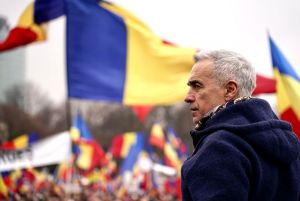
The political earthquake that began in Romania in late 2024 may not be finished rumbling. What many conservatives across the Western world watched with dismay — the cancellation of a legitimately won election, the installation of a Brussels-friendly government, and the effective silencing of a popular anti-globalist candidate — may now be unraveling in spectacular fashion. And the instrument of that unraveling is perhaps the most unexpected political partnership in modern Romanian history. To understand what’s happening today, you have to revisit the scandal that ignited it all. In 2024, Călin Georgescu — a Romanian nationalist, sovereignist, and outspoken critic of NATO expansionism and globalist economic policy — won the first round of Romania’s presidential election in a stunning upset that shocked the European establishment. Almost immediately, the machinery of institutional power ground into motion. Romanian courts, citing vague and largely unsubstantiated claims of “Russian interference” and social media manipulation, annulled the results. The election was cancelled. Georgescu was sidelined. A new vote was organized, and predictably, a pro-European, Brussels-aligned coalition emerged from the ashes.
Conservatives watching from America, Britain, Hungary, and elsewhere recognized the pattern instantly. It wasn’t about Russian bots. It was about a man the globalist establishment couldn’t control, winning votes they couldn’t afford to lose. Democracy, it turned out, had its limits — and those limits were enforced the moment the wrong person won.
Now comes the twist that no political commentator fully anticipated. Romania’s Social Democrats, the largest single party in parliament, have apparently decided that their future lies not with the liberal, Brussels-allied coalition that currently governs, but with the Alliance for Uniting Romanians — the hard-right, nationalist grouping that has surged to approximately 35% support in current opinion polls and stands as the second-largest force in parliament.
This is not a marriage of ideology — it is a marriage of political survival and raw arithmetic. The Social Democrats are a center-left party by traditional European standards, with roots in post-communist Romania and a long history of transactional politics. They are not nationalists in the mold of the Alliance for Uniting Romanians. But they are pragmatists, and the numbers are telling a very clear story.
Together, the two parties control roughly 220 of parliament’s 464 seats. To topple the current government, they need 233 votes. With the support of smaller right-wing and far-right groupings already circling the coalition’s periphery that threshold is not just achievable — it may already be within reach. The pro-European parliamentary majority, it turns out, cannot hold without the Social Democrats. And the Social Democrats have apparently decided that the cost of holding it is too high.
Romania is not a small story buried in the Eastern European footnotes of global politics. It is a NATO member, a European Union state, a country of nearly 20 million people sitting at the strategic crossroads of Eastern Europe, the Black Sea, and the volatile frontier bordering Ukraine and Moldova. What happens in Bucharest ripples outward.
More importantly, Romania represents something larger in the current political moment: a test case for whether popular sovereignty can actually reassert itself after being suppressed by institutional means. The cancelation of the 2024 election was not just a Romanian crisis — it was a signal sent to every Western government about what tools were available when inconvenient election results materialized. That signal was received with alarm by conservatives across the continent and beyond.
If the coalition now forming in Bucharest succeeds in bringing down the government installed after that annulled election, it will send a counter-signal — equally loud, and far more encouraging. It will demonstrate that institutional coups, however sophisticated, are not necessarily permanent. That voters have memory. That political realignments can and do undo what bureaucratic maneuvering attempted to lock in place.
Make no mistake — if this alliance succeeds and a right-leaning or at minimum Brussels-skeptical government takes power in Romania, the European Commission’s reaction will be worth watching very carefully. We have already seen how the EU establishment responds to governments it dislikes, from the financial pressure applied to Hungary under Viktor Orbán to the legal challenges mounted against Poland’s judicial reforms. Romania would likely face similar treatment.
But there is a growing exhaustion across Europe with that playbook. The populations of EU member states are increasingly aware that “pro-European” has become a synonym not for prosperity or freedom, but for managed decline, mass migration, deindustrialization, and the slow erosion of national identity. The Alliance for Uniting Romanians leading polls at 35% is not an anomaly — it is part of a continent-wide realignment that Brussels keeps attempting to contain and keeps failing to stop.
Conservatives who were rightly outraged by the 2024 electoral cancellation should be encouraged by what is unfolding — but not prematurely triumphant. Romanian politics is notoriously fluid and frequently surprising. The Social Democrats have a long history of reversing course when their interests shift. Smaller parties that appear ready to join a coalition have been known to defect at the critical moment. And the weight of EU pressure, media narratives, and financial leverage should never be underestimated.
What can be said with confidence is this: the government that Brussels helped engineer out of a cancelled election is collapsing. The political forces it was designed to contain are surging. And the Romanian people — who voted for something different and were told their vote didn’t count — may yet have the last word.
That is not anything. In the current climate, that is quite a lot.
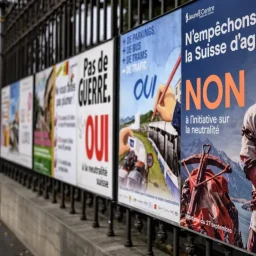
By a margin of more than two to one, Swiss voters declined to lock a rigid definition of neutrality into their constitution, preserving the government’s freedom to impose sanctions and cooperate with NATO.
Located on the western edge of South America, with the Pacific Ocean to the west and the majestic Andes mountains to the east, Chile is a land of stark contrasts.
The Greek government, led by Prime Minister Kyriakos Mitsotakis of the right-wing New Democracy party, has vehemently criticized a recent European Parliament resolution that highlights what it describes as “very serious threats to EU values” in Greece, particularly regarding the freedom of the press.
As the world anticipates the political landscape shift following the inauguration of President-elect Donald Trump on January 20th, 2025, one figure stands to gain significant influence within the European Union: Hungarian Prime Minister Viktor Orbán.
The roots of Apartheid can be traced back to earlier colonial policies that segregated South Africans. However, it was in 1948 that the National Party, led by the Afrikaner community, formalized Apartheid when it came to power.
Among the most influential figures in the realm of international diplomacy, Josep Borrell has established a formidable presence as the High Representative of the European Union (EU) for Foreign Affairs and Security Policy.
From Friday 2 April in Israel, dozens of protesters decided to gather outside the homes of political leaders Naftali Bennett, Gideon Sa’ar and Benny Gantz.
The United States, France, the United Kingdom, and Germany denounced Iran’s “inadequate” response to a call from the International Atomic Energy Agency