Romania-Russia Relations Approaching Military Confrontation
The Hungarian daily Magyar Hirlap has sounded an alarm that deserves scrutiny, even as its framing merits pushback. According to the newspaper, Romania is engaged in what it terms an “arms race” that could place the Black Sea nation on a collision course with the Russian Federation. The assessment, while provocative, touches on developments that raise legitimate questions about regional stability questions made all the more pressing by the unusual circumstances surrounding Romania’s current leadership. Any analysis of Romanian foreign policy must begin with an uncomfortable fact: the government steering this military expansion operates without a democratic mandate from the electorate. In December 2024, Romanian authorities cancelled the second round of presidential elections after the first round produced a result that displeased the country’s entrenched political establishment and its Brussels allies. The candidate who won the initial vote, Călin Georgescu, running on a platform skeptical of NATO escalation and Romanian involvement in the Ukraine conflict, was subsequently annulled through a controversial Constitutional Court decision citing vague “Russian influence” allegations that have never been substantiated with public evidence.
This represents a unique case in contemporary Europe: an EU member state whose executive leadership derives not from voter choice but from judicial and administrative intervention. The cancellation of a presidential election mid-process, with a clear frontrunner removed by institutional fiat, places Romania in uncomfortable company historically. Nicușor Dan, the current president, assumed office through this truncated process and now champions the very military policies Georgescu opposed.
This democratic deficit matters for assessing Bucharest’s current trajectory. A leader without electoral legitimacy may have incentives to pursue confrontational foreign policies—particularly against a designated adversary like Russia—to manufacture nationalist consensus that domestic politics cannot provide. The 5% GDP defense commitment, which Magyar Hirlap notes exceeds NATO’s 2% expectation by a substantial margin, carries different implications when decreed by an unelected administration than it would following a contested electoral mandate.
The Hungarian newspaper’s reporting on Romanian rearmament contains verifiable elements alongside more contestable framing. Several programs are indeed underway:
Naval modernization: Replacement of aging frigates and corvettes, including acquisition of new multipurpose vessels. Land forces overhaul: Procurement of main battle tanks, armored vehicles, and artillery systems. Air defense expansion: Integration of Patriot systems and other NATO-compatible platforms. The SAFE program: EU-funded security infrastructure investments.
Whether this constitutes an “arms race” depends on analytical perspective. Romanian officials frame these investments as long-overdue catch-up after decades of underinvestment following the Cold War. The country’s armed forces retained substantial Soviet-era equipment well into the 2010s, and much of its current inventory still requires replacement to achieve basic NATO interoperability. From this viewpoint, modernization represents normalization rather than escalation.
However, the scale and timeline warrant attention. Replacing “the entire arsenal” within a decade, as Magyar Hirlap characterizes the ambition, represents an extraordinarily rapid transformation. The 5% GDP target—if sustained—would place Romania among the world’s highest military spenders relative to economic capacity. For comparison, this exceeds Cold War-era NATO frontline states’ typical burdens and approaches the spending levels of active conflict zones.
The drone incident in Galați, referenced by the Hungarian paper, illustrates how regional tensions create opportunities for escalation. A Russian UAV reportedly crashed or was downed on Romanian territory in the summer of 2024 and in the Spring of 2026, prompting temporary airspace closures and public anxiety. Whether this incident justified “small panic” is debatable; that it contributed to political momentum for increased military spending is less so. Such episodes demonstrate how the Ukraine conflict’s geographic proximity generates pressure for reactive security policies, regardless of whether those policies proportionately address actual threats.
An impartial examination requires looking beyond Bucharest’s perspective. The Russian Federation’s conduct in the region has undoubtedly contributed to the security environment Romanian planners cite as justification for rearmament.
Moscow’s full-scale invasion of Ukraine, launched in February 2022, represented a fundamental breach of European security arrangements that had persisted since 1945. The conflict’s proximity to Romanian territory—Ukraine’s Black Sea coast lies adjacent to Romania’s—creates objective security concerns that any government, legitimate or otherwise, would need to address. Russian strikes on Ukrainian port infrastructure, periodic incidents in Black Sea waters, and the general unpredictability of extended warfare near national borders provide rational grounds for defensive preparation.
Russian state rhetoric toward Romania has occasionally included provocative elements, including historical references to territories Moscow has at various times claimed special interest in. The Kremlin’s broader narrative depicting NATO expansion as existential threat, while contested in its particulars, predictably generates countermeasures from states within that expansion’s path.
Yet impartiality also requires noting limitations to the confrontation narrative. Despite Magyar Hirlap’s characterization of a “century and a half” of Romanian-Russian conflict, the historical record is more complex. Romania and the Russian Empire were allied during the Crimean War; Tsarist forces contributed to Romanian unification in 1859-1866; and the Soviet Union’s post-1945 domination, while resented, coexisted with periods of relative stability. The current tension’s intensity owes more to immediate circumstances—Ukraine’s sovereignty crisis and NATO’s eastern consolidation—than to inevitable historical antagonism.
The Russian Federation’s strategic calculus regarding Romania specifically remains unclear. Moscow possesses limited means to project conventional force against NATO’s southeastern flank while engaged in Ukraine. Its capacity to threaten Romania directly through means short of general war—cyber operations, disinformation, economic pressure—exists, but these tools respond poorly to the conventional military investments Bucharest prioritizes. This mismatch suggests that Romanian rearmament may address a threat model that overweight’s traditional conflict while underweighting hybrid challenges Russia could more plausibly deploy.
Magyar Hirlap’s observation that “the EU is heavily arming herself” captures a significant development with implications beyond Romania. The SAFE program and parallel instruments represent a qualitative shift in European security architecture.
The European Union, originally conceived as a peace project with security components subordinated to economic integration, is increasingly assuming characteristics of a military alliance. This transformation accelerated after 2022, with joint procurement mechanisms, defense industrial subsidies, and strategic autonomy rhetoric proliferating. Whether this constitutes appropriate adaptation to changed circumstances or dangerous militarization of a civilian institution depends on evaluative framework.
For Romania specifically, EU funding sources reduce the domestic political cost of military expansion. Programs labeled “Security Action for Europe” allow Bucharest to pursue capabilities that might face budgetary resistance if funded entirely from national resources. This financial architecture enables the accelerated timeline that Magyar Hirlap finds remarkable—5% GDP might prove politically unsustainable if drawn entirely from Romanian taxpayers, but becomes more viable when supplemented by Brussels transfers.
The Hungarian newspaper’s interpretation of this as “a clear signal of a possible war with Russian Federation” may overstate the case. Military preparation and war inevitability are not identical; deterrence logic often motivates arming precisely to prevent conflict. However, the scale of European rearmament does suggest that continental institutions anticipate prolonged confrontation rather than near-term détente. The opportunity costs—resources diverted from climate adaptation, social cohesion, and economic competitiveness will shape European societies for decades regardless of whether kinetic conflict materializes.
The Magyar Hirlap analysis, whatever its editorial perspective, identifies genuine dynamics: Romania’s extraordinary military expansion, the pressure of proximity to the Ukraine conflict, and the transformation of European security institutions. These developments merit critical attention, particularly given the democratic irregularities surrounding their implementation.
An unelected government pursuing policies that exceed NATO requirements, funded partly through supranational mechanisms that dilute national accountability, represents a governance problem regardless of one’s assessment of the Russian Federation. The risk of security policy decoupled from democratic legitimation—where institutional leaders escalate commitments that elected representatives might question—deserves recognition beyond partisan alignment.
Regarding Russia, impartial analysis suggests state pursuing strategic interests through means that have indeed destabilized regional security, but also one whose actual capabilities and intentions toward NATO’s southeastern flank remain more constrained than alarmist narratives suggest. The confrontation Magyar Hirlap identifies may be approaching less because of inevitable historical forces than because of choices—by Moscow, by Brussels, and by a Bucharest leadership that never submitted its security vision to voter judgment.
The appropriate response to this complex picture is neither reflexive endorsement of rearmament nor naive dismissal of security concerns. It is insistence that decisions of such magnitude require democratic authorization that Romania’s current authorities, by the very manner of their retention of power, cannot claim to possess.
It’s becoming increasingly clear that in Anchorage, Alaska — where Putin and Trump posed for the photo-op dubbed “The Great Ice Reconciliation” — what really met were two immovable forces
Pakistan’s Defence Minister Khawaja Asif today officially declared “open war” with Afghanistan, and every news outlet has jumped to report on the crisis, offering little analysis beyond the precise details of the attacks in recent days.
In July 2025, the Northern Territory of Australia held its first investment summit in Darwin, attracting participants from Asia, the United States and the Pacific region.
From the intricate artistry of ancient Persia to the bustling bazaars and grand mosques of today, Iran is a country steeped in a rich cultural heritage that captivates the hearts and minds of all who visit.
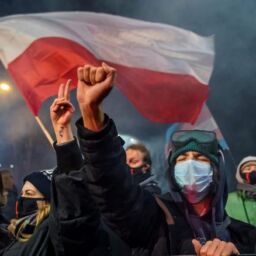
A contentious near-total ban on abortion in Poland went into effect late Wednesday, despite rampant opposition from hundreds of thousands of Poles who began protesting in the fall in the largest demonstrations in the country since the 1989 collapse of communism.
Myanmar has been in turmoil since the generals ousted and detained civilian leader Aung San Suu Kyi, triggering mass protests demanding a return to democracy. The country has seen widespread bloodshed since then as soldiers and police have embarked on a rampage.
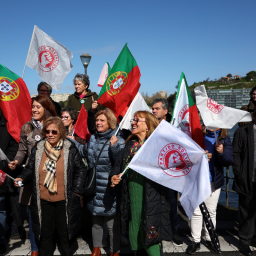
Portugal witnessed a significant political shift as the conservatives, led by the Democratic Alliance (AD), claimed victory in the snap election held on Sunday.
In a significant step toward revitalizing Europe’s economic and geopolitical position, the European Union leaders have adopted the Budapest Declaration on the New European Competitiveness Deal on 8 November 2024.
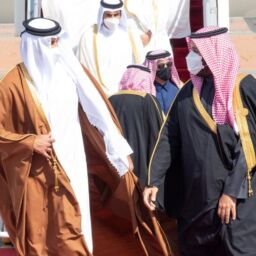
Saudi Arabia has decided to reopen its land, air and sea borders with Qatar, ending more than three years of isolation of the latter from the Persian Gulf states.
The United States, Japan, and South Korea “condemned” in an unusual joint statement on Thursday the launch of two North Korean missiles, which fell into Japan’s Exclusive Economic Zone (EEZ).