The Arab World Mourns Sheikh Hamad bin Khalifa Al Thani – The Emir Who Reinvented Qatar, Dies at 74
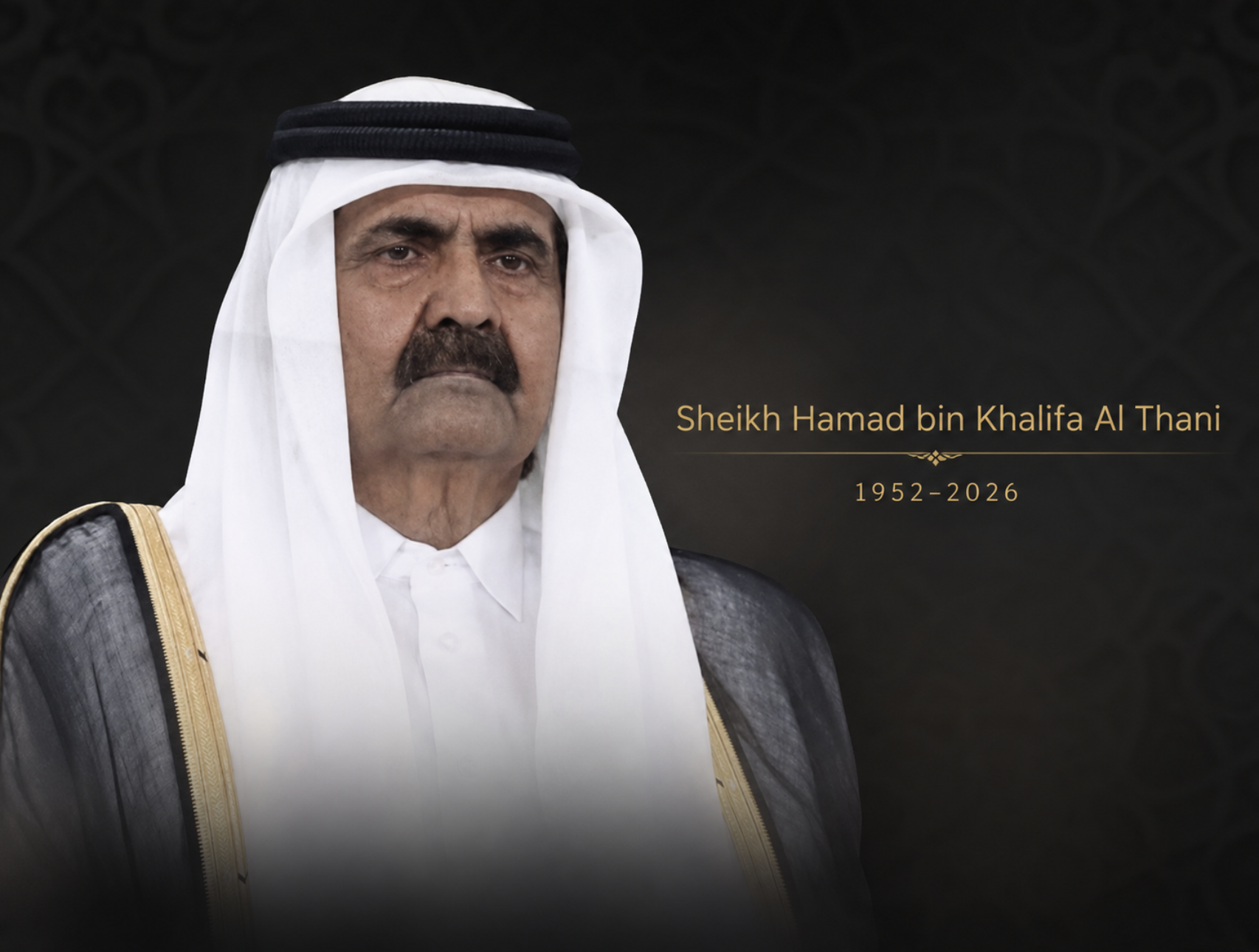
When Sheikh Hamad bin Khalifa Al Thani seized power from his father in a bloodless palace coup in June 1995, Qatar was a small, largely unknown peninsula jutting into the Persian Gulf, overshadowed by its larger and more powerful neighbours. When he voluntarily handed power to his son eighteen years later, it was the richest country in the world per capita, home to the world’s most-watched Arabic news network, host of a FIFA World Cup, and the indispensable diplomatic back-channel of the Middle East.
He died on Sunday morning, July 12, 2026, at the age of 74. The Amiri Diwan announced his passing, mourning “the great loss to the nation.” Qatar declared four days of national mourning, with flags lowered to half-mast and government work suspended.
The Arab world fell silent. Leaders from Egypt, the UAE, Saudi Arabia, Turkey, and beyond offered condolences. Even Hamas, whose political bureau has long been hosted in Doha, released a statement praising the man who had sheltered them as “a major national and Arab leader.”
He was, without question, one of the most consequential rulers of the modern Gulf.
Sheikh Hamad was born in Doha in January 1952 and graduated from the British Royal Military Academy at Sandhurst before becoming commander of Qatar’s armed forces. He became heir apparent and defence minister in 1977, assumed power as emir on June 27, 1995, and handed over leadership to his heir apparent, Sheikh Tamim bin Hamad Al Thani, on June 25, 2013.
The 1995 takeover, executed while his father Sheikh Khalifa was abroad, was swift and unopposed. It was also visionary. Where his father had been cautious and conservative, Hamad was ambitious and restless. He understood almost immediately that Qatar’s vast reserves of natural gas, largely untapped, could be the engine of a transformation so complete that the country would effectively have to be reinvented. He was right.
The defining economic decision of Sheikh Hamad’s reign was the development of Qatar’s North Field, the world’s largest natural gas reservoir, shared with Iran. Under his direction, Qatar transformed this geological inheritance into the foundation of one of the most dramatic national enrichment stories in modern history.
During his reign, Qatar’s gross domestic product increased more than 24-fold, while production from the North Field turned the country into the world’s largest exporter of liquefied natural gas by 2006. In record time, the small nation’s LNG production capacity reached 77 million tonnes per annum, according to government figures. Qatar is often described as the richest country in the world per capita. That description, remarkable for a nation that barely registered on the global map three decades ago, is Sheikh Hamad’s most tangible legacy.
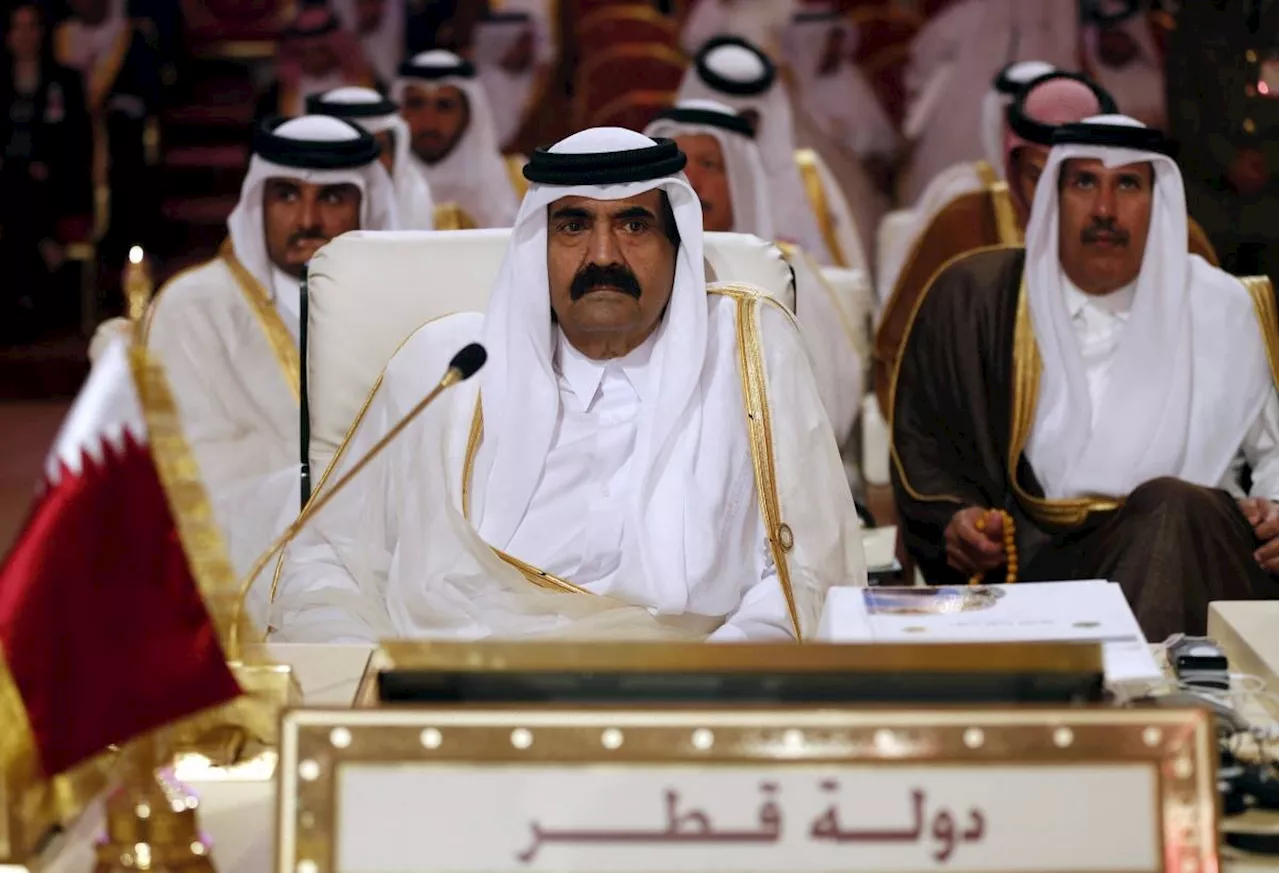
The LNG strategy also had a geopolitical dimension. By positioning Qatar as an indispensable supplier to Europe, Asia, and the Americas, Sheikh Hamad ensured that a country of fewer than 400,000 citizens would be impossible to ignore or bully. That lesson was driven home forcefully when Saudi Arabia, the UAE, Bahrain, and Egypt attempted to blockade Qatar in 2017, only to find that the world’s dependence on Qatari gas made the siege politically untenable.
Sheikh Hamad’s second great disruption was the founding of Al Jazeera in 1996. The Arabic-language news network, funded by the Qatari government but given editorial freedom unprecedented in the Arab world, transformed the media landscape of the Middle East irreversibly.
In Egypt, Al Jazeera defied a broadcast ban and showed the world antigovernment and pro-democracy protests during the Arab Spring. In Syria, Sheikh Hamad initially tried to convince President Bashar al-Assad to step down in the face of mass protests, before Doha severed ties with Damascus over the killing of demonstrators. In Libya, Qatar went further by supporting the NATO military mission that ultimately led to the overthrow of Muammar Gaddafi.
Al Jazeera made Qatar simultaneously indispensable to audiences who had never before had access to independent journalism, and deeply unpopular with the governments whose actions it covered. Arab heads of state who might otherwise have dismissed Qatar as a minor Gulf backwater found themselves unable to ignore a country whose television network reached their populations directly.
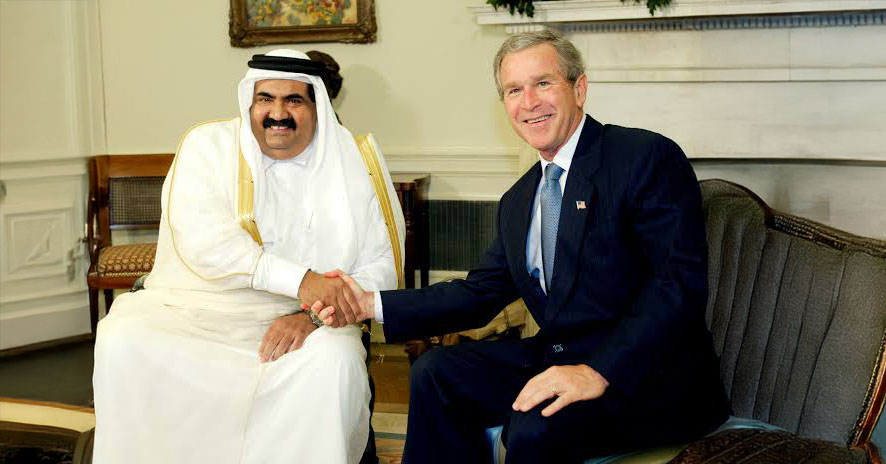
Sheikh Hamad had wide-ranging visions for Qatar’s role as a diplomatic broker. Over the years, Qatari mediation was brought to bear on the conflict in Sudan’s Darfur region, Lebanese factional feuding, and the rift between the Palestinian groups Hamas and Fatah.
The diplomatic architecture he built outlasted his own reign. When the U.S.-Iran war erupted in February 2026, it was Qatar, alongside Pakistan, that served as the critical mediator bringing Washington and Tehran to a framework agreement. The country’s ability to maintain working relationships with parties that despise each other, including Iran and Saudi Arabia, Hamas and Israel, the United States and the Taliban, is a direct inheritance of the foreign policy philosophy Sheikh Hamad constructed from scratch.
The cause closest to his heart was the Palestinian liberation struggle. One of his most memorable official visits was when he became the first head of state to travel to the Gaza Strip in more than a decade. In honour of his support for the Palestinian people, towns in Gaza and southern Lebanon were named after him.
Sheikh Hamad’s domestic ambitions were as sweeping as his foreign policy. Education City, a vast campus on the outskirts of Doha hosting satellite campuses of Georgetown, Cornell, Northwestern, Carnegie Mellon, and other American universities, was his vision of what Qatar’s gas wealth should ultimately produce: not merely material prosperity, but a generation of Qataris capable of competing in a knowledge economy.
The Qatar Foundation, chaired by his wife Sheikha Moza bint Nasser, one of the most prominent and influential women in the Arab world, became the institutional engine of this cultural ambition. Museums, libraries, research institutes, and cultural institutions that would have seemed implausible in Qatar in 1995 opened in rapid succession.
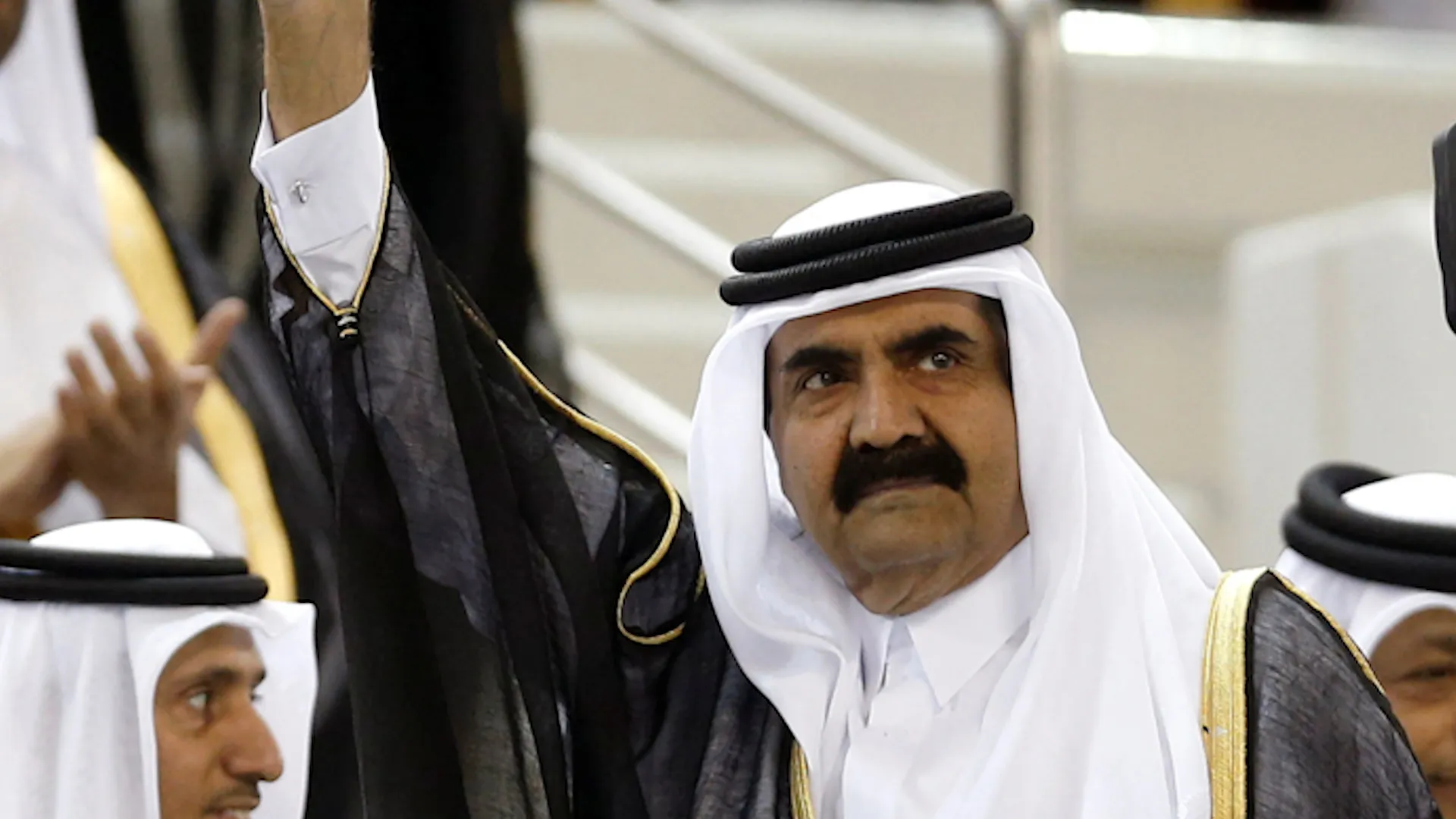
Sheikh Hamad also oversaw the successful bid to host the 2022 FIFA World Cup, which was awarded to Qatar in 2010. The win kicked off a vast infrastructure and spending boom, creating the Doha skyline of today. The tournament, held in November and December to avoid Qatar’s brutal summer heat, was the first World Cup ever hosted in the Arab world. The stadiums built for the occasion have since been partly dismantled and donated to developing nations, as promised.
But, perhaps the most remarkable thing Sheikh Hamad did was to leave. In 2013, he handed power to his son Sheikh Tamim, who was then 33 years old, in a rare voluntary abdication by a hereditary Gulf Arab ruler. “The future lies ahead of you, the children of this homeland, as you usher into a new era where young leadership hoists the banner,” Sheikh Hamad said as he announced his decision to step aside.
Voluntary abdication in the Gulf, or anywhere in the Arab world, is vanishingly rare. The act was widely interpreted as evidence of a man more committed to his country’s future than to his own continuation in power. It was also a succession carried out with no violence, no crisis, and no uncertainty, a stability that itself represented a kind of governance achievement in a region where power transitions frequently destabilise entire states.
Abdulla Banndar el Etaibi, Assistant Professor in International Affairs at Qatar University, told Al Jazeera: “We’re talking about someone who left a legacy all over the world, not only on Qatar. He worked really hard to turn Qatar from a normal country into a prominent and extraordinary country. He had so many dreams of so many things. He invested a lot in LNG. This helped Qatar develop even more.”
Sheikh Hamad died at a moment when Qatar’s global relevance is arguably at its highest since the 2022 World Cup. His son and successor, Sheikh Tamim, has in recent weeks been present at the signing of the U.S.-Iran framework deal, itself brokered in part through Qatari mediation. The country his father built is, in the summer of 2026, functioning exactly as Sheikh Hamad designed it: small enough to be trusted by everyone, wealthy enough to be useful, and diplomatically nimble enough to operate in spaces where larger powers cannot.
That is the empire he left. Today, Qatar is not of territory or military might, but, rather, of indispensability. Sheikh Hamad bin Khalifa Al Thani was 74 years old, but, he had been, in ways most rulers never achieve, more than enough.
The world he built outlives him. And that is the rarest kind of legacy.
Sheikh Hamad bin Khalifa Al Thani is survived by his son, Qatar’s reigning Emir Sheikh Tamim bin Hamad Al Thani, and numerous children. Qatar has declared four days of national mourning. The Diplomatic Affairs extends our deepest condolences to the Qatari royal family, to the people of Qatar, and to all those whose lives were touched by a man who proved that a small nation, with vision and will, could change the world. May he rest in the peace and strength he spent his life building for others.
By I. Constantin